
Some dishes are memorable because of their bold appearance, while others become favorites because of the slow cooking and layers of flavor behind them. Asado Negro belongs to the second category. This traditional Venezuelan beef dish is known for its deeply browned exterior, tender texture, and rich dark sauce created by slowly caramelizing the meat and developing the cooking juices.
If you’re searching for the best asado negro near me, one of the most useful things to know is that this dish may not be available every day. Checking Venezuelan restaurant menus, recent customer photos, and daily specials can help you find a traditional version rather than a generic braised beef dish. A properly prepared Asado Negro should have tender beef, a dark glossy sauce, and a balance of sweet, savory, and slightly tangy flavors.
What makes this dish especially distinctive is the contrast between its dark exterior and tender interior. The beef is traditionally browned deeply before being slowly cooked with aromatics and a sweet element such as papelón or brown sugar. The resulting sauce becomes one of the most important parts of the dish.
Whether you’re discovering Asado Negro for the first time or trying to find an authentic version nearby, knowing how it is traditionally prepared can make it much easier to recognize a good plate.
Quick Overview
What Is Asado Negro?
Asado Negro is one of Venezuela’s best-known traditional beef dishes. It consists of a large piece of beef that is deeply browned before being slowly cooked in a flavorful sauce until tender.
The name refers to the characteristic dark color that develops during cooking. The exterior becomes intensely browned, while the cooking liquid takes on a deep color and concentrated flavor.
The exact recipe varies between Venezuelan families and regions, but onions, garlic, spices, and a sweet ingredient such as papelón or brown sugar are commonly involved. Some recipes also include wine, vinegar, Worcestershire sauce, or other ingredients that contribute acidity and depth.
The sweetness is important, but an authentic Asado Negro should not taste like dessert. The sugar or papelón helps create the characteristic dark caramelized flavor and balances the savory richness of the beef.
The beef is usually cooked slowly enough for the connective tissue to soften. When done correctly, the meat should be tender enough to slice easily while still maintaining enough structure to hold together.
Related Post: Best Albondigas con Sepia Near Me
What Makes Authentic Asado Negro?
Authentic Asado Negro depends heavily on the browning of the beef and the gradual development of its sauce. It is not simply a piece of beef cooked until tender.
The beef is traditionally browned deeply before the braising process begins. This creates the dark exterior associated with the dish and contributes a concentrated roasted flavor. The outside should have a deep brown or mahogany appearance without tasting burnt.
The sauce is equally important. As the meat cooks, browned bits from the pot combine with onions, garlic, spices, sweetener, and cooking liquid. Over time, the sauce becomes darker, richer, and more concentrated.
Papelón is traditionally associated with Venezuelan cooking and can provide a deeper sweetness than ordinary white sugar. Depending on the recipe and location, brown sugar or another sweetener may be used instead.
The meat should remain moist despite its dark exterior. A properly braised Asado Negro should be tender enough to slice without falling completely apart, while the sauce should be thick enough to coat the meat without becoming sticky or excessively sugary.
The finished flavor should move between savory, sweet, aromatic, and slightly acidic notes. Beef remains the main flavor, while the caramelized exterior and sauce provide the complexity that makes the dish distinctive.
How to Find the Best Asado Negro Near Me
Asado Negro can be harder to locate than more widely known Venezuelan dishes because restaurants may prepare it as a daily special rather than keeping it permanently on the menu.
Family-owned Venezuelan restaurants are particularly worth checking because traditional dishes like Asado Negro are often prepared according to recipes passed down through generations.
Venezuelan cafés and casual restaurants can also be good options, especially those offering a broad selection of traditional dishes rather than focusing exclusively on arepas and empanadas.
Availability can change by day. The long cooking process means some restaurants prepare Asado Negro only for particular lunch services, weekends, or special menus. Checking the current menu or calling before visiting is therefore worthwhile.
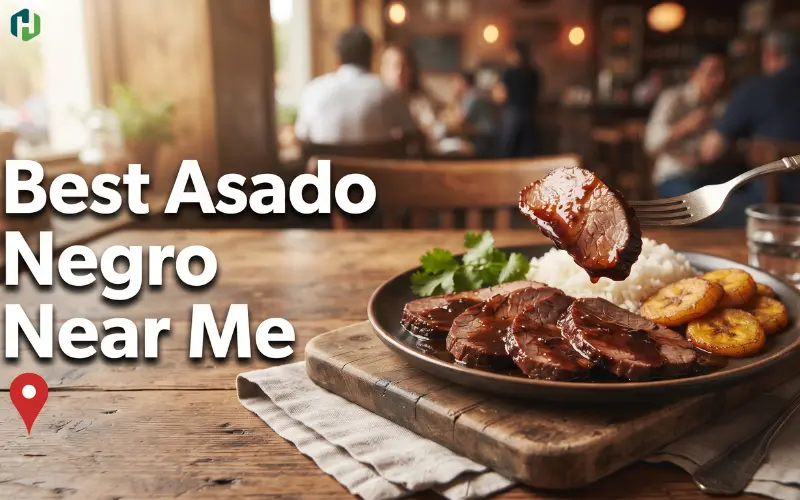
When comparing different restaurants, pay attention to recent photos and menu descriptions. A plate showing thick slices of dark-browned beef covered in a developed sauce is a much stronger indication than a generic description such as “Venezuelan beef.”
Google Maps Search Tips
For local results, search for “Asado Negro near me,” “Venezuelan restaurant near me,” “authentic Venezuelan food near me,” or “Venezuelan beef near me.”
After finding potential restaurants, check recent customer photos for the characteristic dark-browned beef and glossy sauce. Reviews can also help; terms such as “Asado Negro,” “tender beef,” “dark sauce,” and “traditional” can reveal useful customer experiences.
If the dish isn’t listed on the current menu, contact the restaurant directly. Smaller Venezuelan restaurants may prepare it only on certain days.
Is Asado Negro Halal?
Asado Negro can be halal, but the traditional preparation should not automatically be assumed to be halal.
The beef itself needs to come from a halal source. If you’re following a halal diet, ask whether the beef is halal-certified and whether it is handled separately from pork or other non-halal meats.
The sauce also deserves attention. Some recipes may use wine or other alcoholic ingredients as part of the braising liquid. Other versions rely on vinegar, stock, or other non-alcoholic ingredients instead.
Worcestershire sauce can also require checking because formulations differ between brands and may contain ingredients that some halal diners prefer to verify.
Cross-contact is another consideration. If the same kitchen equipment is used for pork-based dishes, you may want to ask how the Asado Negro is prepared.
A useful question is: “Is the beef halal, and does the sauce contain wine or any other non-halal ingredients?” This can clarify the main concerns before ordering.
Best Cities to Find Asado Negro
Cities with established Venezuelan communities generally provide more opportunities to find traditional Venezuelan dishes.
United States
Miami is one of the strongest places to explore Venezuelan cuisine because of its large Venezuelan community and extensive Latin American restaurant scene.
New York City is another excellent destination, with Venezuelan restaurants and cafés across different neighborhoods offering traditional dishes beyond the most familiar street foods.
Orlando and Houston are also worth exploring because both cities have growing Venezuelan communities and Venezuelan dining options.
Los Angeles and Northern Virginia can provide additional opportunities, particularly in areas with established Latin American communities.
United Kingdom
London is the strongest UK destination for Venezuelan cuisine. Venezuelan restaurants and Latin American eateries can provide access to traditional dishes, although Asado Negro may be a rotating or special menu item.
Manchester and other larger UK cities are also worth checking when looking for Venezuelan food.
What to Eat with Asado Negro
White rice is one of the most practical accompaniments because its mild flavor allows the rich beef and dark sauce to remain the focus.
Traditional Venezuelan meals may also include tajadas, or fried ripe plantains. Their natural sweetness and caramelized edges complement the savory-sweet character of the Asado Negro particularly well.
Depending on the restaurant, vegetables or other Venezuelan side dishes may also be served alongside the beef.
We hope you guys find this guide helpful. If you like this one, here we have more for you:
FAQs
What is Asado Negro?
Asado Negro is a traditional Venezuelan beef dish made by deeply browning beef and then slowly braising it in a rich, dark sauce containing aromatics and a sweet element such as papelón or brown sugar.
What does Asado Negro mean?
“Asado Negro” can be understood as “dark roast” or “dark roasted beef,” referring to the deeply browned appearance of the meat.
Is Asado Negro spicy?
Usually, Asado Negro is not extremely spicy. Its main flavor comes from caramelized beef, aromatics, spices, and the balance between savory and sweet ingredients.
What cut of beef is used for Asado Negro?
The exact cut varies between recipes. Traditional preparations generally use a beef cut suitable for long, slow cooking so it can become tender while developing a rich sauce.
Is Asado Negro halal?
It can be halal when halal-certified beef is used and the sauce contains no non-halal ingredients. Wine, Worcestershire sauce, shared cooking equipment, and cross-contact should be checked when necessary.
Does Asado Negro contain sugar?
Traditional recipes commonly include papelón, brown sugar, or another sweet ingredient. The purpose is to create the characteristic caramelized flavor rather than make the dish taste like dessert.
What is papelón?
Papelón is an unrefined cane sugar commonly used in Venezuelan and other Latin American cooking. It contributes a deeper caramel-like sweetness to dishes such as Asado Negro.
Is Asado Negro the same as ordinary roast beef?
No. Although both involve beef, Asado Negro is distinguished by its deeply browned exterior and sweet-savory braising sauce developed during the cooking process.
What is served with Asado Negro?
White rice and fried ripe plantains are popular pairings. Vegetables and other Venezuelan side dishes can also accompany the beef.
Where can I find Asado Negro near me?
Venezuelan restaurants, family-owned Venezuelan cafés, and Latin American restaurants with a strong Venezuelan menu are useful places to check. Always verify the current menu because availability can vary.
Conclusion
Asado Negro stands out because of the cooking technique behind its dark color and concentrated flavor. Deeply browned beef, slow braising, and a carefully balanced sauce create a dish that is much more distinctive than ordinary roast beef.
When searching locally, check current menus, recent customer photos, reviews, and daily specials before visiting. If you follow a halal diet, verify the beef source and ask about wine, Worcestershire sauce, and possible kitchen cross-contact.
A properly prepared Asado Negro should have deeply browned beef, a tender interior, and a rich sauce that balances savory, sweet, aromatic, and slightly acidic flavors. Those details are what make this Venezuelan classic worth seeking out.