Is Banana Bread Halal

Is Banana Bread Halal or Haram?

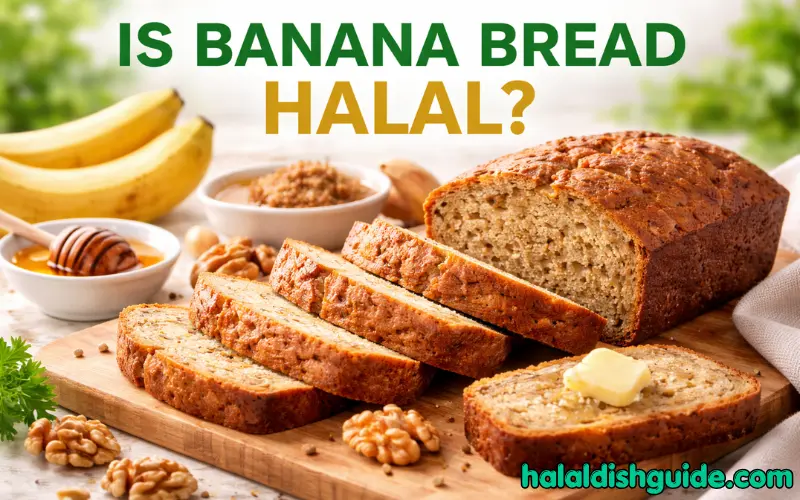
Is banana bread halal or Haram? In most cases, banana bread is generally considered halal because it is made with simple ingredients like bananas, flour, sugar, eggs, and butter. Banana bread is one of the most popular baked foods in the USA and UK, commonly sold in coffee shops, bakeries, supermarkets, and homemade recipes. Since the basic ingredients are plant-based and halal-friendly, many Muslims regularly eat banana bread without concern.
However, some commercial banana bread products may contain questionable ingredients that create halal concerns for stricter Muslim consumers. Alcohol-based vanilla extract, emulsifiers like E471, artificial flavorings, and cross-contamination in bakeries are some of the main issues Muslims look for before buying banana bread. Store-bought and café versions can vary greatly depending on the recipe and manufacturing process. Because ingredients and food preparation standards differ between brands and countries, Muslims should always check labels carefully and choose halal-certified products whenever possible.

Quick Overview Table

CategoryHalal StatusNotes
Homemade Banana BreadHalalFull ingredient control
Bakery Banana BreadDependsRecipes vary
Store-Bought Banana BreadDependsAdditives may be questionable
Vanilla ExtractQuestioned by Some MuslimsOften alcohol-based
E471 & EmulsifiersDoubtfulSource may be animal-derived
Best OptionHalal-Certified or HomemadeSafest choice

What Is Banana Bread and Why Is It So Popular

Is Banana Bread Halal or Haram

Banana bread is a soft, moist loaf made primarily from ripe bananas. It is one of the most popular baked goods in both the United States and the United Kingdom. Created as a way to use overripe bananas, it has now become a staple in homes, cafes, and bakeries.

In the USA, banana bread is often served as a breakfast item or a quick snack with coffee. In the UK, it is commonly found in coffee shops and is sometimes marketed as a healthier alternative to cakes.

Its popularity comes from its simplicity, rich flavor, and versatility. People can easily customize banana bread by adding nuts, chocolate chips, or spices. However, these variations can also affect its halal status.

Basic Ingredients of Banana Bread (Halal Overview)

A traditional banana bread recipe includes simple ingredients that are generally halal:

  • Bananas
  • Flour
  • Sugar
  • Eggs
  • Butter or vegetable oil
  • Baking soda or baking powder

All of these are naturally halal. There is no issue with these ingredients from an Islamic perspective.

The concern begins when recipes become more complex, especially in commercial production where additional ingredients are used.

Clear Answer: Is Banana Bread Halal or Haram?

Banana bread is mostly halal, especially when made at home or with basic ingredients.

However, it becomes doubtful or non-halal if it contains:

  • Alcohol-based vanilla extract
  • Non-halal emulsifiers
  • Gelatin or animal-derived additives
  • Cross-contamination during preparation

This means that while the base recipe is halal, the final ruling depends on how the banana bread is made.

Banana Bread in the USA

Is Banana Bread Halal or Haram

In the United States, banana bread is extremely common and available in many forms.

Where You’ll Find It

  • Coffee chains
  • Local bakeries
  • Supermarkets
  • Restaurants

Halal Considerations in the USA

1. Use of Vanilla Extract
Most American recipes use vanilla extract, which often contains alcohol. This is one of the main concerns for Muslims.

2. Commercial Additives
Store-bought banana bread may include preservatives and artificial flavorings. These ingredients are not always clearly halal.

3. Shared Kitchen Spaces
Many bakeries produce multiple products, including those containing alcohol or non-halal ingredients. This can lead to cross-contamination.

Because of these factors, Muslims in the USA often prefer homemade banana bread or verified halal sources.

Banana Bread in the UK

In the United Kingdom, banana bread is also very popular, especially in cafes and supermarkets.

Key Differences in the UK

1. Better Food Labeling
The UK has stricter labeling laws, which makes it easier to identify ingredients.

2. Vegan Options
Vegan banana bread is widely available and usually halal-friendly, as it contains no animal products.

3. Alcohol in Flavorings
Just like in the USA, vanilla extract and other flavorings may contain alcohol.

Overall, banana bread in the UK is often halal, but checking labels is still necessary.

Ingredients That Can Make Banana Bread Non-Halal

Vanilla Extract (Major Concern)

Vanilla extract is one of the most common ingredients in banana bread.

In both the USA and UK, it is typically made using alcohol as a solvent. This makes it questionable for strict halal consumption.

Chocolate Chips and Additives

Chocolate chips may contain emulsifiers such as lecithin, which are usually halal but not always clearly sourced.

Some flavored chips may also contain alcohol-based ingredients.

Butter and Dairy Products

Butter is generally halal, but certain processed dairy products may include additives.

These should be checked, especially in commercial products.

Preservatives and Emulsifiers

Store-bought banana bread often contains preservatives to increase shelf life.

While many are halal, their sources are not always clearly stated.

Types of Banana Bread and Their Halal Status

Is Banana Bread Halal or Haram

Homemade Banana Bread

This is the safest option.

You have full control over ingredients and can avoid anything doubtful.

Bakery Banana Bread

This depends on the bakery.

Some bakeries use simple ingredients, while others include flavorings that may not be halal.

Supermarket Banana Bread

Packaged banana bread often contains additives.

Always check the label before buying.

Vegan Banana Bread

Vegan versions are usually halal, but flavorings still need to be checked.

Cross-Contamination in Bakeries and Cafes

In Western countries, bakeries often prepare multiple items in the same kitchen.

This includes products that may contain alcohol or non-halal ingredients.

Shared equipment such as mixers, trays, and ovens can lead to contamination.

For strict halal followers, this is an important factor to consider.

Banana Bread in Coffee Shops (Reality Check)

Banana bread is a common item in coffee chains.

However, these products are usually mass-produced and may include:

  • Artificial flavorings
  • Preservatives
  • Alcohol-based extracts

Because of this, it is better to verify before consuming.

Health Perspective of Banana Bread

Is Banana Bread Halal or Haram

Banana bread can be healthy when made with natural ingredients.

It provides:

  • Fiber from bananas
  • Energy from carbohydrates
  • Essential vitamins

However, commercial versions may contain high sugar and fat levels.

Why Banana Bread Is So Popular in the West

Banana bread is simple, affordable, and easy to make.

It is also a great way to reduce food waste by using overripe bananas.

Its versatility allows people to customize it in many ways.

Common Misconceptions About Banana Bread

All banana bread is halal

Not true — ingredients vary.

Baked goods are always safe

Some contain alcohol or additives.

Vegan means halal

Mostly true, but not guaranteed.

How to Make Halal Banana Bread at Home (Step-by-Step Insight)

Making banana bread at home is the best way to ensure it is halal.

Use the following approach:

  • Choose ripe bananas
  • Use halal-certified or alcohol-free vanilla flavoring
  • Avoid doubtful additives
  • Use clean and simple ingredients

This ensures full control over the halal status.

Practical Tips for Muslims in the USA & UK

  • Always read ingredient labels carefully
  • Ask bakeries about ingredients
  • Prefer homemade options
  • Avoid doubtful products

Real-Life Scenarios Muslims Face

In Western countries, Muslims often face situations where banana bread is offered at:

  • Workplaces
  • Schools
  • Cafes
  • Social gatherings

In such cases, it is better to politely ask about ingredients or avoid if unsure.

We hope you guys find this guide helpful. If you like this one, here we have more for you:

FAQs

Is homemade banana bread halal?

Yes, homemade banana bread is generally halal because you can control all ingredients and avoid doubtful additives.

Why do some Muslims avoid banana bread?

Some Muslims avoid commercial banana bread because of alcohol-based vanilla extract, emulsifiers like E471, and possible cross-contamination in bakeries.

Is vegan banana bread halal?

Most vegan banana bread is usually halal-friendly because it contains plant-based ingredients, but Muslims should still verify flavorings and additives carefully.

Is banana bread halal in the USA?

Yes, if made with halal ingredients.

Is banana bread halal in the UK?

Yes, most versions are halal-friendly.

Does banana bread contain alcohol?

Sometimes, due to vanilla extract.

Are supermarket banana breads halal?

They can be, but labels must be checked.

Conclusion

Is banana bread halal? Banana bread is generally halal when made with basic ingredients like bananas, flour, sugar, eggs, and butter. Homemade banana bread is usually the safest option because Muslims can fully control the ingredients and avoid doubtful additives. Many Muslims in the USA and UK also consume simple bakery or café banana bread when no obvious haram ingredients are present.

The biggest halal concerns usually involve alcohol-based vanilla extract, questionable emulsifiers such as E471, artificial flavorings, and possible cross-contamination in commercial bakeries. Some packaged banana bread products may also contain additives with unclear sources. Since recipes and food processing methods vary widely between brands and bakeries, the safest approach is to read ingredient labels carefully and choose halal-certified or homemade banana bread whenever possible.

What Makes Meat Halal

What Makes Meat Halal?

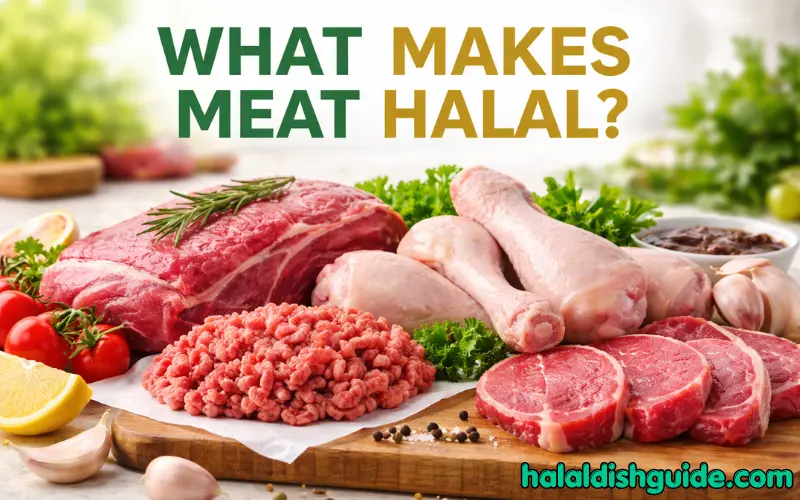
What makes meat halal? In Islam, meat is considered halal when it comes from a permissible animal and is slaughtered according to Islamic dietary guidelines. Halal meat is one of the most important parts of a Muslim diet, especially for Muslims living in the USA and UK, where many restaurants and supermarkets may not always follow halal standards. The word “halal” means permissible, and halal meat must meet specific religious and ethical requirements before Muslims can consume it. 
For meat to be halal, the animal must be healthy, treated properly, and slaughtered through the Islamic zabiha method while the name of Allah is recited. Blood must also be fully drained from the animal because consuming blood is prohibited in Islam. Muslims are also concerned about halal certification, cross-contamination, animal welfare, and meat processing methods used by modern food companies. Since halal standards can vary between countries, restaurants, and suppliers, many Muslims carefully verify halal meat sources before eating.

Quick Overview Table

CategoryHalal RequirementNotes
Animal TypeMust Be PermissibleBeef, chicken, lamb allowed
PorkHaramCompletely prohibited
Slaughter MethodZabiha RequiredIslamic slaughter process
Allah’s NameRequiredRecited during slaughter
Blood DrainageMandatoryBlood consumption prohibited
Halal CertificationRecommendedHelps verify halal compliance

The Concept of Halal Beyond Food

What Makes Meat Halal

Halal is often translated as “permissible,” but its meaning goes much deeper. It represents a lifestyle guided by Islamic principles.

When applied to food, halal ensures that what a person consumes is pure, lawful, and ethically sourced. It reflects discipline, awareness, and accountability.

In the USA and UK, where food chains are industrialized, this concept becomes more relevant. Muslims are required to think about where their food comes from and how it reaches their plate.

Halal Meat: More Than Just Slaughter

Many people reduce halal to a single act—the moment of slaughter. In reality, halal meat involves a complete system that begins long before the animal is slaughtered.

From the way the animal is raised to how it is transported, handled, and processed, every step matters.

This holistic approach ensures that halal meat is not only religiously compliant but also ethically responsible.

Permissible Animals

The first condition of halal meat is that the animal itself must be permissible.

Animals such as cows, sheep, goats, and chickens are allowed. These are commonly consumed in both the USA and UK.

On the other hand, animals like pigs are strictly prohibited. This rule is clear and universally accepted among Muslims.

In Western countries, where pork products are widely used, this becomes a major concern. Even small traces of pork contamination can make food non-halal.

The Importance of Animal Welfare in Halal

What Makes Meat Halal

Islam places strong emphasis on the treatment of animals.

Animals must be raised in a healthy environment, given proper food, and not subjected to unnecessary stress.

In modern farming systems in the USA and UK, this aspect is often debated. Large-scale industrial farms may not always meet the ethical expectations associated with halal principles.

This is why many Muslims prefer to buy from trusted halal farms or suppliers that follow humane practices.

The Halal Slaughter Process

The method of slaughter is one of the most important elements of halal meat.

The process requires a sharp knife to make a swift cut to the throat, windpipe, and major blood vessels. The intention is to minimize pain and ensure a quick death.

The name of Allah must be mentioned at the time of slaughter. This reflects the spiritual aspect of consuming food with gratitude and awareness.

In the USA and UK, there is ongoing discussion about how this method aligns with animal welfare laws, especially regarding stunning practices.

Stunning and Halal Debate

One of the most debated topics is whether stunning animals before slaughter is permissible.

In the UK, stunning is commonly practiced and often required by law. Some halal certifiers accept reversible stunning, while others do not.

In the USA, practices vary depending on the slaughterhouse. Some halal facilities avoid stunning, while others use methods that are considered acceptable by certain scholars.

Because of these differences, Muslims often follow the opinion they trust and choose suppliers accordingly.

Why Blood Drainage Matters

What Makes Meat Halal

Blood is considered impure in Islam and must be removed from the meat.

The halal slaughter process ensures that blood is drained completely, which contributes to both cleanliness and quality.

Many people believe that this process also improves the taste and shelf life of the meat.

Halal Certification in the USA

The halal market in the United States is growing, but it is not fully standardized.

There are multiple certification bodies, each with its own criteria. This can sometimes create confusion among consumers.

Some products are labeled halal without proper certification, which makes it important to verify authenticity.

Halal Certification in the UK

The UK has a more structured halal certification system.

Organizations monitor and certify halal meat, making it easier for consumers to identify compliant products.

However, differences in certification standards still exist, especially regarding stunning.

From Farm to Plate: The Halal Supply Chain

Halal meat is not just about slaughter—it involves the entire supply chain.

This includes farming, transportation, processing, packaging, and distribution.

If any stage involves contamination with non-halal substances, the meat may no longer be considered halal.

In the USA and UK, where supply chains are complex, maintaining this integrity can be challenging.

Cross-Contamination Risks in Western Countries

Cross-contamination is one of the biggest concerns for Muslims living in non-Muslim countries.

In many restaurants and food facilities, halal and non-halal foods are prepared in the same environment.

Shared equipment, utensils, and storage areas can lead to contamination.

Because of this, many Muslims choose to eat only at fully halal-certified establishments.

Halal Meat in Restaurants

What Makes Meat Halal

The availability of halal meat in restaurants has increased significantly in recent years.

Major cities now have a wide range of halal dining options, from fast food to fine dining.

However, not all restaurants follow strict halal practices. Some may serve halal meat but prepare it alongside non-halal items.

This makes it important to ask questions and verify before eating.

Ethical and Spiritual Dimensions of Halal Meat

Halal meat is deeply connected to faith. It is not just about physical nourishment but also spiritual well-being.

Eating halal is considered an act of عبادت (worship). It reflects obedience to Islamic teachings.

It also encourages mindfulness—being aware of what one consumes and how it affects both body and soul.

Health and Quality Aspects of Halal Meat

Many people associate halal meat with higher quality.

Proper blood drainage and careful handling can result in cleaner meat.

Ethical animal treatment may also contribute to better overall health of the animal, which affects the quality of the meat.

Why Halal Meat Is Gaining Popularity

Halal food is no longer limited to Muslim communities.

In the USA and UK, many non-Muslims are choosing halal meat because of its ethical and hygienic aspects.

Restaurants and food brands are responding to this demand by offering more halal options.

Common Misunderstandings About Halal Meat

Halal is only about religion

It also includes ethics, hygiene, and quality.

Halal meat is the same everywhere

Practices can vary between countries and suppliers.

Certification guarantees perfection

Certification helps, but consumers should still stay aware.

Challenges Muslims Face in the USA & UK

  • Limited availability in smaller towns
  • Confusion due to multiple certifications
  • Cross-contamination risks
  • Lack of clear labeling

These challenges require awareness and careful decision-making.

How to Choose Halal Meat in the West

  • Buy from trusted halal butchers
  • Look for certification labels
  • Ask about sourcing and slaughter methods
  • Avoid doubtful products

Practical Lifestyle Tips for Muslims

Living in the USA and UK requires practical solutions.

Planning meals, choosing reliable sources, and staying informed can make halal living easier.

Community support and local halal directories can also help.

We hope you guys find this guide helpful. If you like this one, here we have more for you:

FAQs

What makes meat halal?

It must follow Islamic rules of sourcing and slaughter.

Is halal meat available in the USA?

Yes, but availability varies by location.

Is halal meat easy to find in the UK?

Yes, especially in major cities.

Why is halal slaughter important?

It ensures ethical and clean meat.

What makes meat halal in Islam?

Meat becomes halal when it comes from a permissible animal and is slaughtered according to Islamic zabiha guidelines.

Why must blood be drained from halal meat?

Blood is prohibited in Islam, so halal slaughter requires proper blood drainage after the animal is slaughtered.

Is halal meat only about slaughter?

No, halal meat also includes ethical animal treatment, proper processing, avoiding contamination, and following Islamic dietary rules throughout production.

Do all halal products have certification?

No, certification is not always present.

Conclusion

What makes meat halal? Halal meat must come from a permissible animal and follow Islamic slaughter guidelines known as zabiha. The animal should be healthy, treated humanely, slaughtered while Allah’s name is recited, and properly drained of blood. These rules are designed to ensure both spiritual and ethical standards for Muslim consumers.

Today, many Muslims in the USA and UK also focus on halal certification, meat sourcing, processing methods, and cross-contamination concerns when choosing halal meat products. Because modern food production can vary greatly between suppliers and restaurants, verifying halal certification and buying from trusted halal sources remains the safest option for halal-conscious consumers.

Is Frozen Meat Halal

Is Frozen Meat Halal or Haram?

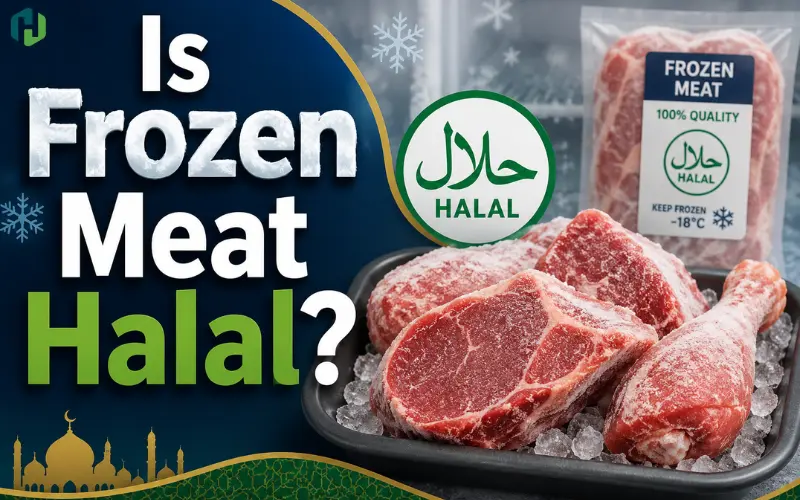
Is frozen meat halal or Haram? The answer depends on the source of the meat, halal certification, and how the product is processed and stored. Frozen meat itself is not haram simply because it is frozen. If the meat comes from a halal-slaughtered animal and follows proper halal guidelines during processing, packaging, and storage, then frozen meat can be considered halal. Many Muslims in the USA and UK regularly buy frozen halal chicken, beef, and lamb from supermarkets and halal grocery stores.

However, many halal-conscious consumers still have concerns about imported frozen meat, unclear certification labels, cross-contamination, and industrial processing methods. Some frozen products may contain non-halal marinades, flavorings, gelatin, or be processed in facilities that also handle pork products. Because halal standards vary between brands and countries, Muslims should always check halal certification carefully and buy frozen meat from trusted halal-certified suppliers whenever possible.

Quick Overview Table

CategoryHalal StatusNotes
Halal-Certified Frozen MeatHalalSafest option for Muslims
Frozen ChickenDependsVerify halal certification
Frozen BeefDependsCheck slaughter method
Frozen Processed FoodsDependsMay contain non-halal additives
Shared Processing FacilitiesPossible ConcernCross-contamination risk
Imported Frozen MeatDependsCertification standards vary

What is Frozen Meat?

Frozen meat is fresh meat that is preserved by lowering its temperature to below freezing point, usually around -18°C or lower. This process slows down bacterial growth and prevents spoilage.

It is widely used in supermarkets, restaurants, hotels, and food supply chains because it is easy to transport and store for long periods.

Frozen meat can include chicken, beef, lamb, goat, and other common meat types. It is usually cut, cleaned, packaged, and then frozen immediately after processing.

The freezing process does not change the identity of the meat. It only preserves it in its existing state at the time of freezing.

Why Frozen Meat is So Common Today

Is Frozen Meat Halal or Haram

In the modern food industry, frozen meat plays a very important role. One of the biggest reasons is global supply demand.

Countries import and export meat across continents, and freezing makes long-distance transportation possible without spoilage.

Another reason is convenience. Consumers prefer buying meat in bulk and storing it at home for longer use.

Restaurants and fast food chains also rely heavily on frozen meat because it reduces waste and ensures consistent supply.

Does Freezing Affect Halal Status?

Freezing itself does not affect whether meat is halal or not. It is only a preservation method, not a religious or ethical process.

If the meat was halal before freezing, it remains halal after freezing. If the meat was not halal before freezing, freezing does not change its status.

This is one of the most important points to understand because many people mistakenly assume freezing changes the nature of the meat.

The actual concern always remains the same: how the animal was sourced and slaughtered before it was frozen.

Main Factors That Decide Halal Frozen Meat

There are several important factors that determine whether frozen meat is halal or not. These factors are related to sourcing, processing, handling, and certification.

Even if the packaging looks clean and professional, the real decision depends on what happened before freezing.

Let’s break down each factor in detail.

1. Source of the Animal

The first and most basic requirement is the type of animal used.

Animals like chicken, beef, lamb, goat, and fish are generally considered permissible categories.

However, pork and its derivatives are strictly not allowed under any circumstances, regardless of how they are processed or frozen.

So before anything else, the origin of the meat must be clearly identified.

2. Slaughter Method

The slaughter method plays a very important role in determining whether meat is acceptable.

The animal must be slaughtered in a proper way before it is processed or frozen.

If the slaughter method is incorrect or unclear, the meat is not considered acceptable even if it is frozen and packaged later.

This is why many countries require strict certification for meat processing plants.

3. Industrial Processing Stage

Before freezing, meat usually goes through multiple processing stages such as cutting, cleaning, trimming, and packaging.

During these stages, the meat may be handled in large industrial facilities where different types of meat are processed.

If proper separation is not maintained, there is a risk of contamination.

This is why hygiene and production standards are extremely important in the meat industry.

4. Cross-Contamination Concerns

Cross-contamination occurs when halal and non-halal products come into contact during processing or storage.

This can happen in factories that handle multiple meat types.

Even if the original meat was acceptable, contamination during processing can raise concerns.

To prevent this, modern facilities use strict separation systems and cleaning protocols.

5. Packaging Process

Is Frozen Meat Halal or Haram

Packaging is done to preserve freshness and prevent contamination during transportation.

Vacuum sealing and airtight packaging are commonly used in frozen meat products.

However, packaging alone does not determine whether meat is acceptable or not.

It only protects the meat after it has already been processed.

6. Storage Temperature and Conditions

Frozen meat must be stored at very low temperatures, usually -18°C or below.

This prevents bacterial growth and keeps the meat safe for consumption.

Storage does not change permissibility, but it affects quality.

If storage conditions are poor, the meat may lose texture, flavor, or freshness.

7. Transportation and Supply Chain

Frozen meat is often transported across countries and continents.

During transportation, temperature control is extremely important to maintain quality.

If the cold chain is broken, the meat may spoil even if it was originally good quality.

However, this is a safety issue, not a permissibility issue.

8. Halal Certification Importance

Halal certification is one of the most reliable ways to verify frozen meat.

Certified products are checked at multiple levels including sourcing, slaughter, processing, and packaging.

However, not all frozen meat products are certified, especially in international markets.

This creates confusion among consumers who rely on clear labeling.

9. Imported Frozen Meat Complexity

Many frozen meat products are imported from different countries around the world.

Each country may have different regulations and standards for meat processing.

This makes it difficult for consumers to verify every step of production.

Because of this, certification becomes even more important in imported products.

10. Supermarket vs Local Butcher Meat

Frozen meat from supermarkets is usually standardized, labeled, and packaged professionally.

Local butcher meat may be fresher but sometimes lacks detailed certification information.

Both can be acceptable depending on sourcing and handling.

However, supermarkets often provide more transparency.

Why People Get Confused About Frozen Meat

One of the main reasons for confusion is lack of visibility in the supply chain.

Consumers usually see only the final packaged product, not the entire process behind it.

Because of this, many people assume freezing changes or improves meat status, which is not correct.

The confusion increases when products come from different countries with different labeling systems.

Health Perspective of Frozen Meat

Is Frozen Meat Halal or Haram

Frozen meat is generally safe when handled properly.

It retains most of its nutrients and is widely used around the world.

However, repeated freezing and thawing can affect quality and texture.

Proper cooking is also important for safety and taste.

Common Misunderstandings

A common misunderstanding is that frozen meat is less acceptable than fresh meat.

In reality, freezing is just a preservation method and does not change the nature of the meat.

Another misconception is that all imported frozen meat is questionable, which is not always true.

Many imported products are fully certified and safe.

What Experts Generally Explain

Experts agree that freezing has no effect on permissibility.

The key focus is always on sourcing, slaughter method, and processing.

If these conditions are met, frozen meat is generally considered acceptable.

However, lack of transparency in some products requires caution.

Should You Eat Frozen Meat?

Frozen meat can be consumed without concern if it is properly sourced and certified.

If there is no clear information, it is better to verify before buying.

The decision ultimately depends on personal preference and level of caution.

Some people prefer only certified products, while others rely on ingredient transparency.

Practical Buying Tips

Always check packaging labels carefully before purchasing frozen meat.

Look for certification marks from trusted authorities.

Avoid products with unclear origin or missing details.

Choose reputable brands whenever possible.

We hope you guys find this guide helpful. If you like this one, here we have more for you:

FAQs

Is frozen meat halal in Islam?

Yes, frozen meat can be halal if the animal was slaughtered according to halal guidelines and processed in a halal-compliant facility.

Does freezing make meat haram?

No, freezing does not make meat haram. The halal status depends on the slaughter method and ingredients used.

Why do some Muslims avoid frozen meat?

Some Muslims avoid certain frozen meat products because of unclear halal certification, cross-contamination concerns, and industrial processing methods.

Is imported frozen meat reliable?

It depends on certification and country standards. Always check labeling.

Is supermarket frozen meat safe?

Yes, if it comes from trusted and certified suppliers.

Does frozen meat lose quality?

It may lose some texture over time, but safety is maintained if stored properly.

What is cross-contamination in meat?

It is when halal and non-halal products mix during processing or storage.

Conclusion

Is frozen meat halal? Frozen meat can be halal if it comes from animals slaughtered according to Islamic guidelines and is processed in a halal-compliant environment. Freezing itself does not make meat haram. Many halal-certified frozen meat products are widely available in supermarkets and halal stores across the USA and UK.

The main concern for Muslims is not the freezing process but the sourcing and processing of the meat. Cross-contamination, unclear halal labels, non-halal ingredients, and questionable certification standards can create halal concerns for some consumers. The safest approach is to buy frozen meat from trusted halal-certified brands and carefully verify labels before purchasing.