
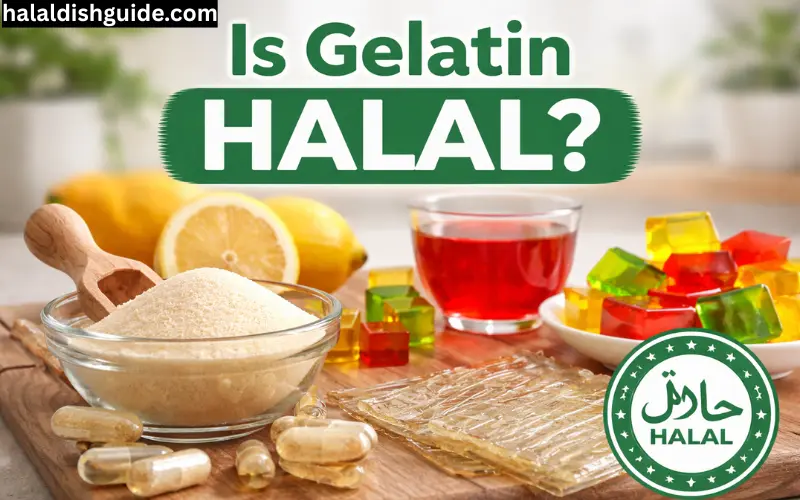
Is Gelatin Halal? Yes, gelatin is halal if it comes from halal sources such as fish or properly slaughtered animals. However, it is haram if it is made from pork or animals not slaughtered according to Islamic law.
Gelatin is a very common ingredient found in many everyday food products such as candies, marshmallows, desserts, and even medicines. Because of this, many Muslims are concerned and want a clear answer to the question: is gelatin halal?
In this article, we will explain everything in simple and easy language so that anyone can understand without confusion.
What Is Gelatin?
Gelatin is a protein that comes from animal collagen. It is made by boiling the skin, bones, and connective tissues of animals. This process produces a jelly-like substance that is widely used in the food and pharmaceutical industries.
Gelatin is commonly used in:
- Gummies and candies
- Marshmallows
- Yogurt and desserts
- Ice cream
- Capsules for medicines
Because it comes from animals, its halal status depends on which animal it is derived from and how that animal was treated.
Is Gelatin Halal or Haram?
👉 Gelatin is halal only if it comes from halal sources
👉 It is haram if it comes from pork or non-halal slaughtered animals
So, the short answer to “is gelatin halal?” is: It depends on the source
Types of Gelatin and Their Rulings
1. Pork Gelatin (Haram)
The most common type of gelatin in the global market is made from pork. Since pork is strictly forbidden in Islam, gelatin made from pigs is considered haram.
There is no difference of opinion among scholars on this matter — pork and anything derived from it is not allowed.
2. Beef Gelatin (Depends)
Gelatin made from cows can be halal or haram depending on how the animal was slaughtered.
- If the cow is slaughtered according to Islamic law → Halal
- If not → Haram
This is why it is important to check for halal certification before consuming products containing beef gelatin.
3. Fish Gelatin (Halal)
Gelatin derived from fish is generally considered halal because fish does not require halal slaughter in the same way land animals do.
This makes fish gelatin a safer option for Muslims.
4. Plant-Based Alternatives (Halal)
Some products use plant-based substitutes instead of animal gelatin. These are always halal.
Common alternatives include:
- Agar-agar
- Pectin
- Carrageenan
These are widely used in vegetarian and halal-certified products.
Why Gelatin Is a Concern for Muslims
Many food products do not clearly mention the source of gelatin. Labels often just say “gelatin” without specifying whether it comes from pork, beef, or fish.
This lack of transparency makes it difficult for Muslims to decide whether a product is halal.
Also, gelatin is used in unexpected products like:
- Chewing gum
- Frosting
- Vitamins
- Medicines
That’s why understanding the answer to “is gelatin halal” is very important for practicing Muslims.
Islamic Perspective on Gelatin
In Islam, food must come from halal sources. The Quran clearly forbids pork and animals not slaughtered in the name of Allah.
Some scholars have discussed a concept called Istihalah (transformation). This means that if a substance changes completely into something else, its ruling may change.
However, when it comes to gelatin:
- Many scholars believe the transformation is not complete
- Therefore, pork-based gelatin remains haram
Because of this difference of opinion, many Muslims choose to avoid doubtful products completely.
How to Identify Halal Gelatin Products
Here are some simple tips to help you:
✅ Check for Halal Certification
Look for a trusted halal logo on the packaging. This is the easiest and safest method.
✅ Read the Ingredients Carefully
If the label says:
- “Beef gelatin” → verify halal certification
- “Fish gelatin” → generally safe
- “Gelatin” (unspecified) → avoid if unsure
✅ Choose Vegan or Vegetarian Products
These products do not contain animal gelatin, making them automatically halal.
Common Foods That Contain Gelatin
You might be consuming gelatin without even realizing it. Some common foods include:
- Jelly and gummies
- Marshmallows
- Cheesecake
- Yogurt
- Ice cream
- Cake toppings
Always check labels, especially for processed foods.
Halal Alternatives to Gelatin
If you want to stay on the safe side, you can choose halal alternatives that work just like gelatin.
Popular Options:
- Agar-agar (from seaweed)
- Pectin (from fruits)
- Halal-certified gelatin
These alternatives are widely available and used in many halal-friendly products.
FAQs
Is gelatin halal in Islam?
Gelatin is halal only if it comes from halal sources such as fish or properly slaughtered animals. If it comes from pork or non-halal animals, it is considered haram.
Is beef gelatin halal or haram?
Beef gelatin is halal only when the animal is slaughtered according to Islamic law. Otherwise, it is not permissible.
Is gelatin in medicine halal?
In cases of necessity, some scholars allow gelatin in medicine if no halal alternative is available. However, it is always better to choose halal-certified options when possible.
Is vegan gelatin halal?
Yes, vegan or plant-based gelatin is completely halal because it does not contain any animal ingredients.
Does gelatin contain pork?
Yes, many gelatin products are made from pork. This is why it is important to check the source or look for halal certification before consuming.
How can you tell if gelatin is halal?
You can check if gelatin is halal by looking for halal certification, reading the ingredient label, or choosing products that clearly mention fish or plant-based gelatin.
Is all gelatin haram?
No, not all gelatin is haram. Gelatin can be halal if it is sourced from fish or halal-slaughtered animals.
Can Muslims eat foods with gelatin?
Muslims can eat foods containing gelatin only if the gelatin is halal. If the source is unknown or from pork, it should be avoided.
Conclusion
So, is gelatin halal?
👉 Yes, if it comes from halal sources (fish or halal-slaughtered animals)
👉 No, if it comes from pork or non-halal sources
If the source is unknown, it is better to avoid it to stay on the safe side.
For Muslims who want to follow halal guidelines strictly, checking labels and choosing certified products is very important.
For More free guides like this stay tuned with halal dish guide.