
Some dishes become famous because of expensive ingredients, while others earn their reputation by turning simple vegetables into something unforgettable. Pisto Manchego belongs firmly in the second category. This traditional Spanish vegetable stew from the Castilla-La Mancha region combines ripe tomatoes, peppers, onions, zucchini, and olive oil into a colorful dish that’s both rustic and remarkably satisfying.
The first time I tasted authentic Pisto Manchego, I expected something similar to ratatouille. Instead, I discovered a dish with its own personality. The vegetables were cooked slowly until they almost melted together while still keeping their individual character, creating a rich, naturally sweet flavor that paired beautifully with fresh bread and a perfectly fried egg. If you’ve been searching for the best Pisto Manchego near me, you’re probably hoping to find authentic Spanish restaurants where this classic is prepared the traditional way rather than treated as just another vegetable side dish. The best versions are usually served in Spanish restaurants, tapas bars, and family-owned Mediterranean eateries that respect the original recipe from central Spain.
Quick Overview
What Is Pisto Manchego?
Pisto Manchego is one of Spain’s most beloved vegetable dishes and a true symbol of the Castilla-La Mancha region. The name simply means “Pisto from La Mancha,” referring to the vast central Spanish region made famous worldwide through Miguel de Cervantes’ Don Quixote.
Although it looks simple at first glance, authentic Pisto Manchego is built on patience rather than complexity. Fresh tomatoes, green peppers, onions, zucchini, and extra virgin olive oil are cooked slowly until the vegetables soften and naturally blend together while still keeping their individual textures. The result is a colorful stew that’s both light and deeply flavorful.
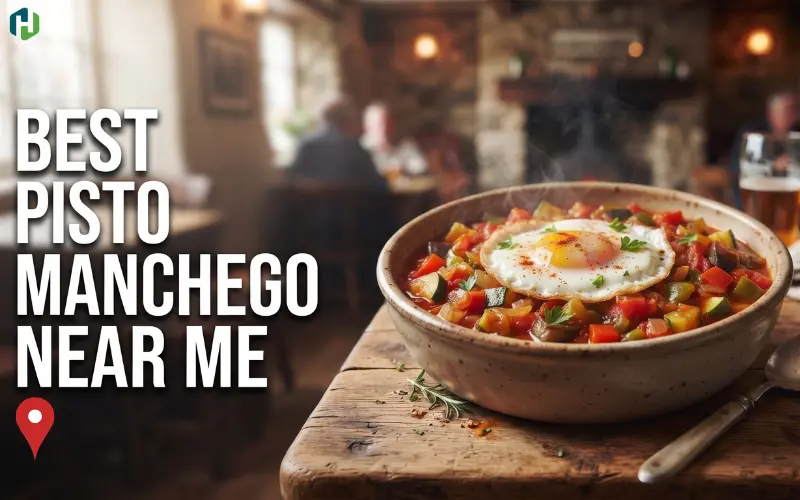
Unlike many vegetable dishes that are served only as side dishes, Pisto Manchego is incredibly versatile. Some people enjoy it as a light lunch with warm bread, while others serve it alongside grilled lamb, roast chicken, or fish. Perhaps the most traditional presentation is with a freshly fried egg placed directly on top, allowing the rich yolk to mix into the vegetables.
For generations, Spanish families have prepared Pisto Manchego at home using vegetables harvested during the summer months. Today, it remains a staple in restaurants throughout Spain, where it appears as both a comforting main course and a popular tapa.
Related Post: Best Bacalao Vizcaina Near Me
What Makes Authentic Pisto Manchego?
A truly authentic Pisto Manchego is surprisingly easy to recognize once you’ve tasted the real thing.
The first thing you’ll notice is the quality of the vegetables. Traditional recipes rely on ripe tomatoes, green peppers, onions, zucchini, and generous amounts of extra virgin olive oil. Because there are so few ingredients, freshness becomes incredibly important. Sweet summer tomatoes and fragrant peppers give the dish its naturally rich flavor without relying on heavy seasoning.
Cooking technique matters just as much as the ingredients. Rather than rushing the vegetables over high heat, Spanish cooks prepare Pisto Manchego slowly. Each vegetable is given enough time to soften, release its natural sweetness, and blend gently with the others. The finished dish should feel silky and rich, never watery or undercooked.
One technique worth knowing is that serious Spanish cooks often prepare each vegetable separately before combining them. The onions are softened first, then the peppers, then the zucchini, and finally the tomatoes are added last. This layered approach allows every vegetable to develop its own flavor fully before everything comes together, which is why restaurant versions often taste noticeably more complex than quickly prepared ones. When you ask a Spanish cook why their Pisto tastes different from every other version you’ve tried, this is almost always the answer.
Another hallmark is simplicity. Authentic Pisto Manchego doesn’t depend on cream, butter, or complicated sauces. The vegetables themselves provide all the richness the dish needs, while high-quality extra virgin olive oil ties everything together beautifully. Some Spanish restaurants even ask about their olive oil specifically — whether it comes from La Mancha or another Spanish region — because the oil contributes as much to the final flavor as any individual vegetable.
I’ve always found that the best Pisto Manchego tastes remarkably fresh despite being cooked for a long time. Every spoonful still allows you to recognize the tomatoes, peppers, and zucchini individually while enjoying how perfectly they’ve come together.
Where Can You Find the Best Pisto Manchego Near You?
Finding the best Pisto Manchego near me usually starts with choosing restaurants that genuinely specialize in Spanish cooking rather than offering a broad Mediterranean menu.
Traditional Spanish restaurants are almost always the best place to begin. Because Pisto Manchego is considered a classic home-style recipe throughout Spain, many chefs prepare it using family recipes that have been passed down for generations. The vegetables are usually cooked fresh each morning, allowing the flavors to develop slowly before lunch and dinner service.
Tapas bars are another excellent option. Although many visitors associate tapas with cured meats and seafood, authentic Spanish tapas bars often include Pisto Manchego as one of their signature vegetable dishes. It may be served in a small clay dish with fresh bread or topped with a fried egg for a more substantial meal.
Mediterranean restaurants sometimes feature Pisto Manchego as well, particularly those that focus on Spanish regional cuisine. While recipes can vary slightly, many still stay remarkably close to the traditional version by using fresh vegetables and high-quality olive oil.
If you live in a larger city, Spanish cultural cafés and family-owned eateries are also worth exploring. These smaller restaurants often prepare dishes in limited batches instead of relying on mass production, which usually results in fresher vegetables and better flavor.
One thing I’ve noticed is that restaurants serving several regional Spanish specialties often produce the best Pisto Manchego. When the menu includes dishes from different parts of Spain, it’s usually a good sign that the kitchen values authenticity rather than simplifying recipes for tourists.
Why La Mancha Is Famous for Pisto Manchego
Every traditional dish has a place where it feels most at home, and for Pisto Manchego, that place is Castilla-La Mancha.
The region is known for its wide plains, sunny climate, and productive farmland. Tomatoes, peppers, onions, zucchini, and olive oil have been grown here for centuries, making it natural for local cooks to create meals centered around seasonal vegetables.
Unlike elaborate royal cuisine, Pisto Manchego developed as practical farmhouse cooking. Families prepared it using whatever vegetables were ready for harvest, allowing nothing to go to waste while creating meals that were filling, nutritious, and affordable.
Over time, the recipe became closely associated with La Mancha itself. Even today, many Spanish people consider the dish one of the region’s culinary symbols, much like paella belongs to Valencia or gazpacho to Andalusia.
Despite its humble beginnings, Pisto Manchego has become one of Spain’s most respected vegetable dishes. Restaurants throughout the country continue serving it because its simple ingredients showcase the quality of Spanish produce better than almost any complicated recipe could.
I’ve always liked the fact that Pisto Manchego doesn’t try to impress anyone with expensive ingredients. Its reputation comes entirely from careful cooking and fresh vegetables, proving that great food often begins with simplicity.
Pisto Manchego vs Ratatouille
Because both dishes combine slowly cooked vegetables, many people assume Pisto Manchego and French ratatouille are essentially the same recipe.
They’re actually quite different.
Pisto Manchego comes from central Spain, while ratatouille originated in Provence in southern France. Both celebrate fresh vegetables, but the cooking methods and final textures create noticeably different dishes.
Traditional Pisto Manchego cooks the vegetables until they almost blend together, creating a rich, spoonable consistency where every ingredient contributes to a unified flavor. Ratatouille usually keeps the vegetables more distinct, allowing slices of zucchini, eggplant, peppers, and tomatoes to remain clearly recognizable.
The ingredients differ as well.
Eggplant is almost essential in many ratatouille recipes but isn’t always included in authentic Pisto Manchego. Instead, Spanish cooks place greater emphasis on tomatoes, peppers, onions, and zucchini cooked in generous amounts of olive oil.
Serving style also sets them apart.
Ratatouille is commonly served as a side dish alongside meat or fish. Pisto Manchego often becomes the centerpiece of the meal, especially when topped with a fried egg or accompanied by crusty bread.
Neither dish is better than the other.
They simply reflect two different culinary traditions that celebrate fresh vegetables in their own distinctive ways.
Related Post: Kisir Bulgur Salad Near Me
Google Maps Search Tips
Searching only for “best Pisto Manchego near me” doesn’t always produce the most authentic restaurants because many Spanish establishments simply list it under tapas or vegetable specialties.
Instead, search “Spanish restaurant near me,” “Spanish tapas near me,” “Spanish cuisine near me,” or “Basque and Spanish restaurant near me.” These searches often reveal restaurants serving authentic Pisto Manchego even when it isn’t prominently advertised online.
Once you’ve found a few restaurants, open the Photos section on Google Maps.
Customer photos can reveal whether the dish is served traditionally with a fried egg, fresh bread, or rustic presentation. Rich tomato color, generous olive oil, and fresh vegetables are all encouraging signs.
The Reviews section is equally useful.
Search within reviews for words such as “Pisto,” “Spanish vegetables,” “La Mancha,” or “fried egg.” Positive comments mentioning homemade flavor, fresh vegetables, and authentic preparation usually indicate a worthwhile restaurant.
Before making a special trip, it’s worth calling ahead.
Some Spanish restaurants prepare Pisto Manchego only on weekends or rotate it as a seasonal special depending on fresh vegetable availability.
Is Pisto Manchego Halal?
Pisto Manchego is usually one of the easiest Spanish dishes to enjoy on a halal diet because the traditional recipe is entirely vegetable-based.
Classic recipes contain tomatoes, peppers, onions, zucchini, olive oil, garlic, and simple seasonings. These ingredients are naturally halal and require no special preparation.
The only detail worth checking is whether the restaurant has added meat.
Some modern versions include small pieces of chorizo, serrano ham, or other cured pork products to create a richer flavor. While these additions aren’t part of the original farmhouse recipe, they occasionally appear in contemporary restaurants.
If you’re ordering in a Spanish restaurant, simply ask whether the Pisto Manchego is prepared with vegetables only. Most restaurants can answer immediately and will often recommend the traditional version if that’s what you’re looking for.
Cross-contamination can also vary depending on the kitchen, particularly in restaurants preparing pork dishes alongside vegetable recipes.
Fortunately, authentic Pisto Manchego is traditionally meat-free, making it one of the most halal-friendly dishes on many Spanish menus.
Best Cities to Find Authentic Pisto Manchego
If you’re searching for the best Pisto Manchego near me, living near a city with a strong Spanish dining scene can make your search much easier. Authentic Spanish restaurants often prepare this traditional vegetable dish using recipes that stay remarkably close to those served throughout Castilla-La Mancha.
United States
New York City is one of the best places to begin. Manhattan, Brooklyn, and Queens are home to numerous Spanish restaurants where regional specialties appear alongside tapas, seafood, and classic rice dishes. Many chefs prepare Pisto Manchego using fresh seasonal vegetables and premium Spanish olive oil.
Miami also offers an excellent Spanish food scene. With its strong Mediterranean influence, several restaurants feature authentic Spanish comfort food, including Pisto Manchego served with fried eggs, grilled meats, or fresh bread.
Chicago has continued expanding its international dining culture, making it another great destination for traditional Spanish cuisine. Family-owned restaurants throughout the city frequently include vegetable classics that reflect authentic home cooking.
San Francisco is equally worth exploring thanks to its focus on fresh produce. Many Spanish restaurants there prepare Pisto Manchego using locally sourced vegetables while respecting the traditional recipe.
United Kingdom
In the UK, London remains the easiest place to find authentic Spanish cuisine outside Spain. Spanish restaurants throughout the city regularly serve regional dishes beyond the better-known tapas and paella.
Cities such as Manchester, Birmingham, and Leeds have also developed excellent Spanish restaurant scenes where authentic home-style dishes continue becoming more popular.
Even if you don’t live near these larger cities, independent Spanish restaurants often include Pisto Manchego as a seasonal special whenever fresh vegetables are at their best.
What to Eat with Pisto Manchego
Although Pisto Manchego is satisfying on its own, pairing it with the right accompaniments creates an even more memorable meal.
Fresh crusty bread is perhaps the most traditional choice.
The rich tomato and pepper mixture is perfect for scooping up with warm bread, making sure none of the flavorful olive oil or vegetables are left behind.
A fried egg is another classic pairing.
Breaking the yolk into the vegetables creates an incredibly rich sauce that many Spanish families consider the traditional way to enjoy Pisto Manchego.
Grilled lamb, roast chicken, or grilled fish also complement the dish beautifully. Because Pisto Manchego isn’t overly heavy, it works equally well as a side dish or as the centerpiece of a complete meal.
Some restaurants serve it alongside roasted potatoes or simple white rice, allowing the vegetables to remain the star while adding extra substance.
For drinks, sparkling water, fresh lemonade, or citrus-based beverages pair especially well because they refresh the palate without competing with the vegetables’ natural sweetness.
I’ve always thought Pisto Manchego is one of those dishes that encourages slow eating. Good bread, quality olive oil, and fresh vegetables create a meal that’s comforting without ever feeling complicated.
We hope you guys find this guide helpful. If you like this one, here we have more for you:
Best Suspiro a la Limena Near Me
Frankfurter with Mustard Near Me
Tapas Tortilla Chips con Chorizo Near Me
Best Lancashire Hotpot Near Me
FAQs
What is Pisto Manchego?
Pisto Manchego is a traditional Spanish vegetable stew from the Castilla-La Mancha region made with tomatoes, peppers, onions, zucchini, olive oil, and simple seasonings.
Is Pisto Manchego the same as ratatouille?
No. Although both dishes use similar vegetables, Pisto Manchego is a Spanish recipe with its own cooking method, texture, and flavor profile.
Does authentic Pisto Manchego contain meat?
Traditional recipes are completely vegetable-based. Some modern restaurants add chorizo or ham, but these aren’t part of the original recipe.
Why is a fried egg served on top?
A fried egg is one of the most traditional accompaniments because the runny yolk blends with the vegetables, creating an even richer sauce.
Is Pisto Manchego served hot or cold?
It’s traditionally served warm, although some people also enjoy it at room temperature, particularly during warmer months.
Is Pisto Manchego halal?
Usually yes. Traditional recipes contain only vegetables and olive oil, but it’s worth checking whether the restaurant adds pork products such as chorizo or ham.
Can I eat Pisto Manchego as a main course?
Absolutely. Many people enjoy it with bread and a fried egg as a complete meal, while others serve it alongside grilled meats or seafood.
Where can I find authentic Pisto Manchego?
Authentic Spanish restaurants, tapas bars, Mediterranean eateries specializing in Spanish cuisine, and family-owned Spanish restaurants usually prepare the most traditional versions.
Conclusion
Finding the best Pisto Manchego near me isn’t simply about ordering vegetables at the nearest Mediterranean restaurant. It’s about discovering places that respect one of Spain’s greatest examples of traditional home cooking by using fresh seasonal produce, quality olive oil, and the patience needed to allow every ingredient to develop its full flavor.
Start your search with authentic Spanish restaurants, neighborhood tapas bars, and family-owned eateries that focus on regional Spanish cuisine. Browse customer photos, read reviews carefully, and don’t hesitate to ask whether the dish is prepared fresh each day using traditional ingredients. Restaurants that treat Pisto Manchego as a classic rather than an afterthought usually produce the most memorable plates.
Whether you’re exploring Spanish cuisine for the first time or returning to one of its most comforting vegetable dishes, Pisto Manchego proves that extraordinary food doesn’t require complicated ingredients. With ripe tomatoes, sweet peppers, fragrant olive oil, and careful cooking, this humble recipe continues to represent the warmth and generosity of Spanish home cooking generation after generation.