
Some desserts impress with extravagant decorations, while others become legendary because a single bite tells a story that has been passed down for generations. Piononos de Santa Fe belong firmly in the second category. These small Spanish pastries may look simple at first glance, but their delicate sponge cake, creamy toasted filling, and unmistakable caramelized top have made them one of Andalusia’s most treasured sweets.
The first time I tasted an authentic Pionono de Santa Fe, I expected something similar to a miniature Swiss roll. Instead, the sponge was remarkably light, the pastry cream was silky rather than overly sweet, and the caramelized surface added just enough richness to make every bite feel perfectly balanced. It immediately became clear why visitors travel to the small town of Santa Fe near Granada specifically to experience the original version.
If you’ve been searching for the best Piononos de Santa Fe near me, you’ll usually have the most success at authentic Spanish bakeries, Andalusian pastry shops, specialty European bakeries, and traditional Spanish cafés that prepare them fresh each day. A genuine Pionono should have soft syrup-soaked sponge cake wrapped around smooth pastry cream and finished with a lightly caramelized top that creates its signature flavor without becoming overly sweet.
Quick Overview
What Are Piononos de Santa Fe?
Piononos de Santa Fe are one of Spain’s most famous pastries, originating in the historic town of Santa Fe, just outside Granada in the Andalusia region. Despite their small size, they’re regarded as one of the country’s finest traditional desserts and remain a source of pride for local pastry makers.
One important thing to know before searching is that the word pionono describes several different foods around the world. In Latin America — particularly Argentina, Colombia, and Ecuador — a pionono often refers to a large rolled cake filled with dulce de leche, fruit, or cream, quite different from the small Spanish version. Some countries even have savory piononos filled with meat or cheese. If you’re specifically looking for the Santa Fe original, always search for Piononos de Santa Fe rather than just piononos to avoid confusion
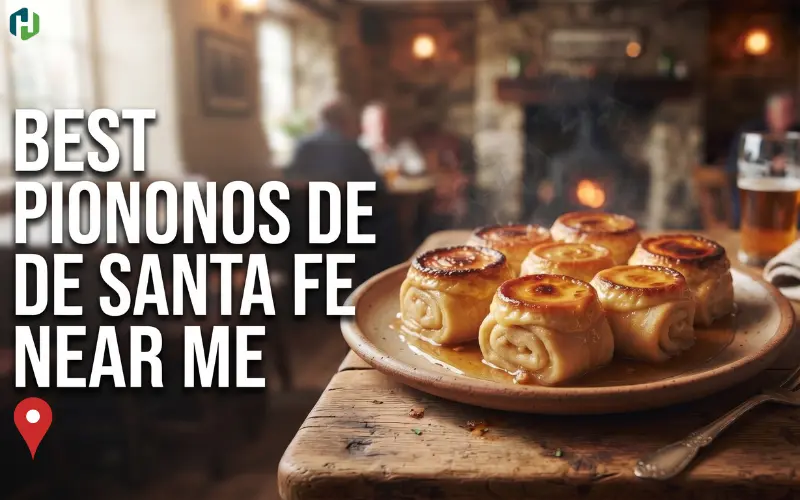
Unlike larger cream-filled cakes or Swiss rolls, a Pionono is intentionally compact. A thin sheet of sponge cake is lightly soaked in sweet syrup, rolled around smooth pastry cream, then stood upright before receiving another layer of cream on top. Finally, the top is lightly caramelized, giving the pastry its distinctive golden finish and delicate toasted aroma.
The dessert strikes an impressive balance between richness and lightness. The sponge remains soft without becoming soggy, while the pastry cream provides a smooth texture that isn’t overwhelmingly sweet. That balance is one of the main reasons Piononos have remained popular for well over a century.
Although they’re now sold in many parts of Spain, the original version continues to come from Santa Fe itself, where local pastry shops still prepare them using recipes that have changed very little over the years.
Related Post: Best Pisto Manchego Near Me
Why Are They Called Piononos?
The name often surprises people because it doesn’t describe the ingredients at all.
Piononos were created in the late nineteenth century by the famous pastry shop Casa Isla in Santa Fe. Their founder wanted to honor Pope Pius IX, whose name in Spanish is Pío Nono. Over time, the pronunciation naturally evolved into Pionono, and the pastry has carried that name ever since.
Unlike many desserts named after ingredients or regions, Piononos carry a historical tribute. That unusual origin has helped make them one of Spain’s most recognizable pastries, especially throughout Andalusia.
Today, visitors traveling through Granada almost always stop in Santa Fe specifically to taste authentic Piononos from the bakeries that continue preserving the original recipe. Many locals believe they’re one of the region’s greatest culinary traditions, and they’re commonly purchased as gifts to take home after visiting the area.
Where Can You Find the Best Piononos de Santa Fe Near You?
Finding the best Piononos de Santa Fe near me starts with knowing which bakeries are most likely to prepare them properly. Since they’re a specialty pastry rather than an everyday dessert, they aren’t commonly found in ordinary supermarkets.
Authentic Spanish bakeries are usually the best place to begin. Many prepare fresh batches daily using traditional sponge cake, homemade pastry cream, and careful caramelization rather than relying on frozen products.
Andalusian bakeries are even better whenever you can find one. Since Piononos originated in southern Spain, bakeries specializing in Andalusian pastries are often the closest you’ll come to tasting the original version outside Granada.
European pastry shops are another excellent option. Many feature regional Spanish desserts during holidays or weekends, and Piononos occasionally appear alongside other classic pastries from Spain.
If you live in a larger city, gourmet dessert cafés and artisan bakeries sometimes prepare their own interpretation using premium vanilla, fresh eggs, and high-quality butter while staying faithful to the traditional recipe.
One thing I’ve noticed is that family-owned Spanish bakeries often produce the most memorable Piononos. Smaller batches usually mean fresher sponge cake, smoother pastry cream, and caramelized tops that are finished just before serving instead of hours earlier.
What Makes Authentic Piononos de Santa Fe?
Not every small cream-filled pastry deserves to be called a true Pionono.
The sponge cake is the first thing to examine.
Authentic Piononos use an exceptionally thin sponge that’s rolled while still soft and lightly soaked with sugar syrup. The syrup should keep the pastry moist without making it heavy or sticky.
The filling is equally important.
Traditional recipes rely on silky pastry cream rather than whipped cream or buttercream. The cream should taste rich, smooth, and lightly flavored with vanilla or citrus without becoming overly sweet.
The signature caramelized top is what truly separates Piononos from other pastries.
After the final layer of pastry cream is added, a light coating of sugar is carefully caramelized to create a thin golden surface. This slight bitterness balances the sweetness underneath while adding another layer of texture.
Freshness also makes a tremendous difference.
A properly prepared Pionono should feel soft, delicate, and creamy from the first bite to the last. It should never taste dry, overly sugary, or artificially flavored.
I’ve found that the finest Piononos always feel surprisingly elegant despite their simple appearance. Every layer contributes something different, creating a dessert that’s far more refined than its small size might suggest.
Fresh Bakery vs Packaged Piononos
Many people first discover Piononos through specialty food shops or imported Spanish products, but there’s a noticeable difference between a freshly made pastry and one that’s been packaged for transport.
Fresh bakery Piononos are exceptionally soft. The sponge remains moist from the syrup, the pastry cream feels silky, and the caramelized top keeps a slight crispness that contrasts beautifully with the creamy filling.
Packaged versions can still be enjoyable, especially if they’re imported from Spain, but they’re often produced with a longer shelf life in mind. The sponge may become slightly firmer, and the caramelized topping usually loses some of its delicate texture after a few days.
If you’re lucky enough to have a Spanish bakery nearby, choosing freshly made Piononos is almost always worthwhile. They’re intended to be enjoyed soon after preparation, when every layer is at its best.
That doesn’t mean imported pastries should be avoided. Many Spanish specialty stores stock authentic brands that offer an excellent introduction to the dessert, especially in places where fresh Spanish bakeries are difficult to find.
Why Santa Fe, Granada Is Famous for Piononos
Although Piononos can now be found across Spain and in Spanish bakeries around the world, the town of Santa Fe remains the dessert’s true home.
Located only a few miles from Granada, Santa Fe has become closely associated with this famous pastry for more than a century. Visitors often travel there specifically to experience the original recipe from the bakeries that first made it famous.
The best-known name is Casa Isla — founded by pastry chef Ceferino Isla González in 1897, the bakery credited with creating the modern Pionono as we know it today. Even today, many travelers consider a stop at Casa Isla an essential part of visiting Granada because it offers the closest experience to the original dessert.
Local pastry shops continue preparing Piononos in small batches throughout the day rather than relying entirely on industrial production. That dedication to traditional methods has helped preserve both the quality and reputation of the dessert.
I’ve always found it fascinating that such a small town became internationally recognized because of a pastry no larger than a few bites. It proves that extraordinary food doesn’t need to be extravagant—it simply needs to be made exceptionally well.
Related Post: Best Bacalao Vizcaina Near Me
Google Maps Search Tips
Searching only for “best Piononos de Santa Fe near me” doesn’t always reveal the best bakeries because many simply list them under Spanish pastries or traditional desserts.
Instead, search “Spanish bakery near me,” “Spanish pastry shop near me,” “Andalusian bakery near me,” or “European bakery near me.” These searches often uncover bakeries selling authentic Piononos even if they aren’t highlighted on the front page of their menu.
After finding a few options, open the Photos section on Google Maps.
Customer photos usually show whether the pastries have the traditional upright shape, smooth pastry cream, and lightly caramelized tops instead of thick frosting or decorative toppings.
The Reviews section is equally valuable.
Search within reviews for words like “Pionono,” “Spanish pastries,” “Granada,” or “Santa Fe.” Positive comments mentioning freshness, soft sponge, and authentic pastry cream are usually excellent signs.
Before making a special trip, it’s worth calling ahead.
Many bakeries prepare Piononos early in the morning, and popular shops often sell out before the afternoon, particularly on weekends.
Are Piononos de Santa Fe Halal?
Piononos are generally considered halal-friendly because the traditional recipe relies mainly on flour, eggs, milk, sugar, butter, and vanilla.
The only ingredients worth checking are the flavorings used in the pastry cream or syrup.
Some bakeries may include vanilla extract containing alcohol, while others prepare the syrup using small amounts of sweet liqueur for additional aroma. These additions vary between recipes and are not essential to authentic Piononos.
Cross-contamination can also depend on the bakery, particularly if pastries containing alcohol are prepared alongside traditional desserts.
The easiest approach is simply to ask whether any alcohol-based flavorings are used during preparation. Most artisan bakeries can answer immediately, making it easy to choose with confidence.
Best Cities to Find Authentic Piononos de Santa Fe
If you’re searching for the best Piononos de Santa Fe near me, living near a city with a strong Spanish community makes your search much easier. Authentic Spanish bakeries often prepare regional pastries that closely resemble the originals from Granada.
United States
Miami is one of the easiest places to begin. Its large Spanish and Latin European communities support numerous bakeries where traditional Spanish pastries remain popular throughout the year.
New York City also offers excellent opportunities. Manhattan, Queens, and parts of Brooklyn feature Spanish bakeries and cafés where authentic desserts regularly appear alongside other Iberian specialties.
Los Angeles has continued expanding its Spanish food scene, making it another excellent destination for artisan bakeries specializing in traditional European pastries.
Chicago is also worth exploring, thanks to its growing collection of Spanish restaurants and specialty bakeries serving regional desserts.
United Kingdom
In the UK, London remains the strongest destination for authentic Spanish pastries outside Spain itself. Spanish cafés, bakeries, and delicatessens frequently stock desserts imported directly from Spain or prepared using traditional recipes.
Manchester, Birmingham, and Leeds have also developed thriving Spanish food scenes where regional pastries continue becoming more widely available.
Even if you don’t live near one of these cities, independent European bakeries occasionally feature Piononos during Spanish food festivals or seasonal events.
What to Eat with Piononos de Santa Fe
Although Piononos are wonderful on their own, pairing them with the right drink makes the experience even better.
Coffee is perhaps the most traditional companion.
A freshly brewed espresso or café con leche balances the sweetness of the pastry while allowing the caramelized top to stand out even more.
Tea also pairs beautifully.
Black tea, Earl Grey, or delicate herbal teas provide enough contrast without overwhelming the light sponge and silky pastry cream.
Many people also enjoy Piononos with hot chocolate during cooler months. The creamy chocolate complements the pastry without competing with its delicate flavors.
Fresh berries or sliced strawberries can provide a pleasant contrast as well, adding brightness that balances the richness of the cream.
I’ve always thought Piononos are best enjoyed slowly with a warm drink rather than rushed as a quick snack. Their delicate texture and balanced sweetness make them feel more like a traditional afternoon treat than an ordinary dessert.
We hope you guys find this guide helpful. If you like this one, here we have more for you:
- Kisir Bulgur Salad Near Me
- Best Suspiro a la Limena Near Me
- Lentil Soup Turkish Near Me
- Best King Kong Dulce Near Me
- Best Frankfurter with Mustard Near Me
- Best Lebkuchen Near Me
FAQs
What are Piononos de Santa Fe?
Piononos de Santa Fe are traditional Spanish pastries made from syrup-soaked sponge cake rolled around pastry cream and finished with a lightly caramelized topping.
Where do Piononos come from?
They originate in the town of Santa Fe, near Granada in Andalusia, Spain.
Why are they called Piononos?
The dessert was named in honor of Pope Pius IX, known in Spanish as Pío Nono, which eventually became Pionono.
Are Piononos very sweet?
They’re sweet but well balanced. Authentic recipes rely on delicate pastry cream and light caramelization rather than excessive sugar.
Do they have to be refrigerated?
Fresh Piononos are usually refrigerated because of the pastry cream and are best enjoyed within a short time after preparation.
Are Piononos halal?
Generally yes, although it’s worth confirming whether alcohol-based vanilla extracts or flavorings are used.
Can I buy authentic Piononos outside Spain?
Yes. Many Spanish bakeries, European pastry shops, and specialty import stores carry authentic versions or prepare them fresh.
What drink pairs best with Piononos?
Espresso, café con leche, black tea, and hot chocolate are all traditional choices.
Conclusion
Finding the best Piononos de Santa Fe near me isn’t simply about locating the nearest bakery. It’s about discovering places that respect one of Spain’s most treasured pastry traditions by using light sponge cake, silky pastry cream, careful caramelization, and the same attention to detail that has defined the dessert for generations.
Start your search with authentic Spanish bakeries, Andalusian pastry shops, European cafés, and family-owned bakeries that specialize in traditional Iberian desserts. Browse customer photos, read reviews carefully, and don’t hesitate to ask whether the pastries are prepared fresh each day. The bakeries that continue making Piononos in small batches usually provide the closest experience to the originals from Santa Fe.
Whether you’re discovering this famous Andalusian dessert for the first time or returning to an old favorite, authentic Piononos prove that extraordinary pastries don’t need to be large or complicated. Once you taste a properly made Pionono, it’s easy to understand why this little dessert has become one of Spain’s sweetest culinary icons.