
Is Chick-fil-A halal or Haram? Many Muslims in the USA and UK search for this question because Chick-fil-A is one of the most popular chicken fast-food chains in America. Known for its chicken sandwiches, nuggets, waffle fries, and sauces, Chick-fil-A attracts many Muslim customers who want to know whether its chicken is halal-certified and permissible to eat.
However, most Chick-fil-A locations in the USA are generally not considered halal because the company does not publicly use halal-certified chicken suppliers nationwide.
Muslims also question cross-contamination, cooking oils, and shared kitchen equipment because Chick-fil-A serves non-halal meat products in regular restaurant environments. Some Muslims may choose vegetarian sides or fries, while stricter halal-conscious consumers avoid the restaurant completely. Since halal standards and scholarly opinions differ, Muslims should always verify restaurant policies and follow the guidance they trust.
Quick Overview Table
| Category | Halal Status | Notes |
| Chick-fil-A USA | Not Halal | No nationwide halal chicken |
| Chick-fil-A UK | Halal Status Unclear | No confirmed certification |
| Chicken Sandwiches | Usually Not Halal | Conventional meat sourcing |
| Waffle Fries | Usually Halal-Friendly | Cross-contamination possible |
| Pork Products | Limited Concern | Some breakfast pork items |
| Best Option | Verify Directly | Policies may vary |
Related Post: Is Sushi Halal in the US?
Why Chick-fil-A Is Not Considered Halal
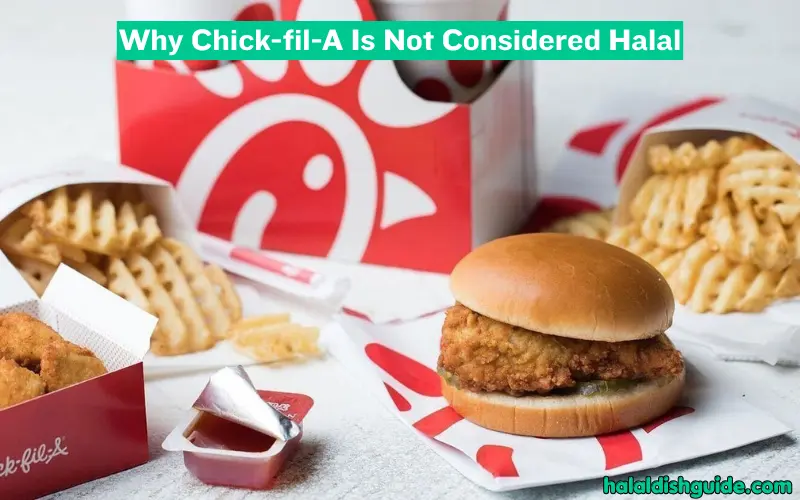
The main reason Chick-fil-A is not considered halal comes down to its supply chain and sourcing practices. The company uses large-scale poultry suppliers that do not follow halal slaughter requirements. In halal dietary guidelines, the method of slaughter is a key factor, and without proper certification, the meat cannot be considered halal for strict consumers.
Another important factor is the absence of halal certification. Chick-fil-A does not advertise its food as halal, and there is no visible certification in most of its restaurants. This creates a clear distinction between Chick-fil-A and restaurants that actively cater to halal consumers. Without certification, customers are left to assume standard sourcing methods, which usually means non-halal.
In addition, the company operates under a standardized preparation system. This means that all food is handled in shared kitchen environments. Because of this, even items that appear safe may still come into contact with non-halal ingredients during preparation. For many people, this is enough reason to avoid eating there entirely.
Detailed Look at Chick-fil-A Chicken Sourcing
Chicken is the main product at Chick-fil-A, and understanding how it is sourced helps explain why it is not considered halal. The company works with large poultry farms and processing facilities that follow industry-standard practices rather than halal-specific methods. These facilities are designed for efficiency and consistency, not for meeting religious dietary requirements.
The chicken is processed, packaged, and distributed through a supply chain that serves thousands of locations. Because of this large-scale system, switching to halal-certified sourcing would require major operational changes. As of now, Chick-fil-A has not made such changes in most of its markets.
Another aspect is transparency. While Chick-fil-A provides general information about its food quality and sourcing, it does not claim halal compliance. This means customers do not have a clear basis to consider the chicken halal. For people who follow strict dietary guidelines, this lack of confirmation is usually enough to avoid all chicken items on the menu.
Chicken Menu
| Item | Halal Status | Recommendation |
| Original Chicken Sandwich | Not halal | Avoid |
| Spicy Chicken Sandwich | Not halal | Avoid |
| Nuggets | Not halal | Avoid |
| Chicken Tenders | Not halal | Avoid |
| Chicken Wrap | Not halal | Avoid |
Are Chick-fil-A Fries Halal?
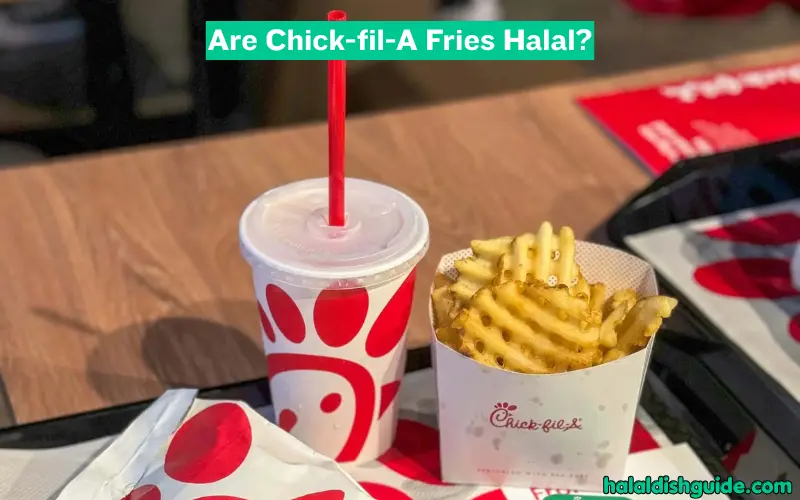
Fries at Chick-fil-A are often discussed as a possible safer option. They are made from potatoes and typically cooked in vegetable oil, which makes them appear halal-friendly at first glance. Compared to meat items, fries are usually considered a lower-risk choice.
However, there are still important factors to consider. One of the main concerns is whether the fries are cooked in dedicated fryers or shared fryers. If the fryer is used only for potatoes, many customers feel comfortable choosing fries. If it is shared with non-halal items, some people may choose to avoid them.
Another consideration is seasoning. Chick-fil-A fries are relatively simple, but any added ingredients or coatings should still be checked. While fries are often chosen as a safer option, they are not automatically guaranteed to be halal. This is why many customers prefer to ask before ordering.
Sides and Add-On Items
Chick-fil-A offers a variety of side items that can be considered as alternatives to main meals. These include fruit cups, salads, mac and cheese, and coleslaw. These items provide flexibility for customers who want to avoid meat.
Fruit cups are generally the safest option because they contain fresh fruit with no complex ingredients. Salads can also be a good choice, but they must be checked carefully. If a salad includes chicken, it is not halal. Even without chicken, the dressing and toppings should be verified.
Mac and cheese is another popular side, but it requires checking for ingredients such as cheese sources and additives. While these items are not as risky as meat, they still require some level of attention.
Sides
| Item | Halal Safety | Notes |
| Fries | Better | Check fryer |
| Fruit Cup | Safe | Best option |
| Side Salad | Better | Check dressing |
| Coleslaw | Better | Verify ingredients |
| Mac & Cheese | Check | Ingredients |
Cross-Contamination and Kitchen Practices
Cross-contamination is one of the biggest concerns in non-halal fast-food environments. Chick-fil-A kitchens are designed for efficiency, which means multiple items are prepared in the same space. This includes meat, sides, and other menu items.
Shared equipment includes fryers, preparation counters, utensils, and storage areas. Because of this, even items that do not contain meat may come into contact with non-halal ingredients during preparation.
For some customers, cross-contamination is not a major issue, especially if they focus only on ingredients. For others, it is a key factor that influences their decision. This difference in approach is why you may see people making different choices at the same restaurant.
Sauces and Hidden Ingredients
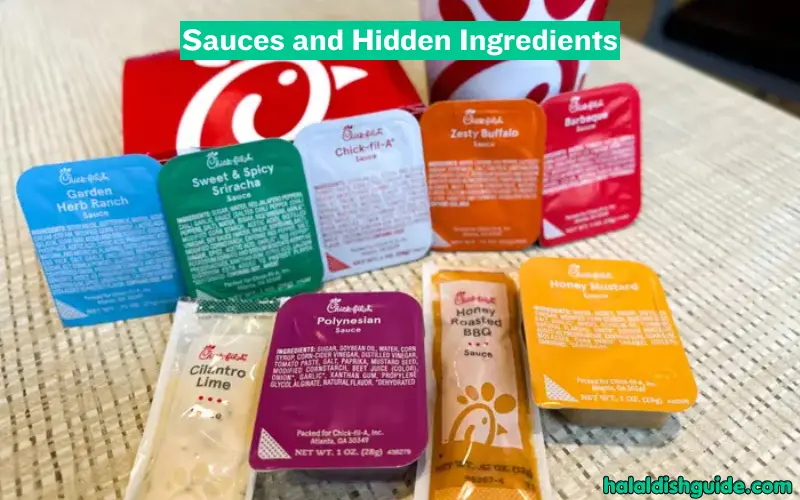
Sauces are another area that often gets overlooked. Chick-fil-A offers a variety of sauces, including signature sauces, barbecue, honey mustard, and others. While these may seem simple, they can contain flavoring agents, emulsifiers, and preservatives that require checking.
Some sauces may include vinegar blends, flavor extracts, or processed ingredients that are not clearly labeled as halal. Because sauces are added to many menu items, they can affect the overall halal status of the meal.
For customers who want to stay cautious, it is usually better to choose simple items with minimal sauce or ask about ingredients before ordering.
Sauce
| Sauce | Halal Concern |
| Chick-fil-A Sauce | Check ingredients |
| BBQ Sauce | Usually safe |
| Honey Mustard | Check |
| Ranch | Check |
| Buffalo Sauce | Check |
Are Drinks and Beverages Halal?
Drinks are generally the safest category at Chick-fil-A. Soft drinks, lemonade, iced tea, and coffee do not involve the same concerns as meat items. These beverages are widely accepted and do not require complex verification.
Because drinks are simple and consistent, they are often chosen by customers who want to avoid uncertainty. Whether you are dining with friends or just stopping by, drinks provide an easy and safe option.
Desserts and Sweet Items
Desserts at Chick-fil-A include ice cream, milkshakes, cookies, and brownies. These items are generally considered safer compared to meat-based products, but they still require some checking.
Ingredients such as gelatin, flavoring, and emulsifiers can vary depending on the product. While most desserts are acceptable for many customers, those who follow strict guidelines may still prefer to verify the ingredients.
Drinks & Desserts
| Item | Halal Safety | Notes |
| Soft Drinks | Safe | No concern |
| Lemonade | Safe | Popular |
| Coffee | Safe | Good option |
| Ice Cream | Check | Flavoring |
| Milkshakes | Check | Ingredients |
Best Halal-Friendly Choices at Chick-fil-A
If you decide to visit Chick-fil-A, the safest approach is to stick to simple, non-meat items. These include fries, fruit cups, drinks, and basic salads.
These choices reduce the need for detailed verification and allow you to enjoy the experience without major concerns. While they may not offer the full menu experience, they provide a practical alternative.
Safer Choice
| Category | Best Choice |
| Meat | Avoid |
| Fries | Better |
| Fruit | Best |
| Drinks | Safe |
| Dessert | Check |
Why Many People Prefer Halal Alternatives
Because Chick-fil-A is not halal-certified, many people choose alternative restaurants that clearly offer halal food. In many cities, halal-certified chicken restaurants provide similar menu items, including sandwiches, wraps, and fried chicken.
These restaurants remove uncertainty and allow customers to enjoy their meals with confidence. For many people, this peace of mind is more important than convenience.
Common Mistakes People Make
A common mistake is assuming chicken is halal simply because it is poultry.
Another mistake is assuming that fries and sides are always safe without checking preparation methods.
The safest approach is always to verify or choose simple options.
What to Ask Before Ordering
Before ordering, ask:
- Is the chicken halal-certified?
- Are fryers shared?
- Are sauces verified?
- Is there any certification displayed?
These questions help you make a clear decision.
We hope you guys find this guide helpful. If you like this one, here we have more for you:
- Is Rabbit Halal or Haram?
- Hot Chix Halal Best Halal Chicken
- Is Wayback Burger Halal or Haram?
- Discovering Sammy’s Halal Food
FAQs
Is Chick-fil-A halal in the USA?
No, most Chick-fil-A locations in the USA are generally not halal-certified.
Does Chick-fil-A use halal chicken?
Chick-fil-A does not publicly confirm using halal-certified chicken suppliers nationwide.
Is Chick-fil-A halal in the UK?
Chick-fil-A has not officially confirmed halal certification for UK restaurants.
Are Chick-fil-A waffle fries halal?
Many Muslims consider waffle fries halal-friendly because they contain no meat, but shared fryer concerns may still exist.
Why do Muslims avoid Chick-fil-A?
Many Muslims avoid Chick-fil-A because of non-halal chicken sourcing, cross-contamination, and lack of halal certification.
Does Chick-fil-A serve pork?
Some Chick-fil-A breakfast items contain pork ingredients like bacon and sausage.
Can Muslims eat vegetarian items at Chick-fil-A?
Some Muslims choose vegetarian sides or salads, but kitchen cross-contamination may still be a concern.
Are there any halal Chick-fil-A branches?
Currently, there are no widely confirmed halal-certified Chick-fil-A branches in the USA.
Conclusion
Is Chick-fil-A halal or Haram? Most Chick-fil-A restaurants in the USA are generally not considered halal because the company does not publicly operate with halal-certified chicken suppliers or halal preparation systems. Many halal-conscious Muslims avoid Chick-fil-A chicken products due to concerns about slaughter methods, supplier sourcing, and shared kitchen equipment.
Some Muslims may still choose halal-friendly side items like waffle fries, fruit cups, or salads without meat, although cross-contamination concerns can remain. Chick-fil-A’s halal status in the UK also remains unclear because the company has not officially confirmed halal certification for UK branches. Since restaurant policies and personal Islamic opinions vary, Muslims should verify directly with locations and follow the halal standard they trust most.