
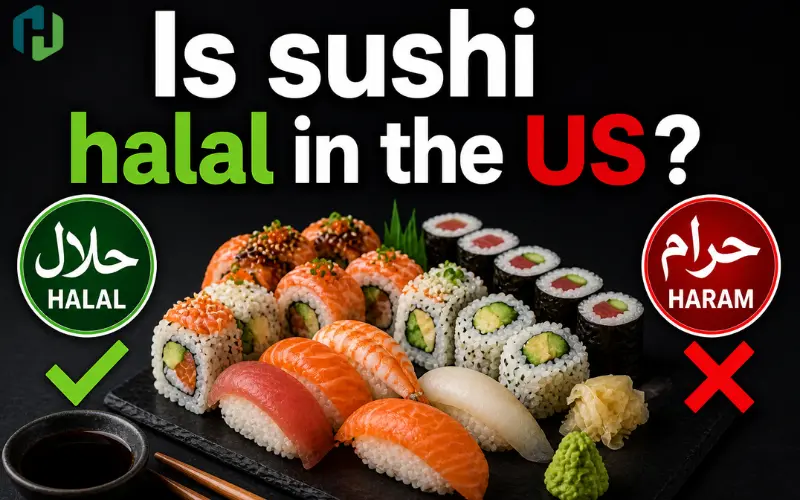
Is sushi halal in the US? Many Muslims in the USA search for this question because sushi is one of the most popular Japanese foods in America. While plain fish like salmon and tuna are generally considered halal, sushi is not automatically halal because many restaurants use ingredients like mirin, imitation crab, alcohol-based sauces, and non-halal additives.
In the United States, most sushi restaurants are not halal-certified, which creates concerns about alcohol in sushi rice, cross-contamination, and seafood ingredients. Muslims also question imitation crab, soy sauce fermentation, and whether sushi is prepared alongside pork or non-halal meat items. Because ingredients and preparation methods vary between restaurants, halal-conscious Muslims should always verify ingredients carefully before eating sushi in the USA.
Quick Overview Table
| Category | Halal Status | Notes |
| Plain Fish Sushi | Usually Halal | Salmon and tuna are generally permissible |
| Sushi Rice | Depends | May contain mirin or sake |
| Imitation Crab | Doubtful | Additives and flavorings may vary |
| Soy Sauce | Scholarly Difference | Fermentation alcohol concern |
| Halal Sushi Restaurants | Available in Major Cities | Verify certification |
| Best Option | Ask Restaurant Directly | Check ingredients carefully |
Why Sushi Halal Status in the US Is Not Always Clear
Sushi is often seen as a simple seafood-based meal, but in the US, the way sushi is prepared can vary significantly. Restaurants may use a wide range of ingredients, including sauces, marinades, and flavor enhancers that are not always halal-friendly. This creates confusion for customers who assume that sushi is automatically halal because it contains fish.
Another factor is the diversity of sushi menus. Some restaurants offer traditional sushi with minimal ingredients, while others create modern fusion rolls with complex toppings, sauces, and fillings. These additions can include alcohol-based flavoring, imitation crab, or even bacon in certain specialty rolls.
The kitchen environment also plays a role. Sushi is often prepared in shared spaces where seafood, meat, and non-halal items are handled together. This increases the risk of cross-contamination, which is an important consideration for many halal-conscious customers.
Because of these variations, it is important to evaluate each sushi item individually rather than assuming all sushi is halal.
Is Seafood Sushi Halal?
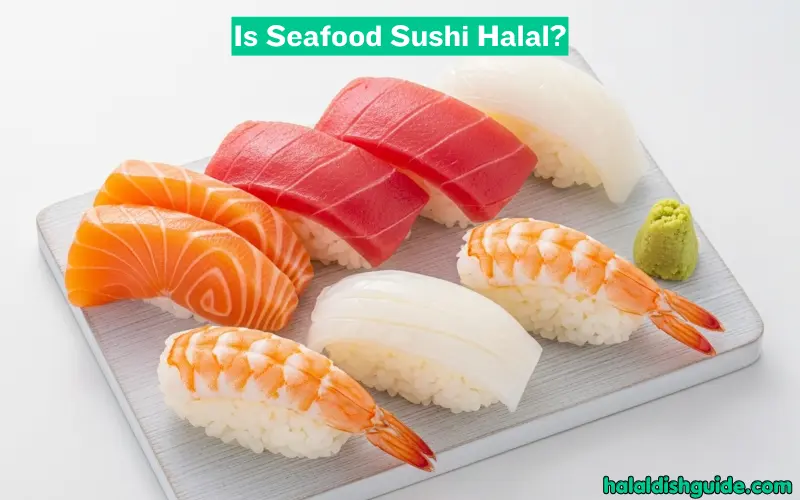
Seafood sushi is generally considered the safest option when it comes to halal dining. Fish such as salmon, tuna, and shrimp are commonly used in sushi and are widely accepted as halal. Simple sushi rolls that include fish and rice without complex sauces are usually a good choice.
However, even seafood sushi requires some level of checking. The main concerns include sauces, marinades, and added flavoring. Some sushi chefs use ingredients like soy sauce mixed with alcohol, mirin, or other flavor enhancers that may not be halal.
Another issue is imitation crab, which is often used in California rolls. While it may appear to be seafood, it is actually a processed product that can include additives and flavoring agents that require verification.
Despite these concerns, seafood sushi remains one of the best halal-friendly options when chosen carefully.
Seafood Sushi
| Item | Halal Safety | Notes |
| Salmon Sushi | Safe | Simple option |
| Tuna Roll | Safe | Minimal ingredients |
| Shrimp Sushi | Safe | Common choice |
| California Roll | Check | Imitation crab |
| Spicy Tuna Roll | Check | Sauce content |
What About Chicken and Beef Sushi?
Chicken and beef sushi are less common but still available in many US sushi restaurants, especially in fusion-style menus. These items require more caution because the halal status depends entirely on the meat source.
In most US restaurants, chicken and beef are not halal-certified unless the restaurant specifically states otherwise. This means items like chicken teriyaki rolls or beef sushi should not be assumed halal by default.
Another factor is marinade. Meat used in sushi is often cooked with sauces that may include alcohol-based ingredients such as mirin or cooking wine. Even if the meat itself were halal, the preparation method could still be a concern.
Because of these factors, many halal-conscious customers choose to avoid chicken and beef sushi unless they are dining at a halal-certified sushi restaurant.
Are Vegetarian Sushi Options Safe?
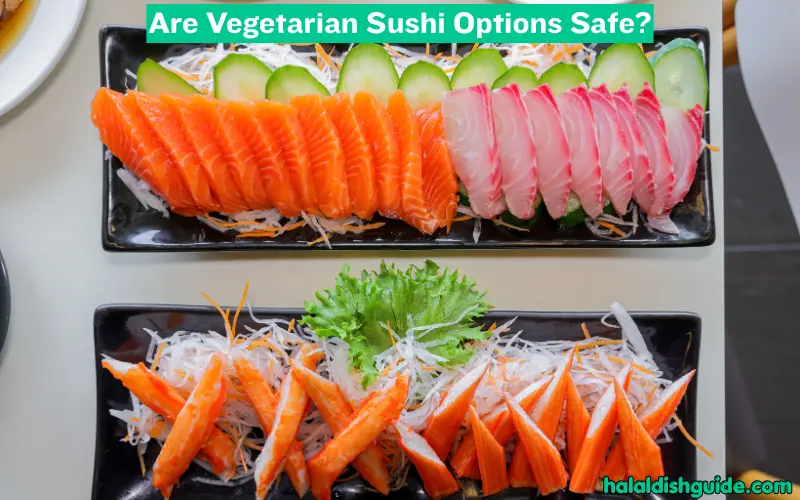
Vegetarian sushi is often considered one of the safest choices for halal-conscious customers. These rolls usually include ingredients such as cucumber, avocado, carrot, and pickled vegetables, which do not involve meat or seafood concerns.
However, even vegetarian sushi should be checked for sauces and preparation methods. Some vegetarian rolls include mayonnaise-based sauces, cheese, or flavored toppings that may contain non-halal ingredients.
Another factor is cross-contamination. Vegetarian sushi may still be prepared on the same surface as non-halal items, which can be a concern for some customers.
Despite these considerations, vegetarian sushi remains a practical and widely available halal-friendly option.
Vegetarian Sushi
| Item | Halal Safety | Notes |
| Cucumber Roll | Safe | Simple choice |
| Avocado Roll | Safe | Popular |
| Veggie Roll | Safe | Mixed vegetables |
| Tempura Veg Roll | Check | Fryer use |
| Cheese Roll | Check | Ingredients |
The Role of Sushi Rice in Halal Status
One of the most overlooked aspects of sushi is the rice itself. Sushi rice is often seasoned with vinegar, sugar, and salt. While this seems simple, some recipes may include rice vinegar blends that contain alcohol or are derived from fermented sources.
In most cases, the alcohol content in rice vinegar is minimal or processed in a way that does not cause intoxication. However, some customers prefer to verify the exact ingredients used, especially in restaurants that do not clearly disclose their preparation methods.
Because rice is a core component of every sushi dish, understanding how it is prepared adds another layer of clarity when determining halal status.
Sauces and Additives: The Biggest Concern

Sauces are one of the biggest reasons sushi can become non-halal. Many popular sushi sauces include ingredients that require checking.
Common concerns include:
- soy sauce blends
- teriyaki sauce
- spicy mayo
- eel sauce
- alcohol-based flavoring
Some sauces use mirin, which is a sweet rice wine commonly used in Japanese cooking. Even small amounts can raise concerns for halal-conscious customers.
Because sauces are often added on top of rolls, they can easily turn a simple halal-friendly dish into something questionable. This is why many people prefer plain sushi or request no sauce.
Sauce Safety
| Sauce | Halal Concern |
| Soy Sauce | Usually safe |
| Teriyaki | Check ingredients |
| Spicy Mayo | Check |
| Eel Sauce | Check |
| Mirin-Based | Avoid |
Cross-Contamination in Sushi Kitchens
Cross-contamination is an important factor when discussing halal sushi in the US. Sushi is typically prepared in open kitchens where multiple ingredients are handled on the same surfaces.
Shared equipment may include:
- cutting boards
- knives
- rolling mats
- gloves
- prep counters
Because sushi chefs often prepare different types of rolls in the same area, there is a risk that halal-friendly ingredients may come into contact with non-halal items.
For some customers, this is a major concern, while others may focus only on the ingredients themselves. Personal preference plays a key role here.
Best Halal-Friendly Sushi Choices in the US
If you want to enjoy sushi while minimizing concerns, the best choices usually include:
- plain salmon or tuna sushi
- cucumber rolls
- avocado rolls
- simple shrimp sushi
- rice bowls without sauce
These options avoid complex ingredients and reduce the need for extensive checking.
Safer Choice
| Category | Best Choice |
| Seafood | Salmon / tuna |
| Vegetarian | Cucumber / avocado |
| Rice | Plain sushi rice |
| Sauce | Avoid or verify |
| Drinks | Safe |
Why Many People Choose Halal Sushi Restaurants
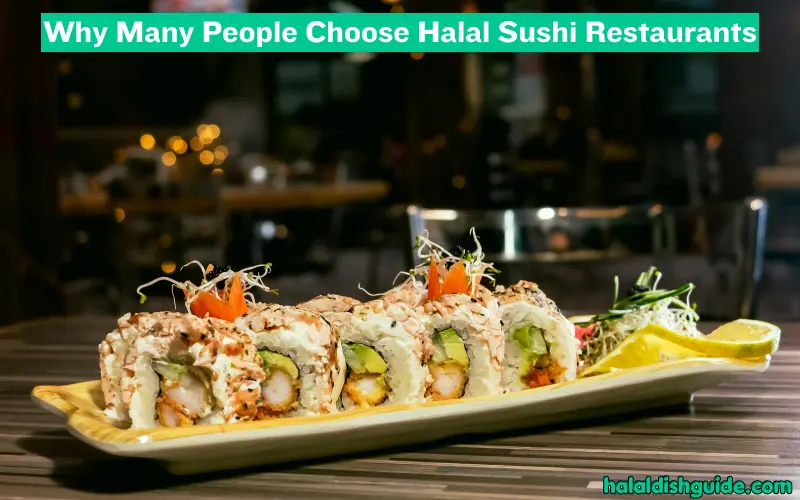
Because of the uncertainty in regular sushi restaurants, many people prefer halal-certified sushi spots. These restaurants clearly state their halal status and use verified ingredients, which removes most of the confusion.
Halal sushi restaurants are becoming more common in many US cities, offering everything from traditional sushi to fusion rolls with full halal assurance.
Common Mistakes People Make
A common mistake is assuming all sushi is halal because it contains fish.
Another mistake is ignoring sauces and preparation methods.
The safest approach is always to check ingredients and keep choices simple.
What to Ask Before Ordering
Before ordering sushi, ask:
- Is the fish handled separately?
- Are sauces alcohol-free?
- Is imitation crab used?
- Is there halal certification?
These questions can help you make a better decision.
We hope you guys find this guide helpful. If you like this one, here we have more for you:
- Is Shrimp Halal or Haram?
- Is Burger King Halal or Haram?
- Are Jolly Ranchers Halal or Haram?
- Are Oreos Halal or Haram?
FAQs
Is sushi automatically halal?
No, sushi is not automatically halal because some restaurants use mirin, sake, imitation crab, and non-halal additives.
Is raw fish sushi halal?
Yes, plain fish like salmon and tuna are generally considered halal by most Islamic scholars.
Why is sushi rice sometimes not halal?
Some sushi rice contains mirin or sake, which are alcohol-based ingredients used for flavoring.
Is imitation crab halal?
Imitation crab can be doubtful because it may contain non-halal additives, crab extract, or alcohol-based flavorings.
Is soy sauce halal with sushi?
Many scholars allow naturally fermented soy sauce, but some Muslims avoid it because of alcohol concerns.
Can Muslims eat sushi in non-halal restaurants?
Muslims may eat certain sushi items if the ingredients are halal, but cross-contamination may still be a concern.
Which sushi is safest for Muslims?
Plain sashimi, salmon rolls, tuna rolls, and vegetarian sushi are usually considered safer halal-friendly options.
Are halal sushi restaurants available in the USA?
Yes, halal-certified sushi restaurants exist in major US cities, but Muslims should still verify certification directly.
Conclusion
Is sushi halal in the US? Sushi can be halal, but it depends entirely on the ingredients and preparation methods used by the restaurant. Plain fish sushi and sashimi are generally considered halal, while concerns usually come from mirin in sushi rice, imitation crab, alcohol-based sauces, and cross-contamination in non-halal kitchens.
Many Muslims in the USA prefer eating at halal-certified sushi restaurants or choosing simple sushi options with verified ingredients. Checking whether the sushi rice contains mirin, avoiding doubtful imitation crab, and asking about kitchen practices can help Muslims make safer halal food choices. Since restaurant ingredients vary widely across America, verifying directly with the restaurant remains the safest approach.