
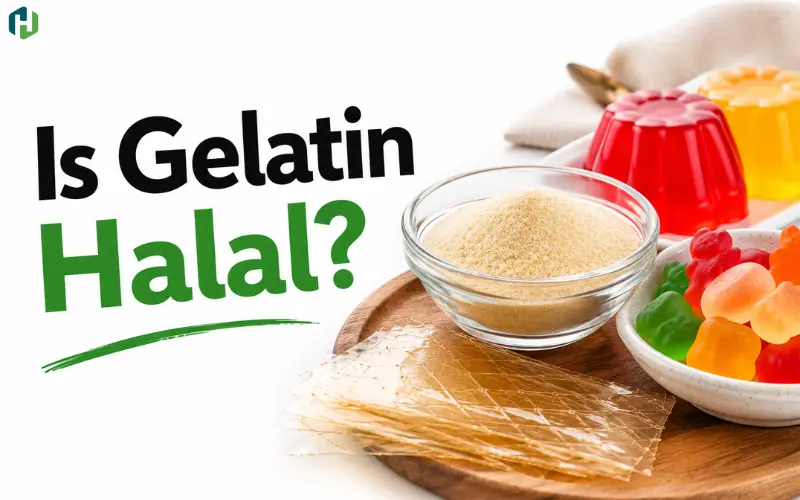
Is gelatin halal? The short answer is yes and no. Gelatin can be halal or haram depending on where it comes from. Pork gelatin isn’t halal, fish gelatin is generally accepted as halal, and beef gelatin is only considered halal when it comes from halal-slaughtered cattle.
The first time I really started reading ingredient labels, I was surprised by how often the word gelatin appeared. It wasn’t just in marshmallows or gummy bears. I found it in yogurt, desserts, vitamins, medicine capsules, and even products I’d been buying for years without thinking twice. If you’ve ever stood in a supermarket wondering whether a food is actually halal, you’re definitely not the only one.
The tricky part is that most food labels simply say “gelatin.” They rarely tell you whether it comes from pork, beef, or fish. That one missing detail can completely change whether a product is halal, which is why understanding the source is far more important than seeing the word “gelatin” on the ingredients list.
Quick Answer Table
Why Is Gelatin Such a Common Question?
Ask any Muslim who regularly checks food labels and there’s a good chance gelatin has confused them at some point.
The problem isn’t that gelatin is rare. It’s actually the opposite.
It’s used in hundreds of everyday products because it gives food a soft, chewy texture and helps desserts hold their shape. Manufacturers like it because it’s inexpensive and works well in everything from sweets to dairy products.
What makes things difficult is that most ingredient labels simply say “gelatin.”
They don’t tell you whether it came from pork, beef, or fish.
That single missing detail completely changes the answer.
I’ve picked up packs of gummies where one brand clearly said fish gelatin, while another only listed gelatin without explaining the source. To most shoppers they looked almost identical, but for Muslims they could have very different rulings.
What Exactly Is Gelatin?
Gelatin isn’t a chemical made in a laboratory. It’s a natural protein produced from collagen, which is found in animal skin, bones, and connective tissue.
During manufacturing, collagen is processed until it becomes the clear, flavourless ingredient used in food.
That’s why gelatin is valued in the food industry.
It helps marshmallows stay fluffy, keeps gummy sweets chewy, gives jelly desserts their wobble, and even prevents some dairy products from separating.
Without it, many popular foods would have a completely different texture.
The important thing to remember is that gelatin always starts with an animal source unless it’s replaced by a plant-based alternative.
That’s why Muslims can’t judge gelatin by its name alone.
Related Post: Are Haribo Gummy Bears Halal or Haram?
Where Does Gelatin Come From?
Commercial gelatin usually comes from one of three sources.
The most common is pork, mainly because it’s inexpensive and widely available in many countries.
The second source is beef. This is where things become more complicated because beef gelatin can be halal or non-halal depending on how the animal was slaughtered.
The third source is fish, which has become increasingly popular in products aimed at halal, kosher, and pescatarian consumers.
Some manufacturers have also moved away from animal gelatin altogether by using plant-based ingredients that create a similar texture. Technically these aren’t gelatin, but they often replace it successfully in desserts and sweets.
Gelatin Source Comparison Table
Pork Gelatin
This is the easiest type of gelatin to understand.
If gelatin comes from pigs, Muslims avoid it.
It doesn’t matter whether it’s used in marshmallows, gummy vitamins, desserts, or medicine capsules. The source remains the same.
One reason pork gelatin is so common is because it’s cheap to produce and gives manufacturers consistent results.
Unfortunately, many products don’t clearly state “pork gelatin” on the front of the package. Instead, they simply list gelatin in the ingredients, which is why checking the manufacturer or looking for halal certification can be important.
If a product specifically says porcine gelatin, that’s another name for pork gelatin.
Beef Gelatin
This is where most of the confusion begins.
Many people assume that if gelatin comes from cows, it must automatically be halal.
That’s not always true.
The animal itself isn’t the issue.
The question is how it was slaughtered.
If the beef comes from an animal slaughtered according to halal requirements, the gelatin is generally accepted as halal.
If the source is unknown or comes from conventionally slaughtered cattle, many Muslims prefer not to eat it because they can’t verify where it came from.
This is why you’ll sometimes see products proudly labelled “Halal Beef Gelatin.”
That wording removes the uncertainty.
On the other hand, a package that only says beef gelatin without any certification may still leave questions unanswered.
Fish Gelatin
If you ask me which type of gelatin causes the least confusion, I’d say fish gelatin.
Unlike beef, there are no questions about how the animal was slaughtered. Unlike pork, there’s no concern about it coming from a prohibited source.
Fish gelatin is made from fish skin and bones, and it’s widely accepted as halal. That’s one reason more halal food manufacturers have started using it in recent years.
You’ll now find fish gelatin in some marshmallows, gummy sweets, desserts, and even pharmaceutical capsules. If a product clearly says “Fish Gelatin” on the label, many Muslims feel much more comfortable buying it.
Of course, it’s still a good idea to check the rest of the ingredients, but the gelatin itself usually isn’t the problem.
Related Post: Is Goldfish Halal?
Plant-Based Alternatives Are Becoming More Common
Not every chewy sweet or jelly dessert contains animal gelatin anymore.
Many companies now use plant-based ingredients that create a similar texture without using any animal products.
Some of the most common alternatives include agar-agar, pectin, carrageenan, and modified starch.
Although people often call them “vegan gelatin,” they aren’t actually gelatin. They simply do the same job.
If you’re trying to avoid all uncertainty, products made with these ingredients are often the easiest choice because there’s no animal source involved.
Plant-Based Alternatives Table
Gelatin Hides in More Foods Than Most People Realize
When people hear the word gelatin, marshmallows are usually the first thing that comes to mind.
But after checking labels for a while, I realised it’s hiding in places I never expected.
Some breakfast cereals use it to help sugar coatings stick.
Certain chewing gums use it to improve texture.
Many gummy vitamins rely on gelatin to keep their shape.
Even medicine capsules often contain it.
Here’s a quick overview of where you’re most likely to find it.
Common Foods That May Contain Gelatin Table
Watch for More Than Just the Word “Gelatin”
One mistake I used to make was searching ingredient lists for only one word.
Gelatin.
Then I discovered manufacturers don’t always use exactly the same name.
Depending on the country or the product, you might also see:
Gelatin Label Names to Watch For
If you notice any of these names on the label, don’t assume they’re different ingredients.
They’re closely related, and the same question still applies:
Where did they come from?
Why Do Scholars Sometimes Give Different Answers?
If you’ve searched this topic online, you’ve probably noticed something confusing.
One scholar says certain gelatin is permissible.
Another advises avoiding it completely.
The disagreement isn’t really about pork gelatin—that’s widely agreed upon.
The discussion is mainly about beef gelatin from non-halal slaughtered animals and what happens to collagen during manufacturing.
Some scholars believe the manufacturing process changes the original material so much that it becomes a completely different substance.
Others believe the original source still matters, even after processing.
That’s why you’ll sometimes find different fatwas about the same product.
For everyday shopping, many Muslims keep things simple.
If the product is halal certified or clearly uses fish gelatin or halal beef gelatin, they buy it.
If the source isn’t clear, they leave it on the shelf.
What About Medicine Capsules?
This is one area where many people feel unsure.
Prescription medicines and supplements often use gelatin capsules because they’re easy to swallow and dissolve quickly.
If you’re buying everyday vitamins, you can usually find vegetarian or halal-certified capsules without much difficulty.
Prescription medicine can be different.
Sometimes there’s no suitable alternative.
Many scholars allow using necessary medication when no halal substitute exists and your health depends on it.
For regular supplements, though, choosing vegetarian capsules or halal-certified products is usually much easier now than it was a few years ago.
When I buy vitamins, I always spend an extra minute checking the label first. It saves me from wondering later.
Brands That Use Halal Gelatin
Finding halal gelatin has become much easier than it was a few years ago. More food companies have realised there’s a growing demand for products made with fish gelatin or halal-certified beef gelatin, especially in countries with large Muslim communities.
One example is Haribo Turkey. Unlike many Haribo products sold in Europe or North America, the Turkish versions are made with halal-certified beef gelatin and are produced specifically for markets where halal certification is important. That’s why many Muslims check the country of origin before buying Haribo gummies.
You’ll also come across halal-certified marshmallow brands sold in halal supermarkets and online stores. Instead of using pork gelatin, these brands usually rely on halal beef gelatin or fish gelatin while keeping the same soft texture people expect.
Some dessert brands also produce halal versions of jelly products for Muslim-majority countries. The ingredients may look almost identical to the regular version, but the gelatin comes from an approved halal source. It’s always worth checking the packaging because the same brand can sell different recipes in different countries.
I’ve also noticed that more companies now offer vegetarian gummies and supplements. These products don’t use animal gelatin at all. Instead, they rely on ingredients like agar-agar or pectin, making them an easy option for Muslims who don’t want to spend time researching the gelatin source.
The easiest approach is still the simplest one: look for a recognised halal certification, read the ingredient list carefully, and don’t assume every product made by the same brand uses the same type of gelatin in every country. A quick check can save a lot of confusion later.
If you like this one, here we have more for you:
- Is Haribo Halal or Haram?
- Is Yogurt Halal or Haram?
- Is Cadbury Dairy Milk Halal or Haram?
- Is Sour Patch Kids Halal?
- Are Welch’s Fruit Snacks Halal?
- Is Nerds Gummy Clusters Halal?
Frequently Asked Questions
Are marshmallows halal?
Only if they use fish gelatin, halal-certified beef gelatin, or a plant-based alternative. Most regular marshmallows contain pork or unspecified gelatin.
Are gelatin medicine capsules halal?
It depends on the source of the gelatin. Many companies now produce vegetarian and halal-certified capsules, which are a good alternative when available.
Is beef gelatin always halal?
No. Beef gelatin is only generally accepted when it comes from cattle slaughtered according to halal requirements or when it’s halal certified.
What is E441?
E441 is simply the food additive number for gelatin. The number itself doesn’t tell you whether it comes from pork, beef, or fish.
Is vegan gelatin halal?
Yes. Products made with agar-agar, pectin, or similar plant-based ingredients don’t contain animal gelatin.
How can I tell if gelatin is halal?
The easiest way is to look for a recognised halal certification or check whether the label specifically says fish gelatin or halal beef gelatin. If it only says gelatin, try checking the manufacturer’s website or customer support.
Conclusion
So, is gelatin halal? The answer depends entirely on its source. Pork gelatin isn’t halal, while fish gelatin and halal-certified beef gelatin are generally accepted by Muslims. If a label doesn’t clearly explain where the gelatin comes from, choosing a certified product or a plant-based alternative is usually the simplest way to avoid unnecessary doubt.