
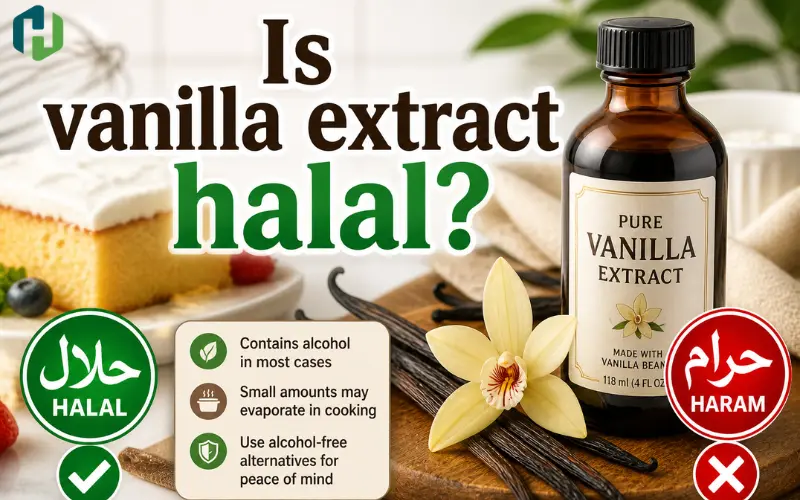
Is vanilla extract halal or Haram? Many Muslims in the USA and UK search for this question because vanilla extract is used in cakes, cookies, ice cream, coffee, and many packaged foods. The main halal concern comes from the alcohol used during the extraction process. Pure vanilla extract usually contains around 35% alcohol, which creates debate among Islamic scholars and halal-conscious consumers.
Some scholars consider vanilla extract permissible when used in very small amounts during cooking or baking, especially if the alcohol evaporates and does not intoxicate. Other scholars avoid it completely because alcohol is intentionally added during production. Because opinions differ, many Muslims prefer alcohol-free vanilla flavoring or halal-certified vanilla products to avoid doubt.
Quick Overview Table
| Category | Halal Status | Notes |
| Pure Vanilla Extract | Debated | Contains 35%+ alcohol |
| Alcohol-Free Vanilla | Halal | Safer option for Muslims |
| Vanilla Powder | Halal | No alcohol used |
| Vanilla Paste | Usually Halal | Check ingredients carefully |
| Artificial Vanilla Flavor | Usually Halal | Often alcohol-free |
| Best Option | Halal-Certified Vanilla | Safest choice |
What Is Vanilla Extract and How Is It Made?
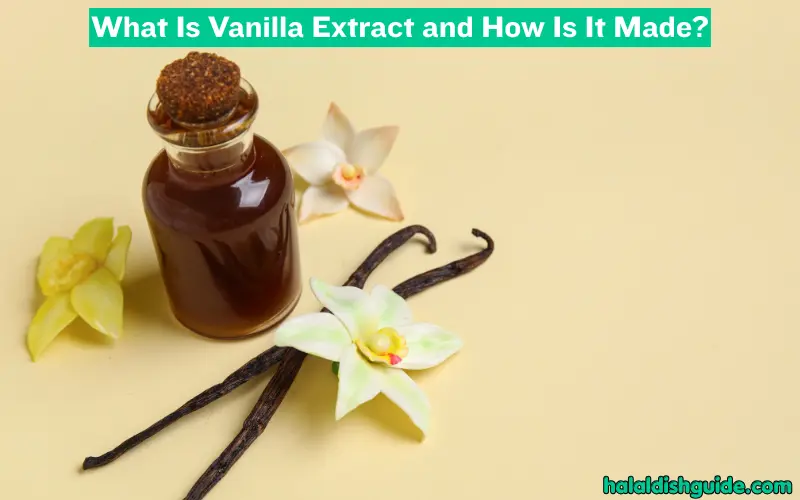
Vanilla extract is a flavoring ingredient made by soaking vanilla beans in a mixture of alcohol and water. This process extracts the natural flavor compounds from the beans, resulting in the rich aroma and taste commonly used in baking and desserts.
The reason alcohol is used is that it is highly effective at pulling out the flavor from vanilla beans. Without alcohol, it would be difficult to achieve the same intensity and stability. In many countries, food standards actually require a certain percentage of alcohol in pure vanilla extract.
During the extraction process, vanilla beans are left in the alcohol solution for an extended period. Over time, the liquid absorbs the flavor, color, and aroma of the beans. The final product is then filtered and bottled for use in cooking and baking.
Because alcohol is a key part of this process, it becomes the main reason why vanilla extract raises halal concerns.
Related Post: Is Starburst Halal or Haram?
Why Vanilla Extract Raises Halal Questions
The primary concern with vanilla extract is the presence of alcohol. In Islamic dietary guidelines, alcohol is generally avoided, which leads to questions about whether products containing alcohol are permissible.
The issue becomes more complex because vanilla extract is not consumed as a drink. It is used in very small amounts as a flavoring ingredient, and in many cases, the alcohol may evaporate during cooking or baking. This creates a situation where scholars may interpret its permissibility differently.
Another factor is the purpose of the alcohol. In vanilla extract, alcohol is used as a solvent rather than for intoxication. Some scholars consider this an important distinction, while others focus only on the presence of alcohol regardless of its purpose.
Because of these factors, vanilla extract becomes a debated ingredient rather than a straightforward case.
Does Vanilla Extract Contain Alcohol?
Yes, most pure vanilla extracts contain alcohol. The alcohol content can be significant in the raw extract, often around 30–40 percent. However, this does not mean that the final food product contains the same level of alcohol.
When vanilla extract is used in cooking, only a small amount is added to the recipe. During baking or heating, much of the alcohol may evaporate, leaving behind the flavor.
However, the extent of evaporation depends on factors such as temperature and cooking time. In some recipes, especially no-bake desserts, the alcohol may remain.
This variation is one of the reasons why different opinions exist on its halal status.
Alcohol Content
| Product | Alcohol Presence | Notes |
| Pure Vanilla Extract | Yes | Main concern |
| Imitation Vanilla | Low or none | Check label |
| Vanilla Powder | None | Safer |
| Alcohol-Free Extract | None | Best option |
Scholarly Views on Vanilla Extract
There are generally two main perspectives regarding vanilla extract.
The first view considers it permissible in small amounts, especially when used in cooking. Scholars who support this opinion argue that the alcohol is not consumed directly and is present only as a processing agent. They also note that the quantity used is very small and does not lead to intoxication.
The second view considers it not permissible because it contains alcohol. Scholars in this group focus on avoiding any product that includes alcohol, regardless of its purpose or quantity. They prefer to use alternatives that do not involve alcohol at all.
There is also a middle approach where individuals choose to avoid vanilla extract if alcohol-free alternatives are available. This approach focuses on caution rather than strict prohibition.
Opinion Comparison
| View | Ruling | Reasoning |
| Permissive View | Halal in small amounts | Not intoxicating |
| Strict View | Not halal | Contains alcohol |
| Cautious Approach | Avoid | Choose alternatives |
| Practical View | Depends | Personal choice |
Does Cooking Remove Alcohol from Vanilla Extract?
One of the most common arguments in favor of vanilla extract is that cooking removes alcohol. While it is true that heat can reduce alcohol content, it does not always remove it completely.
The amount of alcohol that remains depends on cooking time and temperature. For example, long baking times may reduce alcohol significantly, while quick cooking or no-bake recipes may retain more.
Because of this uncertainty, some people are comfortable using vanilla extract in baked goods, while others prefer to avoid it entirely. The decision often depends on personal comfort and interpretation.
Types of Vanilla Products and Their Halal Status
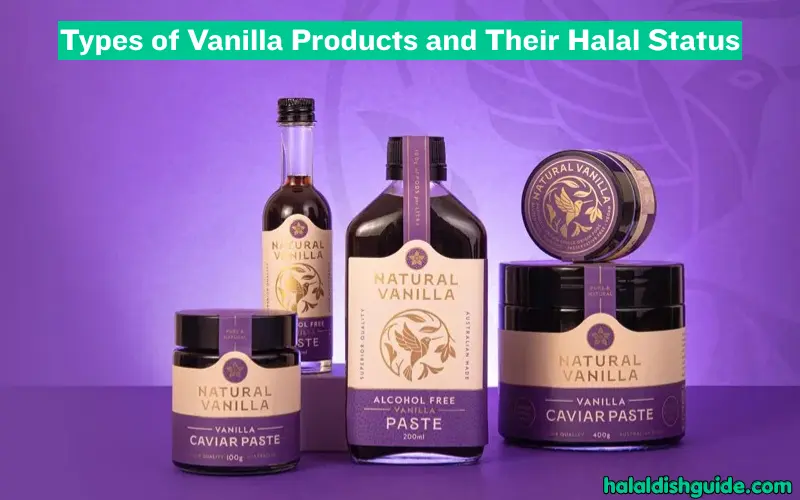
Not all vanilla products are the same. Understanding the different types can help you make a better choice.
Pure vanilla extract is the most traditional form and contains alcohol.
Imitation vanilla is made using synthetic flavoring and may contain little or no alcohol, but it should still be checked.
Vanilla powder is made from dried vanilla beans and does not contain alcohol, making it a safer option.
Alcohol-free vanilla extract is specifically produced without alcohol and is widely considered halal.
Vanilla Product
| Type | Halal Status | Recommendation |
| Pure Extract | Depends | Check view |
| Imitation | Better | Verify |
| Powder | Safe | Good option |
| Alcohol-Free | Halal | Best choice |
Vanilla Extract in Common Foods
Vanilla extract is used in a wide range of foods, including cakes, cookies, ice cream, and desserts. Because it is added in small quantities, it often goes unnoticed, but it still plays a role in flavor.
For halal-conscious consumers, it is important to check whether the product uses pure vanilla extract or an alternative. Packaged foods may list vanilla extract as an ingredient, making it easier to identify.
In restaurants and bakeries, it may be more difficult to verify. This is why many people prefer to ask or choose simple items.
Common Foods
| Food | Vanilla Concern |
| Cake | Check |
| Cookies | Check |
| Ice Cream | Check |
| Custard | Check |
| Milkshake | Check |
Best Halal Alternatives to Vanilla Extract
If you want to avoid uncertainty, there are several alternatives to vanilla extract.
Vanilla powder is one of the best options because it contains no alcohol.
Alcohol-free vanilla extract is another excellent choice and is widely available.
Other flavorings such as almond extract (alcohol-free versions), cardamom, or cinnamon can also be used depending on the recipe.
These alternatives allow you to enjoy similar flavors without concern.
Alternatives
| Alternative | Benefit |
| Vanilla Powder | No alcohol |
| Alcohol-Free Extract | Best substitute |
| Almond Flavor | Good option |
| Cinnamon | Natural |
| Cardamom | Unique taste |
Practical Advice for Consumers
Because of the different opinions, the best approach is to follow a consistent method.
Some people choose to use vanilla extract in small amounts, especially in cooked foods.
Others avoid it completely and use alcohol-free alternatives.
Both approaches are common, and the choice depends on personal comfort and understanding.
Common Mistakes People Make
A common mistake is assuming all vanilla products are the same.
Another mistake is ignoring labels and ingredient lists.
The safest approach is always to check and choose the option that matches your preference.
We hope you guys find this guide helpful. If you like this one, here we have more for you:
- Is Cava Halal or Haram?
- Top Best Halal Whey Proteins in USA
- Top 10 Halal-Friendly Restaurants in Toronto
- Is McDonald’s Halal or Haram?
FAQs
Does vanilla extract contain alcohol?
Yes, pure vanilla extract usually contains around 35% alcohol because ethanol is used to extract vanilla flavor from the beans.
Is vanilla extract halal in Islam?
Scholars differ on this issue. Some allow small amounts in cooking, while others avoid it because alcohol is intentionally added.
Is alcohol-free vanilla halal?
Yes, alcohol-free vanilla flavoring is generally considered halal and is a popular alternative for Muslims.
Is artificial vanilla halal?
Most artificial vanilla flavorings are usually halal because they are often made without alcohol.
Does baking remove alcohol from vanilla extract?
Some alcohol may evaporate during baking, which is why some scholars allow it in cooked foods.
Why do Muslims avoid vanilla extract?
Many Muslims avoid vanilla extract because it contains alcohol and scholars have different opinions about its permissibility.
Is vanilla powder halal?
Yes, vanilla powder is generally considered halal because it usually contains no alcohol.
What is the safest halal vanilla option?
Halal-certified or alcohol-free vanilla products are usually considered the safest options for halal-conscious Muslims.
Conclusion
Is vanilla extract halal or Haram? The answer depends on the Islamic opinion a Muslim follows and the type of vanilla product being used. Pure vanilla extract contains alcohol as part of the extraction process, which leads many scholars and halal certification bodies to consider it doubtful or impermissible. Other scholars allow small amounts used in cooking when the alcohol is diluted or evaporates.
For Muslims in the USA and UK, the safest option is choosing alcohol-free vanilla flavoring, vanilla powder, or halal-certified vanilla products. Since ingredient formulas and scholarly opinions vary, checking labels carefully and following a trusted halal standard can help Muslims make more confident food choices.