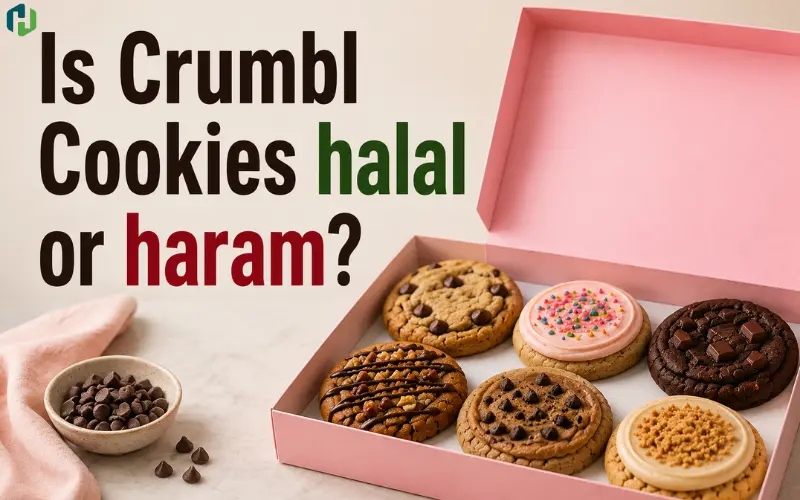
Is Crumbl Cookies halal or haram? This question has become increasingly popular among Muslims in the USA and UK as Crumbl continues growing through TikTok trends, viral cookie reviews, and weekly rotating flavors. While the bakery is famous for its oversized cookies and creative dessert-inspired recipes, many Muslims now want to know whether Crumbl uses halal-friendly ingredients or if some flavors contain doubtful additives like gelatin, flavor extracts, or non-halal dessert fillings.
The answer is not completely straightforward because Crumbl Cookies is not officially halal-certified, and the ingredients can change depending on the weekly menu. Some cookies may appear halal-friendly with simple baking ingredients, while others create concerns because of marshmallow toppings, cheesecake fillings, or processed flavorings. In this guide, we’ll break down everything Muslims should know about whether Crumbl Cookies are halal or haram, including ingredient concerns, safer flavor options, and what to avoid.
Quick Overview Table
| Topic | Short Answer |
| Is Crumbl Cookies halal? | Some flavors may be halal-friendly |
| Is Crumbl Cookies haram? | Not generally considered fully haram |
| Halal-certified? | No official halal certification |
| Biggest concern | Gelatin and flavor extracts |
| Safer choices | Simple cookies with basic ingredients |
| Riskier flavors | Cheesecake and marshmallow cookies |
Why Crumbl Cookies Became a Halal Discussion
A few years ago, Muslims rarely discussed cookies online. Most halal conversations focused on restaurants, burgers, fried chicken, or candy brands. But social media changed food culture completely.
Now every trending snack gets analyzed online. Once Crumbl became viral, Muslims naturally started checking ingredients as well. Videos reviewing weekly flavors made people curious not only about taste but also about what was actually inside the cookies.
The weekly menu is a major reason this topic became complicated. Crumbl does not sell only ordinary chocolate chip cookies. Some flavors are inspired by cheesecake desserts, marshmallow treats, caramel pastries, or candy bars. These types of desserts usually involve processed ingredients that many Muslims prefer to double-check before eating.
That is why searches like “Is Crumbl Cookies halal?” and “Is Crumbl Cookies haram?” started increasing rapidly in both the USA and UK.
Not Every Cookie Creates the Same Halal Concern
One mistake people make is treating every Crumbl cookie as identical.
In reality, there is a huge difference between a basic cookie and a specialty dessert-style cookie. A simple chocolate chip cookie mostly uses standard baking ingredients that Muslims already consume regularly. But once cookies start including mousse fillings, marshmallow frosting, cheesecake layers, or candy toppings, the ingredient list becomes much more complicated.
This is why many Muslims do not judge the entire bakery with one single answer.
Instead, they separate flavors into two categories:
- simpler cookies that appear safer
- heavily processed flavors that create more doubt
That approach is becoming common among halal-conscious consumers today.
Is Crumbl Cookies Halal?
The honest answer is that Crumbl Cookies sits in a gray area for many Muslims.
The company does not market itself as halal-certified, which means there is no official guarantee covering all ingredients. However, many cookies also do not contain obvious haram ingredients directly listed on the label.
Because of this, some Muslims feel comfortable eating certain flavors while avoiding others entirely.
For many people, the safest approach is sticking to simpler cookies that rely on traditional baking ingredients rather than heavily processed dessert toppings or fillings.
Others prefer avoiding the brand altogether because ingredient sourcing is not fully transparent.
Both opinions are common, especially among Muslims living in Western countries where processed foods often contain unclear additives.
Gelatin Is One of the Biggest Reasons Muslims Hesitate
If you ask halal-conscious Muslims why they avoid certain desserts, gelatin is usually one of the first things mentioned.
The problem is not gelatin itself. The issue is where it comes from.
Some gelatin comes from halal beef sources, while other forms may come from pork or non-halal animal products. Unless companies clearly explain the source, many Muslims remain cautious.
Certain Crumbl flavors inspired by marshmallow desserts or cheesecake-style recipes may contain ingredients commonly associated with gelatin. This is why those flavors usually receive more halal questions compared to ordinary cookies.
Interestingly, many people never think about gelatin when eating desserts. They only associate it with gummy candy. But modern bakery products often contain gelatin inside creams, mousse fillings, frosting textures, and decorative toppings.
For stricter halal-conscious consumers, unclear gelatin sourcing is enough reason to avoid some Crumbl flavors completely.
Flavor Extracts Also Create Confusion
Another reason the halal discussion becomes complicated is because of dessert flavoring.
Many bakery companies use concentrated extracts to create stronger flavors. Vanilla is the most common example, but dessert-inspired cookies may also involve coffee, caramel, cheesecake, or pastry flavorings.
Traditional extraction methods sometimes involve alcohol during processing. This immediately raises concern for Muslims who try to avoid doubtful ingredients as much as possible.
Now, most people are not eating Crumbl cookies to get intoxicated. That is obviously not the issue. The concern is more about whether flavor production methods align with halal standards.
This is especially important for flavors inspired by desserts like tiramisu or cream pastries, where richer flavor concentrates are often used.
Some Muslims ignore this concern completely, while others prefer avoiding anything with unclear flavoring sources.
Crumbl’s Weekly Menu Makes Things Harder
What separates Crumbl from ordinary bakeries is the weekly rotation system.
Traditional bakeries are predictable. Once you understand the ingredients, you already know what you are getting next time. Crumbl constantly changes flavors, which means the ingredient situation changes every week too.
One week might feature safe-looking cookies with basic ingredients. The next week could introduce desserts loaded with candy pieces, marshmallow creams, flavored syrups, or cheesecake toppings.
This constant change makes halal research difficult because Muslims cannot simply memorize one answer about the brand.
That unpredictability is actually one reason Crumbl stays popular online. Every week feels new. But from a halal perspective, it also means every week can introduce different ingredient concerns.
Which Crumbl Flavors Usually Feel Safer?
Among Muslims who still eat Crumbl, most naturally gravitate toward simpler flavors.
Classic chocolate chip cookies usually create fewer concerns because the ingredients are easier to understand. Peanut butter cookies, oatmeal cookies, and plain sugar cookies also tend to feel safer compared to specialty dessert flavors.
The hesitation usually starts once cookies include:
- marshmallow fillings
- cheesecake creams
- candy toppings
- mousse textures
- decorative frosting layers
That does not mean every specialty cookie is automatically haram. It simply means the uncertainty level becomes higher, especially for Muslims who prefer avoiding doubtful ingredients.
Many halal-conscious consumers today follow a simple rule: the more processed the dessert looks, the more carefully they check the ingredients.
Crumbl Flavor Risk
| Cookie Type | Halal Risk Level | Main Concern |
| Chocolate Chip | Low | Standard baking ingredients |
| Sugar Cookie | Low | Minimal processed additives |
| Cheesecake Cookies | Medium | Gelatin and emulsifiers |
| Marshmallow Cookies | High | Possible gelatin source |
| Candy-Topped Cookies | Medium | Unknown candy ingredients |
| Tiramisu-Inspired Flavors | Medium | Flavor extracts |
Why American Muslims Talk About Crumbl So Much
Crumbl became especially popular in the United States because the brand grew directly through internet culture.
TikTok reviews, YouTube taste tests, and Instagram food pages helped Crumbl expand faster than most dessert companies. Naturally, Muslim consumers in America also became part of that audience.
At the same time, halal awareness in the USA increased massively over the last few years. Muslims today regularly research:
- snacks
- desserts
- protein bars
- drinks
- fast food
- supplements
before buying them.
Crumbl entered that same conversation because Muslims started questioning the ingredients behind trendy desserts rather than assuming every cookie is automatically halal.
The UK Audience Thinks About Halal Differently
In Britain, halal food culture is already deeply established. Cities like London, Birmingham, and Manchester have huge halal restaurant scenes, so Muslims there often pay close attention to ingredient sourcing.
Because of this, British Muslims discussing Crumbl online usually focus less on hype and more on transparency.
Many UK Muslims want clear answers about:
- gelatin sources
- flavor extracts
- alcohol processing
- ingredient certifications
Without official halal certification, Crumbl naturally falls into a doubtful category for stricter consumers in Britain.
Still, many Muslims in the UK also continue eating simpler flavors if no obvious haram ingredients appear.
Modern Food Labels Confuse Almost Everyone
One of the biggest frustrations with processed foods today is how vague ingredient labels have become.
Food companies often use broad terms like:
- natural flavors
- flavor blends
- emulsifiers
- stabilizers
without clearly explaining what those ingredients actually contain.
For halal-conscious Muslims, this creates uncertainty because some additives may involve animal derivatives or alcohol during manufacturing.
Most consumers never think about these details. But Muslims trying to follow halal dietary rules carefully usually want more transparency before eating processed foods.
This issue affects much more than just Crumbl. It exists across the modern food industry.
Some Muslims Avoid Crumbl Completely
Not every Muslim approaches doubtful foods the same way.
Some people follow the principle that foods remain permissible unless something clearly haram is proven. Others prefer avoiding anything uncertain altogether.
This is why opinions about Crumbl differ online.
One Muslim may feel perfectly comfortable eating a simple chocolate chip cookie from Crumbl. Another Muslim may avoid the bakery entirely because the ingredients are not halal-certified.
Both approaches exist within the Muslim community, especially in Western countries where processed food ingredients are often difficult to verify completely.
Crumbl vs Halal Dessert Shops
The rise of halal bakeries in the USA and UK changed consumer expectations significantly.
Many halal dessert shops now openly advertise:
- halal-certified ingredients
- alcohol-free baking
- pork-free kitchens
- Muslim-friendly desserts
Compared to these bakeries, mainstream dessert chains like Crumbl usually provide less certainty for halal-conscious customers.
Bakery Comparison
| Feature | Crumbl Cookies | Halal Bakeries |
| Halal Certification | No | Usually Yes |
| Gelatin Transparency | Limited | Better transparency |
| Alcohol-Free Guarantee | No | Often Yes |
| Pork-Free Kitchen | Not guaranteed | Usually Yes |
| Ingredient Clarity | Moderate | Higher |
Because halal dessert culture keeps growing, many Muslims now actively search for bakeries that clearly explain ingredient sourcing instead of leaving customers uncertain.
We hope you guys find this guide helpful. If you like this one, here we have more for you:
- Are Takis Halal or Haram?
- Is Wendy’s Halal or Haram?
- Is Alani Nu Halal or Haram?
- Is Poppi Halal or Haram?
- Are Haribo Gummy Bears Halal or Haram?
FAQs
Is Crumbl Cookies halal or haram?
Crumbl Cookies is not officially halal-certified, but some simple flavors may be halal-friendly depending on the ingredients used.
Does Crumbl Cookies use pork gelatin?
Certain specialty flavors may contain ingredients that include gelatin, but the source is not always clearly specified.
Are all Crumbl Cookies haram?
No, not all Crumbl cookies are considered haram. Many basic flavors use standard baking ingredients without obvious haram substances.
Is Crumbl Cookies halal in the USA?
Crumbl does not offer nationwide halal certification in the USA, so Muslims usually check flavors individually.
Which Crumbl cookies are safest for Muslims?
Simple flavors like chocolate chip, sugar cookies, or peanut butter cookies are generally considered safer choices.
Does Crumbl Cookies contain alcohol?
Some dessert flavorings or extracts may involve alcohol during processing, especially in specialty flavors.
Can Muslims eat Crumbl Cookies?
Many Muslims do eat selected Crumbl flavors, while others avoid the brand because of unclear ingredients and lack of halal certification.
Why do Muslims question Crumbl Cookies?
Muslims mainly question ingredients like gelatin, flavor extracts, marshmallow fillings, and processed dessert toppings used in some cookies.
Final Verdict: Is Crumbl Cookies Halal or Haram?
Crumbl Cookies cannot automatically be labeled fully halal because the company does not provide official halal certification.
At the same time, many cookies also do not appear to contain direct haram ingredients. This is why the brand falls into a mixed category for many Muslims rather than being clearly halal or clearly haram.
The biggest concerns usually involve gelatin, flavor extracts, marshmallow fillings, cheesecake toppings, and unclear ingredient sourcing.
For most Muslims, simpler cookie flavors generally feel safer than heavily processed dessert-style cookies. Stricter halal-conscious consumers may still prefer avoiding the bakery completely unless ingredient transparency improves.
Conclusion
So, is Crumbl Cookies halal or haram? The answer depends largely on the flavor and your personal halal standards. Some cookies appear halal-friendly because they use ordinary baking ingredients without obvious haram substances. Other flavors create uncertainty because of processed dessert ingredients like gelatin, marshmallow creams, and flavor extracts.
Since Crumbl is not officially halal-certified, Muslims who prefer complete certainty may choose fully halal bakeries instead. Others may feel comfortable eating selected flavors after checking ingredients carefully.
As halal awareness continues growing across the USA and UK, more Muslims are paying closer attention to desserts and processed foods than ever before. Understanding ingredients and following your own comfort level remains the best approach when deciding whether Crumbl Cookies are right for you.