

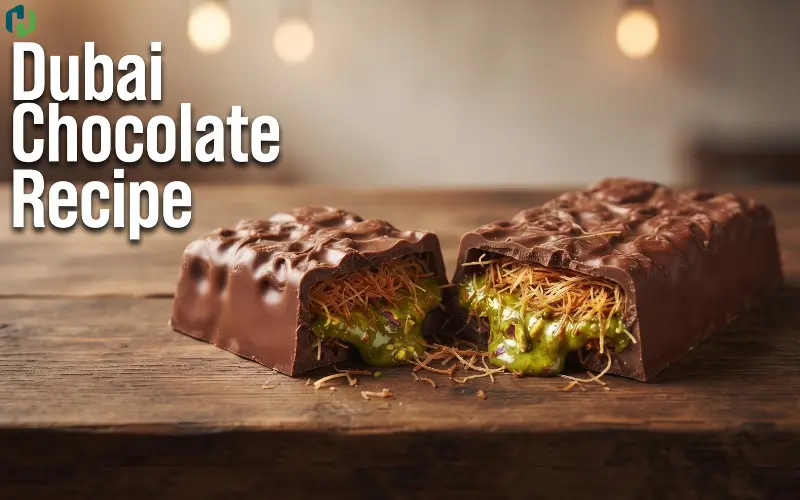
If you have been searching for a Dubai chocolate recipe, this homemade version is a simple way to recreate the popular combination of crisp kataifi pastry, creamy pistachio filling, and smooth chocolate. The contrast between crunchy pastry and rich pistachio cream is what makes Dubai chocolate so appealing.
This recipe is designed for home kitchens in both the USA and UK. You do not need professional chocolate-making equipment, although a silicone chocolate mold makes it much easier to create neat bars.
Dubai chocolate has become a major viral dessert trend, gaining widespread attention through social media before inspiring homemade versions around the world. The style is closely associated with a Dubai-based chocolate maker and combines familiar Middle Eastern dessert ingredients with a modern chocolate-bar format.
Quick Overview
Estimated Nutrition Per Bar: This is a rough estimate based on 4–6 bars and can vary depending on the chocolate, pistachio cream, butter, and exact serving size.
What Is Dubai Chocolate?
Dubai chocolate is a chocolate bar made with a chocolate shell and a filling combining pistachio cream with shredded kataifi pastry. Kataifi, sometimes called kadayif or knafeh pastry, is a very fine shredded pastry commonly used in Middle Eastern desserts.
The combination became especially recognizable for its contrast of textures. The outside is smooth chocolate, while the inside has a creamy pistachio mixture with crisp, toasted pastry.
Dubai chocolate became widely known as a viral dessert trend after social media videos helped bring attention to the distinctive chocolate bars. The style is associated with a Dubai-based chocolate maker and quickly inspired people to recreate the dessert at home, with homemade versions appearing across the USA, UK and many other countries.
Although the name refers to Dubai, the ingredients themselves draw from broader Middle Eastern and Mediterranean dessert traditions. Pistachios, chocolate, and kataifi are combined in a modern confection rather than representing one ancient traditional dessert.
The exact filling can vary. Some versions are sweeter, some use dark chocolate instead of milk chocolate, and others add tahini or different proportions of pistachio cream and pastry.
Related Post: Marry Me Chicken Recipe
What Is in Dubai Chocolate?
The basic ingredients in a Dubai chocolate recipe are surprisingly straightforward.
Chocolate: Milk chocolate gives the bar a sweet, creamy flavor, while dark chocolate creates a more intense contrast with the pistachio filling.
Kataifi pastry: This is the ingredient responsible for the distinctive crunch inside the bar. It needs to be toasted before being mixed with the filling.
Pistachio cream: This provides the main nutty flavor and creamy texture.
Butter: A small amount helps toast the kataifi and gives it a richer flavor.
Tahini: Optional, but a small amount can add a subtle sesame flavor and balance the sweetness of the pistachio mixture.
For the best texture, the kataifi should be crisp rather than soft. If it remains undercooked, the filling can become chewy instead of crunchy.
Dubai Chocolate Ingredients
For approximately 4–6 homemade chocolate bars, you’ll need:
- 300 g milk or dark chocolate
- 150 g kataifi pastry
- 2 tablespoons unsalted butter
- 150 g pistachio cream
- 1 tablespoon tahini, optional
- 1 tablespoon finely chopped pistachios, optional
- A small pinch of salt
If your pistachio cream is already very sweet, you generally do not need additional sugar.
USA and UK Ingredient Notes
In the USA, kataifi may be found in Middle Eastern, Mediterranean, Greek or international supermarkets, often in the refrigerated or frozen pastry section. In the UK, look for kataifi, kadayif, or shredded filo pastry at Middle Eastern and Mediterranean grocery stores.
Pistachio cream can vary significantly in sweetness and thickness. Some products are designed as dessert spreads, while others are more concentrated pistachio pastes. Check the consistency before preparing the filling.
If using frozen kataifi, thaw it according to the package instructions and separate the strands gently before cooking.
How to Make Dubai Chocolate
1. Prepare the Kataifi
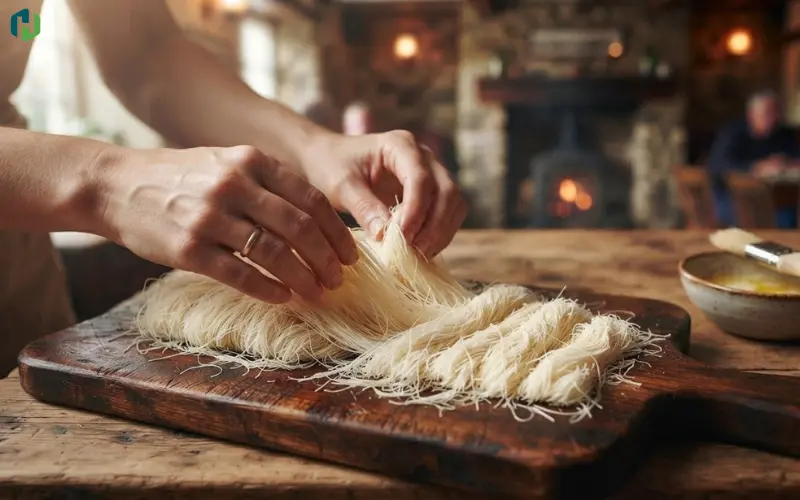
If your kataifi is frozen, thaw it completely.
Gently pull apart the pastry strands with your fingers. You want the strands separated enough that they can toast evenly.
Using kitchen scissors to cut the kataifi into shorter pieces can also make the filling easier to distribute inside the chocolate.
2. Toast the Kataifi

Melt the butter in a large skillet over medium heat.
Add the kataifi and cook, stirring frequently.
Continue cooking until the pastry becomes golden brown and crisp. This usually takes around 8–12 minutes, although the exact time depends on how much pastry is in the pan.
Keep an eye on it toward the end because kataifi can go from golden to burnt quickly.
Once crisp, remove it from the heat and allow it to cool slightly.
3. Make the Pistachio Filling
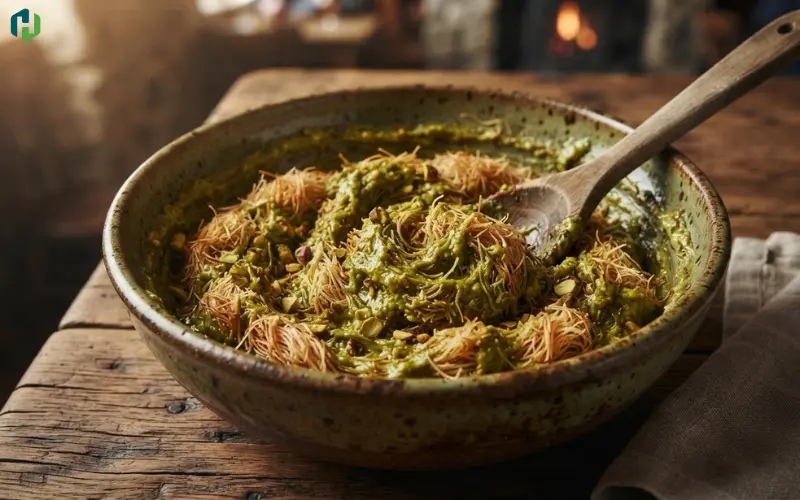
Place the toasted kataifi in a bowl.
Add the pistachio cream and tahini if using.
Stir gently until the pastry is evenly coated.
The mixture should remain textured rather than turning into a completely smooth paste. That texture is important because it creates the characteristic crunch inside the finished chocolate.
Taste a small amount. If your pistachio cream is particularly sweet, the optional pinch of salt can help balance the flavor.
4. Melt the Chocolate
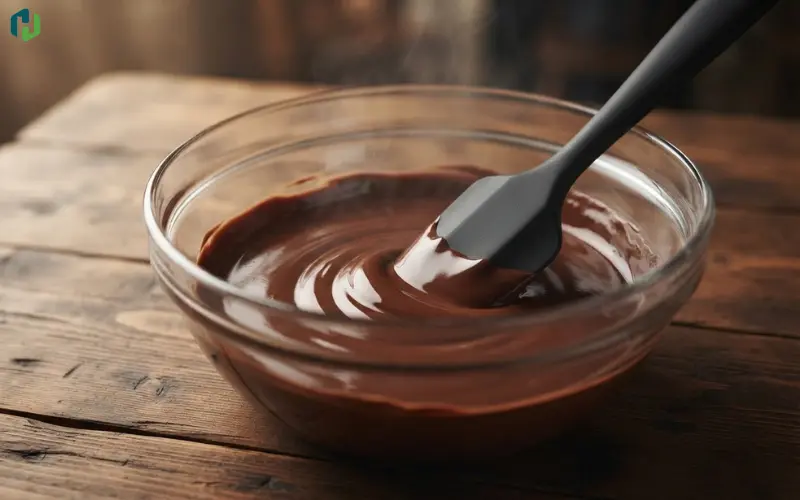
Break the chocolate into small pieces.
Melt it gently using a double boiler or microwave.
If using a microwave, heat it in short intervals and stir between each one to prevent overheating.
The chocolate should become smooth and glossy.
Avoid getting water into the chocolate because even a small amount can cause it to seize.
5. Create the Chocolate Shell
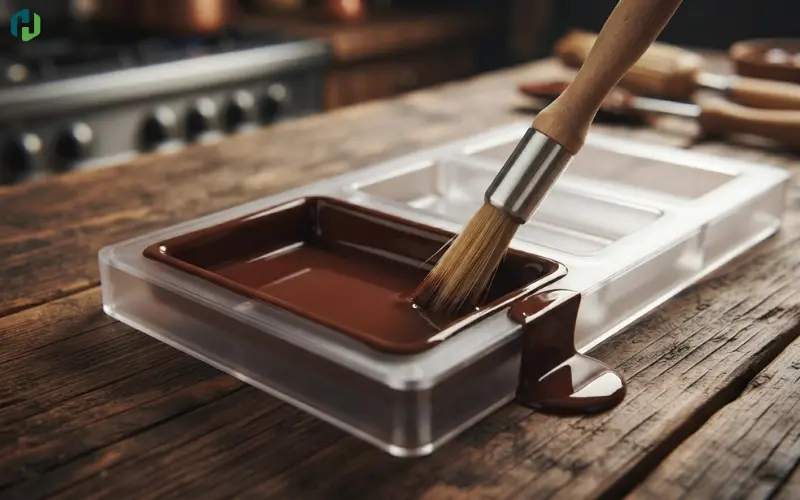
Pour some melted chocolate into your chocolate mold.
Tilt the mold carefully so the chocolate covers the bottom and sides.
You can also use a spoon or pastry brush to push the chocolate up the sides.
The shell should be thick enough to hold the filling without cracking but not so thick that it overwhelms the pistachio center.
Place the mold in the refrigerator for approximately 10–15 minutes, or until the chocolate has firmed.
6. Add the Pistachio Filling
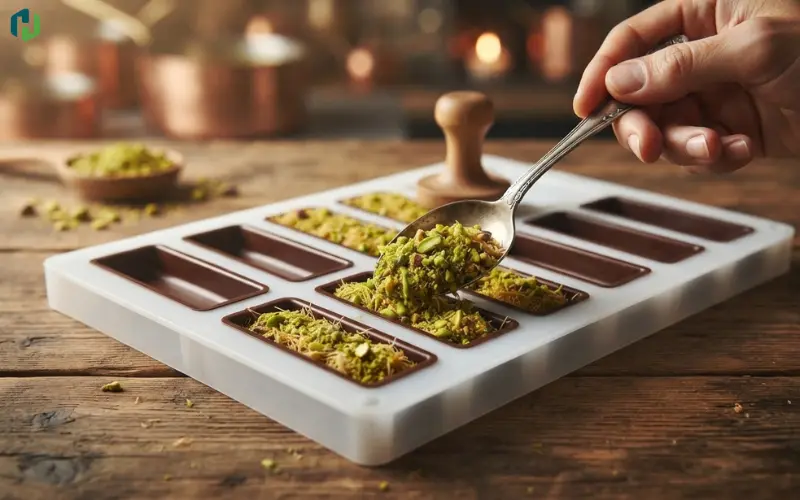
Remove the mold from the refrigerator.
Spoon the pistachio-kataifi mixture into the chocolate shells.
Press it down gently so there are no large air pockets, but do not pack it so tightly that you lose the crunchy texture.
Leave enough space at the top for the final chocolate layer.
7. Seal the Bars
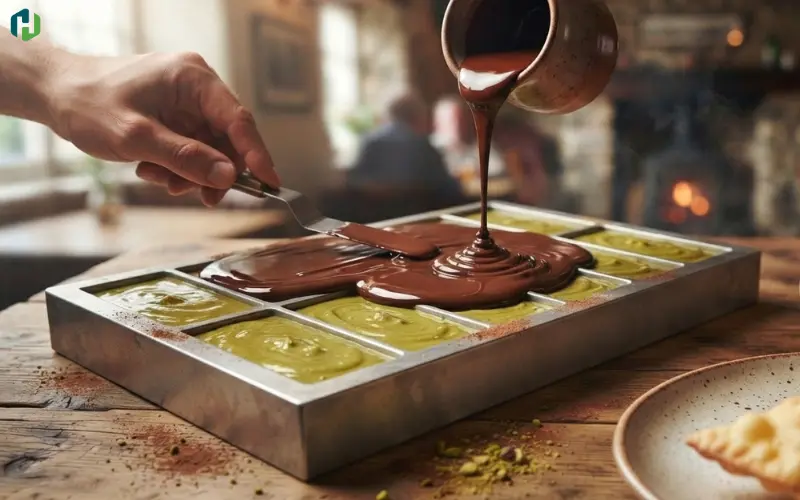
Pour the remaining melted chocolate over the filling.
Spread it evenly to completely seal each bar.
Make sure the edges are covered because gaps can cause the filling to leak out when the chocolate is removed from the mold.
Return the mold to the refrigerator.
8. Chill and Remove
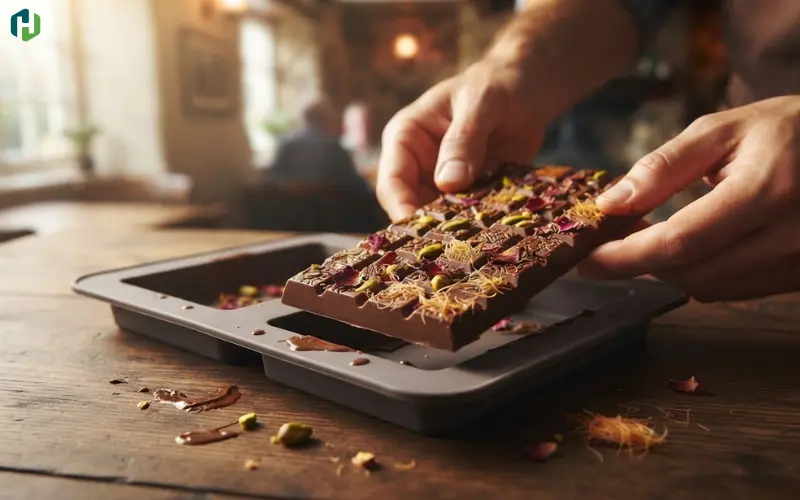
Chill the Dubai chocolate until completely firm, usually around 30–45 minutes.
Once set, carefully turn the mold over and gently release the bars.
If the chocolate does not release easily, give it a little more chilling time rather than forcing it.
What Does Dubai Chocolate Taste Like?
Dubai chocolate combines several flavors and textures in one bite.
The chocolate shell provides sweetness and richness, while pistachio cream contributes a nutty, slightly earthy flavor.
The toasted kataifi provides the biggest textural contrast. Instead of a completely smooth chocolate filling, you get small crisp strands throughout the pistachio mixture.
Tahini, when used, adds a subtle roasted sesame note that can make the filling taste less sugary.
The ideal finished bar should taste rich but balanced. The chocolate should not completely overpower the pistachio, and the kataifi should remain noticeably crunchy.
Related Post: Best Baked Salmon Recipe
Tips for the Best Dubai Chocolate Recipe
Toast the kataifi properly
This is one of the most important steps. Pale, soft kataifi will not provide the same texture as properly toasted pastry.
Don’t overheat the chocolate
Chocolate can become thick, grainy or burnt when overheated. Melt it slowly and stir frequently.
Choose chocolate you enjoy eating
Because chocolate forms the outer shell, its flavor has a major impact on the finished dessert.
Don’t make the filling too wet
Too much pistachio cream can soften the kataifi. Add enough to bind the mixture without completely soaking the pastry.
Leave room for the chocolate seal
Avoid filling the mold all the way to the top. A small gap makes it easier to cover the filling completely.
Chill thoroughly
The chocolate needs to be fully set before removing it from the mold. This helps prevent cracks and broken edges.
Milk Chocolate or Dark Chocolate?
Milk chocolate is probably the easiest choice if you want a sweet, dessert-style Dubai chocolate bar.
Its creamy flavor works naturally with pistachio cream and makes the finished bar taste similar to a confectionery-style chocolate treat.
Dark chocolate is useful if you prefer less sweetness. The bitterness of dark chocolate can provide a stronger contrast with the sweet pistachio filling.
You can also use a mixture of milk and dark chocolate to find a balance that suits your taste.
How to Store Dubai Chocolate
Store homemade Dubai chocolate in an airtight container.
For the best texture, keep it in a cool, dry place if your kitchen is sufficiently cool. During warmer weather, refrigeration may be necessary to prevent the chocolate from becoming soft.
If refrigerated, allow the bars to sit at room temperature for a few minutes before eating. This allows the chocolate and pistachio filling to soften slightly.
Keep the bars away from strong-smelling foods because chocolate can absorb odors.
Can You Freeze Dubai Chocolate?
Yes, Dubai chocolate can be frozen.
Wrap individual bars well and place them in an airtight freezer-safe container.
When you’re ready to eat them, transfer the chocolate to the refrigerator and allow it to thaw gradually.
After thawing, the kataifi may not be quite as crisp as when freshly made, so the best texture comes from eating the bars relatively soon after preparation.
Is Dubai Chocolate Halal?
A basic homemade Dubai chocolate recipe can be halal, but the ingredients should still be checked individually.
Chocolate itself can contain ingredients that vary by brand, including emulsifiers, flavorings and other additives. Check the label if you follow a strict halal diet.
Pistachio cream should also be checked for its ingredients and flavorings.
Kataifi pastry is generally made from wheat flour, water and similar basic ingredients, but packaged products can vary.
Tahini, pistachios, butter and ordinary sugar are generally not the main halal concerns. However, cross-contact and flavoring ingredients can matter depending on the product.
For a homemade halal version, choose clearly labeled ingredients and avoid products containing alcohol-based flavorings or other ingredients that do not meet your dietary requirements.
Is Dubai Chocolate Gluten-Free?
Traditional kataifi pastry is wheat-based, so a standard Dubai chocolate bar is not gluten-free.
The chocolate and pistachio cream may individually be gluten-free, but the kataifi filling usually contains wheat.
A gluten-free adaptation would require a suitable gluten-free shredded pastry substitute, and the texture may differ considerably from the traditional version.
FAQs
What is Dubai chocolate?
Dubai chocolate is a chocolate confection featuring a chocolate shell filled with pistachio cream and toasted kataifi pastry. Its main appeal is the combination of creamy pistachio filling and crunchy pastry.
What is in Dubai chocolate?
The main ingredients are chocolate, pistachio cream and kataifi pastry. Many versions also use butter, while tahini is an optional addition.
How do you make Dubai chocolate?
Toast chopped kataifi in butter, mix it with pistachio cream, create a chocolate shell in a mold, add the pistachio filling, cover it with more chocolate and chill until firm.
What kind of chocolate is best for Dubai chocolate?
Milk chocolate works well for a sweeter version, while dark chocolate creates a richer and less-sweet result. Choose good-quality chocolate that melts smoothly.
Where can I find kataifi pastry?
Look for kataifi, kadayif or shredded filo pastry at Middle Eastern, Mediterranean, Greek and international grocery stores. It is also commonly available frozen.
Can I use pistachio paste instead of pistachio cream?
Yes, but pistachio paste is generally more concentrated and less sweet than pistachio cream. You may need to adjust the amount and sweetness of the filling.
Is Dubai chocolate spicy?
No. Traditional Dubai chocolate is not a spicy dessert. Its main flavors come from chocolate, pistachio and toasted pastry.
Why is my Dubai chocolate not crunchy?
The most common reason is under-toasted kataifi or using too much pistachio cream. Toast the pastry until golden and crisp, then use enough cream to bind it without making it wet.
Can I make Dubai chocolate without a mold?
Yes. You can make a layered version in a small lined container or loaf pan and cut it into pieces after chilling. A chocolate mold simply gives the bars a more traditional appearance.
Can I make Dubai chocolate without tahini?
Yes. Tahini is not essential. If you prefer a cleaner pistachio flavor, simply leave it out of the filling.
Is Dubai chocolate halal?
It can be halal when suitable chocolate, pistachio cream and pastry are used. Check packaged ingredients and flavorings if halal compliance is important to you.
Is Dubai chocolate gluten-free?
Traditional Dubai chocolate made with kataifi pastry is generally not gluten-free because kataifi is usually made from wheat.
How long does homemade Dubai chocolate last?
When properly stored in an airtight container, it can remain good for several days to a couple of weeks depending on the ingredients and storage conditions. For the best crunch, eat it relatively fresh.
Conclusion
This Dubai chocolate recipe is easier to make at home than its impressive appearance might suggest. The key is getting the contrast right: a smooth chocolate shell, creamy pistachio filling and properly toasted kataifi for crunch.
If you’re learning how to make Dubai chocolate for the first time, focus especially on toasting the pastry and melting the chocolate gently. Those two steps have a major effect on the final texture.
The viral popularity of Dubai chocolate has made this combination recognizable far beyond Dubai, but the recipe remains simple enough to recreate in an ordinary home kitchen.
Whether you use milk chocolate for a sweeter bar or dark chocolate for a richer version, the combination of pistachio and crispy kataifi makes this a memorable homemade dessert.