
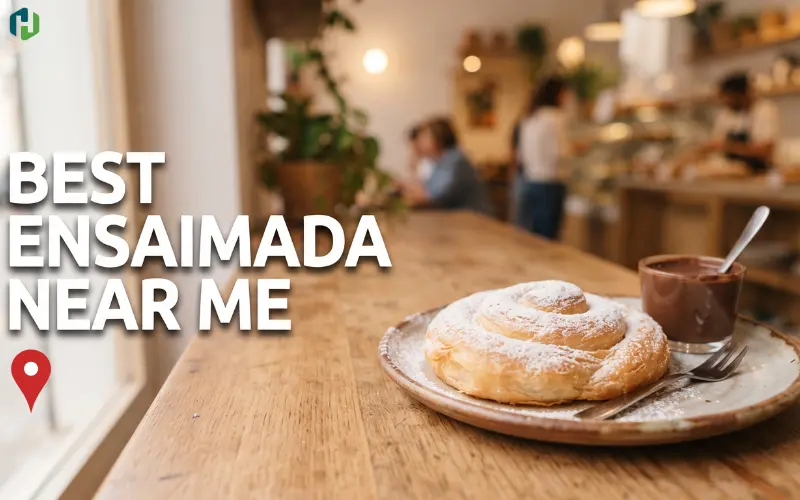
Some pastries are meant to impress you with colorful toppings or rich fillings. An Ensaimada takes a different approach. At first glance, it looks surprisingly simple—a soft spiral pastry lightly dusted with powdered sugar. But after the first bite, you realize why people have been lining up for it in bakeries for generations.
The first Ensaimada I tried came from a small bakery early in the morning. The baker had just finished dusting each spiral with powdered sugar before placing them on the display shelf. I expected something similar to a cinnamon roll or sweet bread, but it turned out to be much lighter. The layers pulled apart effortlessly, the texture was airy instead of dense, and every bite seemed to melt away without feeling overly sweet.
If you’ve been searching for the best Ensaimada near me, you’re probably hoping to find that same experience. The challenge is that authentic Ensaimadas aren’t available in every bakery. Some shops make shortcuts with ordinary bread dough, while traditional bakeries spend hours allowing the dough to rise naturally, creating the delicate texture that makes this pastry famous.
Knowing what separates a genuine Ensaimada from an average sweet roll will help you find bakeries that still prepare it the traditional way.
Quick Overview
What Is an Ensaimada?
An Ensaimada is a traditional spiral-shaped pastry that originated on the Spanish island of Mallorca. It’s known for its incredibly light texture, delicate layers, and signature coating of powdered sugar.
The name Ensaimada actually comes from the Mallorcan word saïm, meaning lard—the fat that was traditionally used to create its distinctive layered texture and remarkable lightness. The first written references to Ensaimadas date back to the 17th century, when documents confirm they were already being made for festivities and celebrations across the island. That long history helps explain why the pastry carries such an important place in Mallorcan food culture even today.
Although it looks simple, making a proper Ensaimada requires patience. The dough is mixed, stretched until extremely thin, rolled into its familiar spiral shape, and then left to rise slowly before baking. That long fermentation creates a pastry that’s soft, airy, and noticeably lighter than many other sweet breads.
Traditional recipes use flour, eggs, sugar, yeast, water, and fat to create the dough. While classic Ensaimadas are enjoyed plain with only powdered sugar on top, many bakeries also prepare filled versions containing pastry cream, chocolate, pumpkin jam, or whipped cream.
One reason the pastry has become so popular is its versatility. Some people enjoy it for breakfast with coffee, while others choose it as an afternoon treat or dessert after dinner.
Despite its growing popularity around the world, many bakers still consider the authentic Mallorcan version the gold standard because of its incredibly soft texture and carefully developed layers.
The first thing most people notice isn’t how sweet it is—it’s how unbelievably light it feels compared to almost every other pastry on the bakery shelf.
Related Post: Best Arepa de Choclo Near Me
Why This Spiral Pastry Is Unlike Any Other Sweet Bread
At first glance, it’s easy to mistake an Ensaimada for an ordinary sweet roll.
Once you cut into it, though, the difference becomes obvious.
Unlike dense pastries that rely on heavy fillings or thick dough, an Ensaimada feels almost weightless. The interior is filled with delicate strands of dough that gently separate as you pull each piece apart, creating a texture that’s closer to fine pastry than traditional bread.
That lightness doesn’t happen by accident.
The dough goes through a long resting process that allows it to develop naturally. Instead of rushing fermentation, experienced bakers give the dough enough time to rise slowly, which produces its characteristic airy structure.
Another feature that makes Ensaimadas unique is their subtle sweetness. Rather than overwhelming the palate with sugar, they allow the buttery aroma, soft dough, and delicate flavor to take center stage. The powdered sugar sprinkled on top adds just enough sweetness without masking the pastry itself.
I’ve always appreciated how balanced an authentic Ensaimada feels. It satisfies a sweet craving without becoming overly rich, making it surprisingly easy to finish an entire pastry before realizing you’ve reached the last bite.
Perhaps that’s why people who try a genuine Ensaimada often become loyal fans. It’s not flashy or overly complicated—it simply proves that simple ingredients, careful technique, and patience can produce something truly memorable.
Where Can You Find the Best Ensaimada Near You?
Finding an authentic Ensaimada isn’t always as straightforward as walking into the nearest bakery. While many bakeries sell sweet breads and pastries, relatively few prepare Ensaimadas using the traditional Mallorcan method.
Your best starting point is a Spanish bakery. Bakeries that specialize in Spanish pastries are far more likely to make authentic Ensaimadas with slow-risen dough rather than adapting a standard bread recipe.
Spanish cafés are another excellent option. Many serve freshly baked Ensaimadas alongside coffee, making them a popular breakfast choice just as they are in Mallorca.
If there aren’t any Spanish bakeries nearby, look for independent European bakeries. Some family-owned bakeries produce a small selection of Mediterranean pastries that includes Ensaimadas, especially on weekends.
In larger cities, gourmet bakeries occasionally prepare them as seasonal specialties. Since they require time and careful handling, they’re often baked in limited quantities rather than throughout the day.
One thing I’ve noticed is that the smallest bakeries sometimes produce the most memorable Ensaimadas. Without trying to make hundreds at once, they can give the dough the time it needs to develop its distinctive light texture.
What Makes an Authentic Ensaimada?
A genuine Ensaimada is surprisingly easy to recognize once you know what to look for.
The first clue is its appearance.
An authentic Ensaimada has a neat spiral shape with visible layers winding toward the center. It should look light and slightly puffed rather than flat or overly dense.
The texture matters even more.
When you pull the pastry apart, the dough should separate into soft, airy strands instead of breaking apart like ordinary bread. That delicate structure comes from careful stretching and slow fermentation rather than extra ingredients.
The crust should be lightly golden with a gentle crispness on the outside while remaining exceptionally soft inside.
Powdered sugar is another signature feature. Traditional Ensaimadas aren’t covered with thick icing or heavy glazes. Instead, a light dusting of powdered sugar finishes the pastry without hiding its flavor.
Freshness also makes a noticeable difference.
A well-made Ensaimada should feel tender and slightly springy when gently pressed. If it feels dry or unusually heavy, it may have been sitting on the shelf for too long.
I’ve found that the best bakeries rarely need to advertise how authentic their Ensaimadas are. One bite usually tells the story better than any menu description.
Related Post: Best Tarta de Choclo Near Me
Classic vs Filled Ensaimadas: Which Should You Try First?
Many bakeries now offer several varieties of Ensaimadas, which leaves first-time visitors wondering where to begin.
The classic Ensaimada remains the traditional choice.
It contains no filling, allowing the soft dough, delicate layers, and buttery aroma to become the focus. A simple coating of powdered sugar is all it needs.
For anyone trying an Ensaimada for the first time, this version provides the clearest picture of what has made the pastry famous for generations.
Filled Ensaimadas, however, have become incredibly popular as well.
Pastry cream creates a smooth, creamy center that’s rich without becoming overwhelming. Chocolate versions appeal to anyone with a sweeter tooth, while pumpkin jam—known in Mallorca as cabello de ángel—offers a traditional filling with a gentle sweetness and silky texture.
Some bakeries even prepare whipped cream or custard-filled versions that are especially popular for celebrations.
Personally, I’d recommend beginning with the classic pastry.
Once you’ve experienced its delicate texture on its own, exploring the filled varieties becomes much more enjoyable because you can appreciate how each filling changes the overall character without losing what makes an Ensaimada unique.
Spanish Ensaimada vs Filipino Ensaimada
One thing that surprises many people searching for Ensaimada near me is discovering that two very different pastries share the same name. The Spanish or Mallorcan version and the Filipino version are both called Ensaimada, but they offer completely different eating experiences.
The Spanish Mallorcan version is understated. It’s airy, relatively light in sweetness, and finished with a generous dusting of powdered sugar. The focus is entirely on the delicate texture and slow-fermented dough rather than rich toppings or heavy fillings. Every bite highlights the craftsmanship behind the dough itself, which is why traditional bakeries place so much importance on careful fermentation and proper shaping.
The Filipino version evolved after Spanish colonization introduced the pastry to the Philippines, where local bakers gradually adapted it to regional tastes over the centuries. Today, Filipino Ensaimada is noticeably richer, softer, and sweeter. It’s commonly topped with butter and grated cheese, creating the salty-sweet combination that has become a signature of Filipino bakeries. Some versions are also filled with ube, the vibrant purple yam that adds a gentle earthy sweetness along with its unmistakable color.
Neither version is better than the other. They simply reflect the food cultures that shaped them. The Mallorcan pastry celebrates delicate layers and restrained sweetness, while the Filipino version embraces richer flavors and generous toppings.
If you’re specifically looking for the Mallorcan style, search for Spanish bakeries or cafés. If you’re craving the Filipino version, look for Filipino bakeries or Asian grocery stores with a bakery or deli section. Knowing which one you’re after before you begin searching saves a lot of confusion and makes it much easier to find exactly the pastry you’re hoping to enjoy.
Google Maps Search Tips
Searching only for “best Ensaimada near me” doesn’t always produce the best results because many bakeries simply list their products under general categories like pastries or sweet breads.
Instead, search for “Spanish bakery near me,” “Mallorcan bakery near me,” or “Spanish café near me.” Those searches often reveal bakeries that prepare Ensaimadas even when they don’t mention them prominently online.
Once you’ve found a few options, open the Photos section on Google Maps.
Customer photos usually provide a much clearer picture than promotional images. You’ll often see the actual size of the pastry, whether it’s lightly dusted with powdered sugar, and whether the bakery offers classic or filled versions.
The Reviews section is equally helpful.
Search within reviews for words like “Ensaimada,” “Mallorca,” “spiral pastry,” or “powdered sugar.” If multiple customers specifically mention the pastry, it’s often one of the bakery’s specialties.
Before making a special trip, consider calling ahead.
Some bakeries prepare Ensaimadas only on weekends or early in the morning, and popular batches often sell out long before the afternoon.
Is Ensaimada Halal?
An Ensaimada can be halal-friendly, but there are a few ingredients worth checking before ordering.
The basic dough is usually made with flour, eggs, sugar, yeast, and water, all of which are generally suitable for a halal diet.
The main point to ask about is the fat used in the dough.
Traditional Mallorcan Ensaimadas have historically been made with lard, which comes from pork and is not halal. Today, however, many bakeries outside Mallorca prepare Ensaimadas using butter or vegetable shortening instead, making them suitable for many Muslim customers.
If you’re ordering a filled Ensaimada, it’s also worth asking about the filling.
Pastry cream, whipped cream, or chocolate fillings are often halal-friendly, but some specialty recipes may contain flavorings or ingredients that you’d prefer to verify.
Cross-contamination can also be important if the bakery prepares products containing pork or alcohol-based fillings on the same equipment.
The easiest approach is simply to ask which fat the bakery uses in its Ensaimadas. Most staff members can answer that question quickly, and it immediately tells you whether the pastry is likely to fit your dietary requirements.
Best Cities to Find Authentic Ensaimadas
If you’re looking for the best Ensaimada near me, your chances improve considerably in cities with established Spanish communities or strong European bakery scenes.
United States
Miami is one of the easiest places to begin your search. The city’s large Hispanic population has helped create numerous Spanish bakeries where traditional pastries remain part of everyday life.
New York City is another excellent destination. Manhattan, Queens, and parts of Brooklyn are home to Spanish cafés and independent bakeries that occasionally prepare authentic Mallorcan Ensaimadas alongside other regional specialties.
Los Angeles continues to grow its international food scene, making it another city where specialty bakeries sometimes feature Ensaimadas, especially during weekends and holidays.
Chicago also deserves attention. Its diverse European bakery culture makes it possible to find traditional pastries that aren’t commonly available elsewhere.
United Kingdom
In the UK, London remains the strongest destination for authentic Spanish pastries. Spanish bakeries and cafés across the city often serve Ensaimadas alongside coffee and other traditional baked goods.
Cities such as Manchester, Birmingham, and Leeds have growing international bakery scenes where Spanish pastries occasionally appear, particularly in independent bakeries rather than large chains.
Even if you don’t live near one of these cities, Spanish food festivals and European markets can be excellent opportunities to discover freshly baked Ensaimadas prepared using traditional methods.
Ensaimada vs Brioche: What’s the Difference?
At first glance, some people mistake an Ensaimada for brioche because both are soft, slightly sweet pastries.
Once you taste them side by side, however, the differences become clear.
An Ensaimada is all about lightness. The dough is stretched into thin layers before being rolled into its signature spiral, creating a pastry that pulls apart into delicate strands. Even though it’s rich enough to feel satisfying, it never becomes overly heavy.
Brioche, by comparison, relies on a much richer dough containing generous amounts of butter and eggs. That creates a softer, denser texture with a noticeably buttery flavor.
The appearance also differs.
An Ensaimada is instantly recognizable because of its spiral shape and generous dusting of powdered sugar.
Brioche is usually baked in loaf tins, individual rolls, or braided shapes and often has a shiny golden surface created by an egg wash rather than powdered sugar.
The eating experience reflects those differences.
An Ensaimada feels surprisingly airy and delicate, making it easy to enjoy with coffee or tea without feeling overly full.
Brioche is richer and more filling, which is why it’s commonly used for sandwiches, French toast, or desserts as well as breakfast.
I’ve always thought the best way to describe an Ensaimada is as something that looks simple but feels incredibly refined. It isn’t trying to compete with richer pastries—it succeeds because of its balance, texture, and remarkable lightness.
We hope you guys find this guide helpful. If you like this one, here we have more for you:
Best Empanada de Espinaca Near Me
Best Callos a la Madrileña Near Me
FAQs
What is an Ensaimada?
An Ensaimada is a traditional spiral-shaped pastry from Mallorca, Spain. It’s known for its soft, airy texture, delicate layers, and light coating of powdered sugar.
Is an Ensaimada sweet?
Yes, but only mildly. Rather than being heavily sweetened, it has a subtle sweetness that allows the flavor and texture of the dough to stand out.
Are Ensaimadas always filled?
No. The traditional version is served plain with powdered sugar. Many modern bakeries also prepare filled varieties using pastry cream, chocolate, pumpkin jam, or whipped cream.
Why is an Ensaimada so light?
The dough goes through a slow fermentation process and is stretched into very thin layers before baking. This creates its famous airy texture.
Can I eat an Ensaimada for breakfast?
Absolutely. In Spain, it’s commonly enjoyed with coffee or hot chocolate during breakfast, although many people also eat it as an afternoon snack or dessert.
Is an Ensaimada halal?
It depends on the ingredients. Traditional Mallorcan recipes often use lard, which is not halal. Many modern bakeries use butter or vegetable shortening instead, so it’s always worth asking before ordering.
Can I freeze an Ensaimada?
Yes. Fresh Ensaimadas freeze well and can be gently reheated to restore much of their soft texture.
Why can’t I find Ensaimadas everywhere?
Authentic Ensaimadas require time, skill, and careful fermentation, so many bakeries choose easier pastries that can be produced more quickly.
Conclusion
Finding the best Ensaimada near me isn’t simply about choosing the bakery with the highest online rating. It’s about finding a place that still values slow fermentation, carefully prepared dough, and the traditional techniques that have made this Mallorcan pastry famous for generations.
Start by looking for authentic Spanish bakeries and family-owned cafés, explore customer photos on Google Maps, read reviews carefully, and don’t hesitate to call ahead to ask whether fresh Ensaimadas are available that day. Since they’re often baked in limited batches, arriving early usually gives you the best chance of enjoying one at its freshest.
Whether you choose the classic powdered sugar version or one filled with pastry cream or chocolate, a properly made Ensaimada proves that great baking doesn’t always require complicated ingredients. Sometimes all it takes is patience, craftsmanship, and a recipe that’s been perfected over generations.
Once you’ve tasted a truly authentic Ensaimada, you’ll understand why this elegant spiral pastry continues to attract devoted fans far beyond the island where it was first created.