
Check the back of the bag. If it says “Made in Turkey,” you’re good — that one uses halal beef gelatin. Anything made in Germany, the UK, Spain, France, or the US? Put it back. Pork gelatin.
Quick Answer
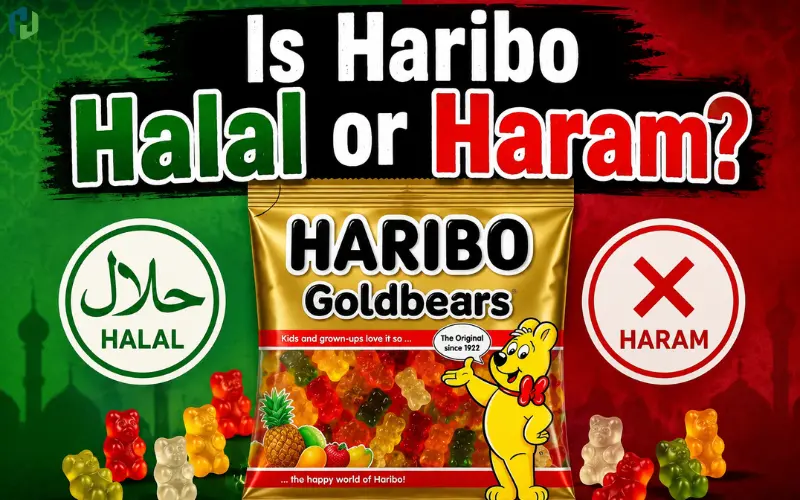
So a friend of mine told me a few years back that Haribo isn’t always halal, and I genuinely laughed at her. Gummy bears? Come on. Turns out she was right and I was the idiot who’d been eating Goldbears for years without checking anything.
Once I actually looked into it I understood why people search this constantly. It’s not a simple yes or no, and that’s annoying when you just want an answer before you grab a bag at the checkout.
Related Post: Are Haribo Gummy Bears Halal or Haram?
The whole thing comes down to one word: gelatin
You’ve seen it on the ingredients list. It’s what gives Haribo that chew, that bounce-back texture instead of just being a sad blob of sugar. Without gelatin, gummy candy basically doesn’t exist in the form we know it.
Here’s the problem. Gelatin comes from animal collagen — skin, bones, that kind of thing — and it can come from a pig or it can come from a cow. Same word on the label. Completely different ruling for us.
And Haribo, frustratingly, doesn’t shout this from the rooftops on the front of the packaging. You actually have to dig.
Pork or beef — it depends on the country, not the flavor
I wish I could tell you Starmix is always fine or Goldbears are always the problem. It’s not that simple.
Germany, UK, Austria, Spain, France, USA — all pork gelatin. Haribo’s own customer service has said this outright when people asked them directly. The UK range specifically uses gelatin from pork. So that bag you grab at Tesco or your local corner shop? Haram.
Turkey is the exception. Their factory there uses beef gelatin, and it’s actually halal certified — you’ll see “HELAL” printed right on the bag. Turkey makes this version specifically because, well, it’s a Muslim-majority country, so it made sense for them to do it properly there.
So weirdly, the deciding factor isn’t the recipe. It’s literally which factory packed your specific bag.
How to actually check this in the store
Flip it over. Somewhere on the back, tiny print, it’ll say where it was made.
That’s the whole trick. No app needed, no calling customer service, just turn the bag around.
A few things I’ve noticed doing this myself:
- Don’t trust the front design — Turkish and German bags can look almost identical
- Halal grocery stores and Middle Eastern markets usually stock the Turkish import specifically
- Big regular supermarkets like Tesco or Sainsbury’s basically never carry it — it’s the German pork version by default
What about everything else in there
People get so focused on gelatin they forget to check the rest, so here’s the full rundown of a typical Goldbears bag.
Basically everything except gelatin is a non-issue. It’s wild that one ingredient carries this entire debate on its back.
One more thing — the red ones
Some of the brighter colored Haribo, especially red and pink mixes, sometimes use Carmine (E120). That’s a dye made from crushed cochineal insects. Most scholars say this is haram since it’s not from a properly slaughtered halal animal, it’s literally bug-derived. Doesn’t show up everywhere but worth a glance if you’re checking thoroughly.
Can’t find the Turkish bags? Here’s your backup plan
I get it, not everyone has a halal store nearby. Good news — a couple Haribo products skip gelatin completely and use starch instead.
Dragibus is one. Sour Spaghetti (sometimes labeled S’ghetti) is another. Neither one is marketed as “halal” specifically, they just happen to not use gelatin at all, so the whole pork-vs-beef question doesn’t even apply. Still worth checking the current ingredients since formulas shift around by country sometimes.
Quick note on kosher
Haribo does have a kosher line too, made in Austria with kosher-certified beef gelatin. But kosher isn’t halal — different slaughter rules, different process. Seeing a kosher symbol tells you it’s pork-free, that’s it. Doesn’t automatically mean it meets halal requirements unless it’s actually marked halal as well.
Reference Table If You Just Want the Quick Version
Why does Haribo even bother making two different versions?
I wondered about this for a while. Why not just pick one gelatin source and use it everywhere?
Turns out it’s just business. Haribo sells in over 100 countries, and a huge chunk of that is Muslim-majority markets — Turkey itself, plus exports going out to places like Saudi Arabia, Pakistan, Malaysia, the UAE. If they only made the pork version, they’d be locking themselves out of a massive customer base. So building a separate halal-certified line in Turkey, where beef gelatin sourcing and zabiha slaughter infrastructure already exists at scale, made more sense than trying to convert the German factories.
It’s not really about Haribo caring deeply one way or the other. It’s about not leaving money on the table. Which, honestly, works out fine for us — we just need to know which bag is which.
A mistake I made for years (so you don’t have to)
I used to assume that because a Haribo product was sold in a Middle Eastern country’s supermarket, it was automatically the halal version. Big mistake. A lot of stores in Muslim-majority countries still import the regular German or UK stock alongside the Turkish stuff, especially in bigger international supermarket chains. The shelf doesn’t sort it for you.
So even shopping in Dubai or Karachi doesn’t guarantee you’re safe. You still have to flip the bag and check. I learned this the hard way after buying a bag in a hypermarket assuming it’d obviously be the halal one, only to read “Produced in Germany” later that night. Lesson learned.
What about gummy candy in general, not just Haribo?
Since we’re already here, it’s worth zooming out for a second. Haribo isn’t unique in this gelatin problem — it’s an industry-wide thing. Trolli, Albanese, most store-brand gummy candy, a lot of them use pork gelatin by default unless they specifically market themselves as halal or vegan.
The pattern to remember is this: if a gummy candy feels soft and stretchy and bounces back when you bite it, it’s almost certainly gelatin-based. If it’s more brittle or has a slightly grainy texture, there’s a decent chance it’s pectin or starch-based instead, which sidesteps the whole issue.
This is actually a useful habit beyond just Haribo. Texture alone can give you a hint before you even read the label.
Does cooking or baking with Haribo change anything?
Random question, but I’ve seen people ask this — some bakers melt down gummy bears for decorating cakes or making candy bark. Does melting it change the halal ruling?
No. Heat doesn’t transform haram gelatin into something permissible. If the source gelatin was pork-based, melting it, baking it, freezing it, none of that changes where it came from. The form changes, the source doesn’t. Worth mentioning because I’ve actually seen this question pop up in baking forums more than once.
A note for parents
If you’ve got kids who love Haribo and you’re trying to manage this without turning grocery shopping into a debate every single time, here’s what’s worked for people I know: just buy in bulk when you do find the Turkish version, and keep a small stash at home so you’re not stuck checking bags every single trip. Some halal stores also sell multipacks specifically because they know families go through this exact struggle.
It’s a small thing, but it removes the daily friction of having to explain the same thing to a five-year-old standing in the candy aisle.
If you like this one, here we have more for you:
- Are Welch’s Fruit Snacks Halal?
- Is Sour Patch Kids Halal?
- Is Poppi Halal or Haram?
- Is Alani Nu Halal or Haram?
- Halal Snacks in UK
- Is White Wine Vinegar Halal or Haram?
FAQs
Is all Haribo haram?
No — just the versions made outside Turkey. The Turkish-made ones use halal beef gelatin and carry certification.
How do I know which one I have?
Look at the back of the bag for “Made in Turkey” or a HELAL mark. Anything else listed (Germany, UK, etc.) means pork gelatin.
Does Starmix have pork in it?
The standard UK/EU version, yes. The Turkish version doesn’t.
Is there a Haribo option with no gelatin at all?
Yep — Dragibus and Sour Spaghetti use starch instead, no animal gelatin involved.
Kosher Haribo = halal Haribo?
Not necessarily. Kosher rules and halal rules aren’t the same thing, even though both ban pork.
Conclusion
This isn’t a brand you can just trust based on the name. The same bag of gummy bears can be completely fine or completely off-limits depending on three words printed in tiny font on the back — “Made in Turkey” versus literally anywhere else.
If you’ve got access to a halal store, grab the Turkish import and stop overthinking it. If all you’ve got is the regular supermarket version, skip it, that’s pork gelatin plain and simple. And if you just want something safe without the hunt, Dragibus or the starch-based options exist for exactly this reason.
Check the label. Every single time. That’s really the whole answer here.