
Is non-alcoholic wine halal? This is a very common question worldwide as non-alcoholic beverages become more popular in restaurants, supermarkets, and social events. Many people assume that removing alcohol automatically makes a drink permissible, but the reality is more complex.
Non-alcoholic wine is marketed as a safer and alcohol-free alternative to traditional wine. It is widely available in the USA, UK, Europe, and other regions where demand for alcohol-free lifestyle options is increasing. However, its halal status is often debated due to how it is produced, labeled, and processed.
Whether non-alcoholic wine is halal requires looking beyond the label. Factors such as fermentation, residual alcohol content, production methods, and branding all play a role. This guide explains everything in detail so you can clearly understand its status in a global context.
Non-Alcoholic Wine Status Table
| Category | Status | Explanation |
| Alcohol Content | ⚠️ Varies | May contain trace amounts (0.0%–0.5%) |
| Fermentation | ⚠️ Concern | Derived from wine fermentation |
| Certification | ⚠️ Limited | Not widely available globally |
| Ingredients | ⚠️ Check needed | Additives may vary |
| Manufacturing Method | ⚠️ Variable | Some leave residual alcohol |
| Legal Labeling | ⚠️ Misleading | “Non-alcoholic” ≠ alcohol-free |
| Overall Verdict | ⚠️ Depends | Based on product-specific details |
What is Non-Alcoholic Wine?
Non-alcoholic wine is a beverage designed to look, taste, and smell like traditional wine but without significant intoxicating alcohol content.
It is made primarily from grapes, just like regular wine. The key difference is that after fermentation, alcohol is removed or reduced to very low levels using modern techniques.
Despite being labeled “non-alcoholic,” many products still contain small traces of alcohol, often up to 0.5% depending on the country and brand.
This small detail is extremely important because it directly affects how the product is viewed from a halal perspective.
Non-alcoholic wine is often used in social settings, restaurants, and events where people want a wine-like experience without consuming alcohol.
Why Non-Alcoholic Wine Has Become Popular Globally
The demand for non-alcoholic wine has grown rapidly worldwide, especially in the USA and UK.
One of the biggest reasons is lifestyle change. Many people are reducing alcohol consumption due to health concerns, religious beliefs, pregnancy, or personal choice.
Restaurants and hotels also offer non-alcoholic wine to attract customers who want to enjoy social drinking culture without alcohol effects.
Another reason is branding and marketing. Many companies promote it as a premium, sophisticated beverage, making it appealing even to non-drinkers.
This growing popularity has made it a common product in supermarkets and online stores.
How Non-Alcoholic Wine is Made (Step-by-Step Process)
Understanding the production process is essential to understanding its halal status.
1. Harvesting Grapes
The process begins with harvesting grapes, usually the same grapes used for traditional wine.
These grapes are selected based on sweetness, acidity, and flavor profile.
2. Crushing and Fermentation
The grapes are crushed to extract juice.
This juice is then fermented using yeast, which naturally produces alcohol.
At this stage, the drink becomes regular wine with alcohol content.
3. Alcohol Removal Process
After fermentation, alcohol is removed using techniques such as:
- Vacuum distillation
- Reverse osmosis
- Spinning cone technology
These methods reduce alcohol but may not eliminate it completely.
4. Flavor Adjustment
Since removing alcohol can affect taste, manufacturers often adjust flavor using natural or artificial additives.
This step ensures the drink still tastes like wine.
Bottling and Packaging
Finally, the beverage is bottled and labeled as non-alcoholic wine.
However, the final product may still contain trace alcohol levels.
Is Non-Alcoholic Wine Halal or Not?
There is no single universal ruling for non-alcoholic wine.
Its halal status depends on several factors, including alcohol percentage, production method, and certification.
If a product is completely free from intoxicating alcohol and does not involve questionable processing, some may consider it acceptable.
However, if it originates from traditional wine fermentation and contains residual alcohol, many consider it doubtful or not permissible.
This is why each product must be evaluated individually rather than applying a general rule.
Why There is So Much Confusion About It
The confusion around non-alcoholic wine comes from several sources.
First is labeling. The word “wine” itself carries strong association with alcohol, which creates hesitation.
Second is fermentation. Even if alcohol is removed later, the drink still starts as alcoholic wine.
Third is global regulation. In many countries, products with up to 0.5% alcohol can still be labeled non-alcoholic.
Fourth is marketing. Brands often present it as a luxury drink similar to wine, which adds to uncertainty.
Key Factors That Determine Halal Status
To understand non-alcoholic wine properly, multiple factors must be analyzed together.
1. Alcohol Content Level
Alcohol content is the most important factor.
Some products contain 0.5% alcohol, while others claim 0.0%.
Even small traces can be a concern depending on interpretation and standards.
2. Fermentation Origin
The drink is usually derived from fermented grapes.
This means alcohol is naturally produced before removal.
This origin plays a major role in halal discussions.
3. Certification Status
Halal certification ensures that the product meets specific guidelines.
However, many non-alcoholic wines in Western markets are not certified.
This increases uncertainty for consumers.
4. Ingredients and Additives
Some brands add preservatives, flavor enhancers, or stabilizers.
These ingredients must also be checked for halal compliance.
Hidden additives can affect overall status.
5. Manufacturing Techniques
Different techniques remove alcohol differently.
Some leave trace amounts behind even after processing.
This is why “0.0%” claims must be verified carefully.
6. Legal Definitions in USA & UK
In both the USA and UK, drinks with less than 0.5% alcohol can be labeled non-alcoholic.
This legal definition does not guarantee complete absence of alcohol.
It is only a labeling standard.
7. Branding and Perception
The term “wine” creates a psychological barrier.
Even if alcohol is removed, the association remains strong.
This affects consumer perception globally.
Global Availability of Non-Alcoholic Wine
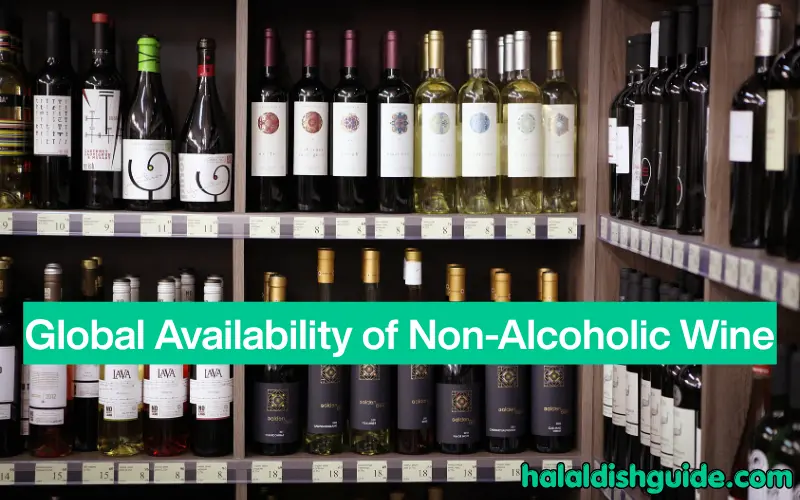
Non-alcoholic wine is now widely available across supermarkets, restaurants, and online platforms.
The USA and UK are among the biggest markets for this product.
It is often marketed as a lifestyle drink for social occasions.
Demand continues to grow as more people reduce alcohol consumption.
Health Perspective
Non-alcoholic wine is often promoted as a healthier alternative.
It may contain antioxidants from grapes.
However, some versions contain added sugars, which reduce health benefits.
Not all products are equally healthy.
Common Misconceptions
Many people think non-alcoholic means completely alcohol-free, which is not always true.
Some assume fermentation automatically makes something forbidden, which depends on interpretation.
Others believe grape-based drinks are always the same, which is incorrect.
Expert Opinions
Experts recommend carefully reading labels and checking certification.
Halal-certified products are the safest option.
When in doubt, avoiding unclear products is advised.
Practical Tips for Consumers
Always check the alcohol percentage.
Look for halal certification if available.
Avoid unclear or unverified brands.
Prefer transparent labeling and trusted companies.
Should You Drink Non-Alcoholic Wine?
It depends entirely on the specific product.
Some versions may meet acceptable standards, while others may not.
Careful evaluation is necessary before making a decision.
We hope you guys find this guide helpful. If you like this one, here we have more for you:
- Top 10 Halal Restaurants in Bangkok: Complete Food Guide
- NYC Halal Eats: Best Halal Restaurants & Street Food in New York
- Is Steak Halal? USA & UK Guide to Halal Beef, Restaurants & Meat
FAQs
Is non-alcoholic wine halal?
It depends on alcohol content and production method.
Does it contain alcohol?
Some products contain trace alcohol.
Is 0.0% wine completely alcohol-free?
Not always; verification is needed.
Is fermentation allowed?
It depends on outcome and interpretation.
Can Muslims consume it?
Only if it meets halal requirements.
Is it the same as grape juice?
No, they are different products.
Is certification important?
Yes, it provides reliability.
Should it be avoided?
Only if details are unclear.
Conclusion
Non-alcoholic wine is a complex product with no single universal answer regarding its halal status. Its permissibility depends on alcohol content, fermentation process, ingredients, certification, and manufacturing methods.
While some versions may be acceptable, others remain questionable due to residual alcohol and production origins. Therefore, careful checking, label reading, and informed decision-making are essential before consumption.