
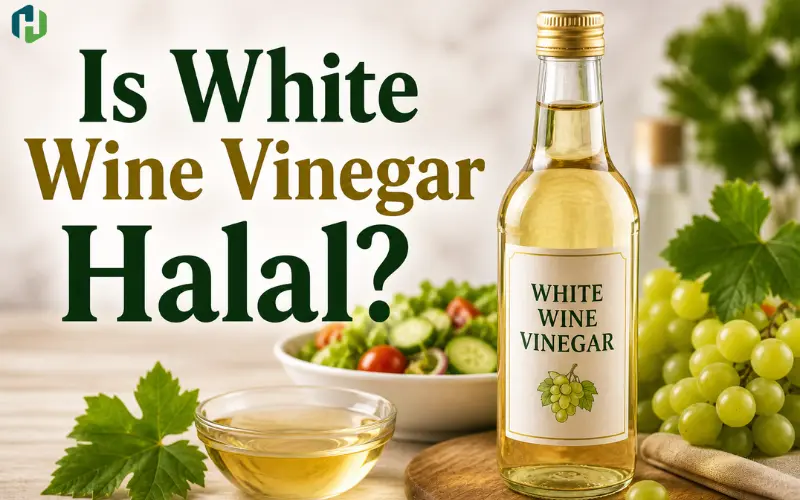
Is white wine vinegar halal or Haram? Many Muslims in the USA and UK search for this question because white wine vinegar is commonly used in salad dressings, sauces, marinades, and packaged foods. The confusion comes from the fact that white wine vinegar is originally made from fermented wine, which raises concerns about alcohol and whether it remains halal after turning into vinegar.
Most Islamic scholars generally consider vinegar halal if the alcohol has fully transformed into vinegar through the fermentation process. However, some Muslims still avoid white wine vinegar because of its wine origin or concerns about added ingredients during manufacturing. Because food ingredients and production methods vary between brands, many halal-conscious consumers prefer checking labels carefully or choosing halal-certified vinegar products.
Quick Overview Table
| Category | Halal Status | Notes |
| White Wine Vinegar | Generally Halal | Alcohol transforms into vinegar |
| Distilled Vinegar | Halal | Common halal-friendly option |
| Apple Cider Vinegar | Halal | Popular alternative |
| Red Wine Vinegar | Generally Halal | Similar ruling to white wine vinegar |
| Flavored Vinegars | Depends | Check added ingredients |
| Best Option | Halal-Certified Vinegar | Safest choice |
What Is White Wine Vinegar?
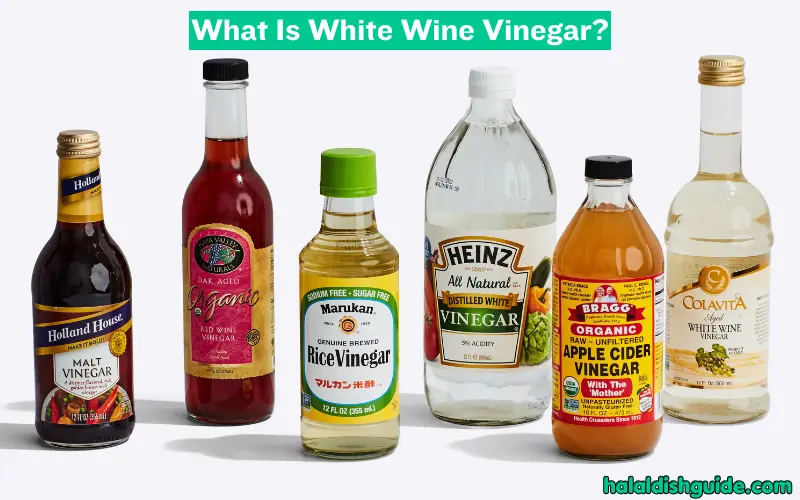
White wine vinegar is a type of vinegar made by fermenting white wine. The process begins with grapes being turned into wine through fermentation. After this, the wine is exposed to bacteria that convert alcohol into acetic acid, which creates vinegar.
This transformation changes the chemical structure of the liquid. The alcohol present in wine is converted into acetic acid, resulting in a sour, acidic liquid that is commonly used in cooking, as a dressing, and for food preservation.
White wine vinegar is popular in many cuisines because of its light flavor and versatility. It is often used in salad dressings, sauces, marinades, and pickling. Despite its widespread use, its origin from wine is what raises halal concerns.
Why White Wine Vinegar Raises Halal Questions
The main reason white wine vinegar raises halal questions is because it is originally derived from wine. Since wine is not permissible, some people question whether a product made from it can be considered halal.
The key issue is transformation. During the vinegar-making process, alcohol is converted into acetic acid. This means the final product is no longer wine, but a completely different substance. However, not everyone agrees on whether this transformation makes it permissible.
Another concern is how the vinegar is produced. Some methods involve natural fermentation, while others use industrial processes that may not fully complete the transformation. This can create uncertainty for consumers.
Because of these factors, white wine vinegar becomes a debated ingredient rather than a clear-cut case.
How Vinegar Is Made from Wine
Understanding the production process helps clarify the halal discussion. Vinegar is made through a two-step fermentation process.
First, sugars in grapes are converted into alcohol, producing wine. In the second stage, bacteria convert that alcohol into acetic acid. This process removes the intoxicating properties of the original liquid and creates vinegar.
In traditional methods, this transformation happens naturally over time. In modern production, it can be accelerated using controlled environments and specific bacteria.
The important point is that the final product does not behave like wine. It is sour, acidic, and not consumed for intoxication. This change in nature is central to the halal discussion.
Production Process
| Stage | Process | Result |
| Step 1 | Fermentation | Wine formed |
| Step 2 | Oxidation | Alcohol converts |
| Final | Acetic acid | Vinegar |
Scholarly Views on White Wine Vinegar

There are generally two main views regarding white wine vinegar.
The first view considers it halal if the transformation from wine to vinegar is complete. Scholars who support this opinion argue that the original substance has changed entirely, and the final product is no longer wine. This concept of transformation is an important principle in halal dietary rules.
The second view is more cautious. Some scholars prefer to avoid white wine vinegar because it originates from wine, even if the transformation is complete. They focus on avoiding anything that has a connection to wine.
There is also a balanced approach where individuals accept vinegar that forms naturally but avoid products where wine is intentionally processed into vinegar using industrial methods.
Because of these differences, many consumers follow the opinion they are most comfortable with.
Opinion Comparison
| View | Ruling | Reason |
| Permissive | Halal | Complete transformation |
| Cautious | Avoid | Origin from wine |
| Balanced | Depends | Process matters |
| Practical | Accept | Widely used |
Does White Wine Vinegar Contain Alcohol?
One of the most common questions is whether white wine vinegar still contains alcohol. In most cases, the alcohol is converted into acetic acid during the fermentation process.
However, trace amounts of alcohol may remain in some products. These amounts are usually extremely small and not intoxicating. For many people, this is acceptable, while others prefer to avoid any trace of alcohol.
The level of remaining alcohol can depend on the production method and quality of the vinegar. High-quality vinegar typically undergoes a more complete transformation.
Alcohol Content
| Product | Alcohol Level | Notes |
| White Wine Vinegar | Very low | Trace amounts |
| Red Wine Vinegar | Very low | Similar |
| Apple Cider Vinegar | None | Safer |
| Malt Vinegar | None | Widely accepted |
Types of Vinegar and Their Halal Status
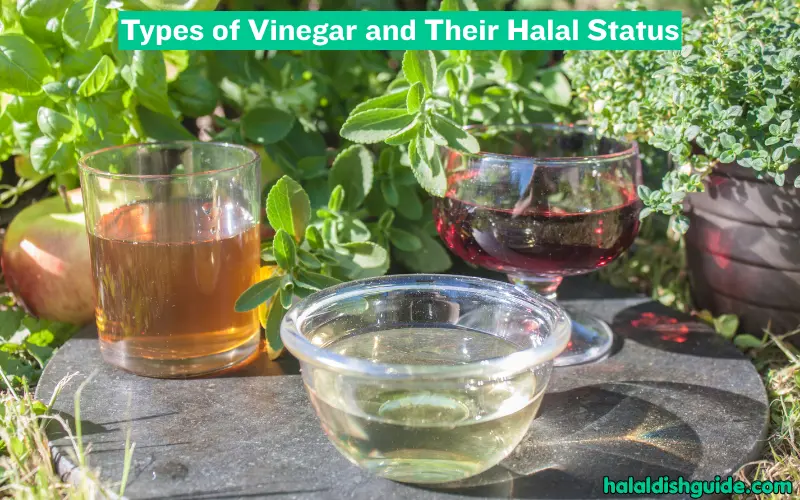
Not all vinegars are the same. Some are clearly halal, while others require checking.
Apple cider vinegar is widely accepted because it is made from apples rather than wine. Malt vinegar is also considered halal as it is made from grains.
Balsamic vinegar can vary because it may include additives or be produced using wine-based methods.
White wine vinegar and red wine vinegar are the most debated because of their origin.
These differences helps you make better choices.
Vinegar Comparison
| Vinegar Type | Halal Status | Recommendation |
| Apple Cider | Halal | Best choice |
| Malt Vinegar | Halal | Safe |
| White Wine | Depends | Check process |
| Red Wine | Depends | Verify |
| Balsamic | Depends | Check label |
Use of White Wine Vinegar in Food
White wine vinegar is used in many everyday foods, including salad dressings, sauces, and marinades. It is also commonly used in pickling and preserving vegetables.
Because it is used in small amounts, many people do not notice it as an ingredient. However, it still plays a role in the overall halal status of a dish.
Packaged foods often list vinegar as an ingredient, but they may not always specify the type. This is why reading labels carefully is important.
In restaurants, it may be more difficult to verify, so asking about ingredients can help.
Common Foods
| Food | Vinegar Concern |
| Salad Dressing | Check |
| Pickles | Check |
| Sauces | Check |
| Marinades | Check |
| Ready Meals | Check |
Best Halal Alternatives to White Wine Vinegar
If you prefer to avoid white wine vinegar, there are several alternatives.
Apple cider vinegar is one of the best substitutes because it has a similar acidity and is widely accepted as halal.
Lemon juice is another natural alternative that works well in salads and marinades.
Malt vinegar can also be used in certain recipes, depending on the flavor needed.
These alternatives allow you to avoid uncertainty while still achieving similar results in cooking.
Alternatives
| Alternative | Benefit |
| Apple Cider Vinegar | Halal |
| Lemon Juice | Natural |
| Malt Vinegar | Safe |
| Rice Vinegar | Check source |
| White Vinegar | Usually safe |
Practical Advice for Consumers
Because of the differences in opinion, the best approach is to follow a consistent method.
Some people choose to use white wine vinegar based on the transformation principle.
Others avoid it and use alternatives instead.
Both approaches are common, and the choice depends on personal comfort and understanding.
Common Mistakes People Make
A common mistake is assuming all vinegar is the same.
Another mistake is ignoring labels and production methods.
The safest approach is always to verify and choose trusted products.
What to Check Before Buying
Before buying vinegar, check:
- ingredient list
- production method
- brand transparency
- certification if available
These steps help you make an informed decision.
We hope you guys find this guide helpful. If you like this one, here we have more for you:
- Is Gelatin Halal or Haram?
- Is KFC Halal or Haram?
- Is Chipotle Halal or Haram?
- Is Beer Halal or Haram?
FAQs
Is white wine vinegar halal in Islam?
Most scholars generally consider white wine vinegar halal because the alcohol transforms completely into vinegar.
Does white wine vinegar contain alcohol?
White wine vinegar may contain tiny trace amounts, but it is mainly converted into acetic acid during fermentation.
Why do some Muslims avoid white wine vinegar?
Some Muslims avoid it because it originates from wine and they prefer avoiding doubtful ingredients.
Is vinegar mentioned as halal by scholars?
Many Islamic scholars consider naturally transformed vinegar permissible and halal.
Is white wine vinegar used in packaged foods?
Yes, it is commonly used in sauces, dressings, marinades, and processed foods.
Is apple cider vinegar halal?
Yes, apple cider vinegar is generally considered halal.
Are all vinegars halal?
Most vinegars are generally considered halal, but flavored vinegars may contain questionable additives.
What is the safest vinegar option for Muslims?
Halal-certified vinegar products are usually the safest option for halal-conscious consumers.
Conclusion
Is white wine vinegar halal or Haram? Most Islamic scholars generally consider white wine vinegar halal because the alcohol undergoes a complete transformation during the vinegar-making process. This process changes wine into vinegar, which many scholars view as a different substance entirely and therefore permissible for Muslims to consume.
However, some Muslims still choose to avoid white wine vinegar because of its original wine source or uncertainty about manufacturing methods and additives. For halal-conscious consumers in the USA and UK, checking ingredient labels and choosing halal-certified vinegar products can provide additional confidence when buying sauces, dressings, and packaged foods.