
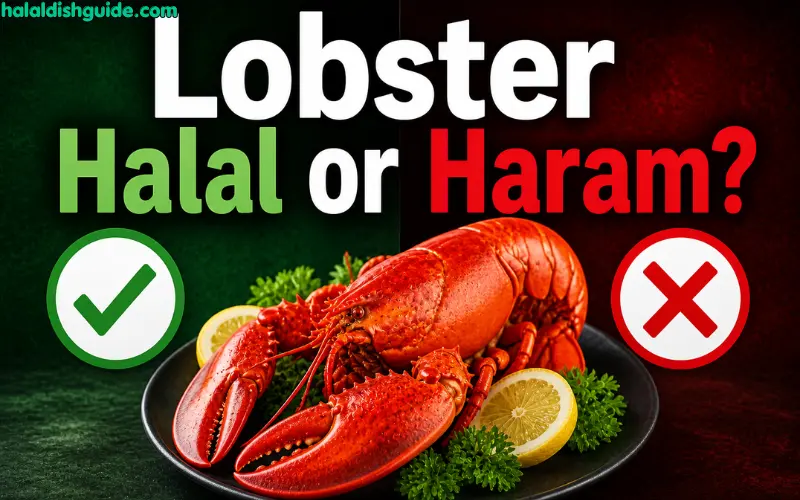
Is lobster halal or haram? This is one of the most debated seafood questions among Muslims in the USA and UK because Islamic scholars have different opinions about shellfish and crustaceans. Lobster is a popular seafood dish in many Western countries, especially in restaurants and seafood markets, but its halal status depends largely on the Islamic school of thought a Muslim follows.
Most Islamic scholars from the Shafi’i, Maliki, and Hanbali schools generally consider lobster halal because it comes from the sea and falls under permissible seafood. However, many Hanafi scholars traditionally consider lobster haram or makruh because it is classified as shellfish rather than fish. Muslims also discuss issues like humane cooking methods and restaurant cross-contamination when eating lobster dishes. Because scholarly opinions differ, many Muslims choose to follow the ruling of their trusted scholar or madhab.
Quick Overview Table
| Category | Halal Status | Notes |
| Shafi’i View | Halal | All seafood generally allowed |
| Maliki View | Halal | Sea creatures permissible |
| Hanbali View | Halal | Lobster usually permitted |
| Hanafi View | Haram or Makruh | Shellfish not considered fish |
| Restaurant Lobster | Depends | Cross-contamination concern |
| Best Option | Follow Trusted Scholar | Opinions vary |
The Classification of Seafood in Islamic Thought
The debate around lobster begins with how seafood is classified. In Islamic dietary discussions, the key question is whether all creatures from the sea are allowed or only specific types, such as fish. This classification plays a central role in determining whether lobster is halal.
Some scholars take a broad approach and consider everything that lives in the sea to be permissible. According to this view, lobster naturally falls into the halal category because it is a sea creature and not harmful in itself. This interpretation focuses on simplicity and general permissibility.
Other scholars take a more restrictive approach and differentiate between fish and other marine animals. In this view, only creatures that resemble fish are considered halal, while others, such as lobster, crab, and shrimp, may be questioned or restricted. This is why lobster becomes part of a larger discussion rather than a standalone issue.
This classification helps explain why opinions differ and why there is no single universal answer across all schools of thought.
Why Lobster Specifically Becomes a Debate
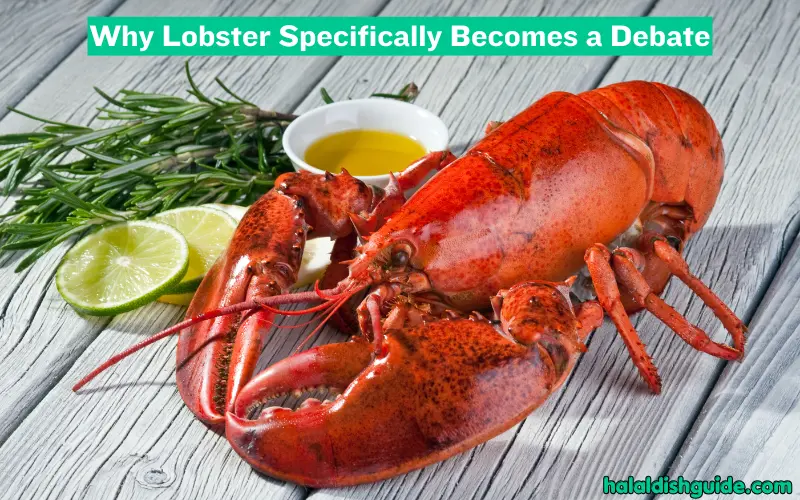
Lobster is not just any seafood item. It has a unique physical structure, with a hard shell, claws, and a bottom-dwelling lifestyle. Because of these characteristics, some scholars argue that it does not fit the traditional definition of fish.
This distinction is important because rulings often depend on classification. If lobster is treated as a type of sea animal broadly, then it is more likely to be considered halal. If it is treated as something separate from fish, then it may fall into a doubtful or restricted category depending on interpretation.
Another factor is how lobsters behave in their natural environment. It is a scavenger and lives on the ocean floor, which leads some scholars to compare it to creatures that are generally avoided. Others argue that this does not automatically make it impermissible.
Because of these factors, lobster becomes a central example in discussions about seafood rules in Islamic dietary guidelines.
Related Post: Is Rabbit Halal or Haram?
Major Scholarly Views on Lobster
There are generally two main perspectives regarding lobster.
The first view considers lobster halal. Scholars who support this opinion argue that all sea creatures are permissible unless there is a clear reason to prohibit them. They see lobster as part of the natural variety of seafood that people can consume without concern.
The second view considers lobster not permissible or at least doubtful. Scholars in this group focus on classification and argue that only fish-like creatures are clearly allowed. Since lobster does not resemble fish, they prefer to avoid it.
It is important to note that both views are based on interpretation and reasoning. This is why the debate continues and why different communities may follow different practices.
Opinion Comparison
| View | Ruling on Lobster | Reasoning |
| Broad Seafood View | Halal | All sea creatures allowed |
| Restrictive View | Not halal / doubtful | Only fish allowed |
| Middle Approach | Avoid if unsure | Prefer caution |
| Practical View | All sea creatures are allowed | Follow guidance |
Role of Different Islamic Schools of Thought
Different schools of thought have influenced how seafood is understood. Some schools adopt a broader definition of permissible seafood, while others apply more detailed classifications.
In broader interpretations, lobster is generally accepted as halal because it comes from the sea and is not harmful. In more restrictive interpretations, lobster may be excluded because it does not fall under the category of fish.
These differences are not random but come from long-standing methods of interpreting dietary guidelines. Each school uses its own principles to determine what is allowed and what is not.
For an individual, this means the answer often depends on which school of thought they follow or which scholar they trust.
Is Lobster Similar to Other Shellfish?
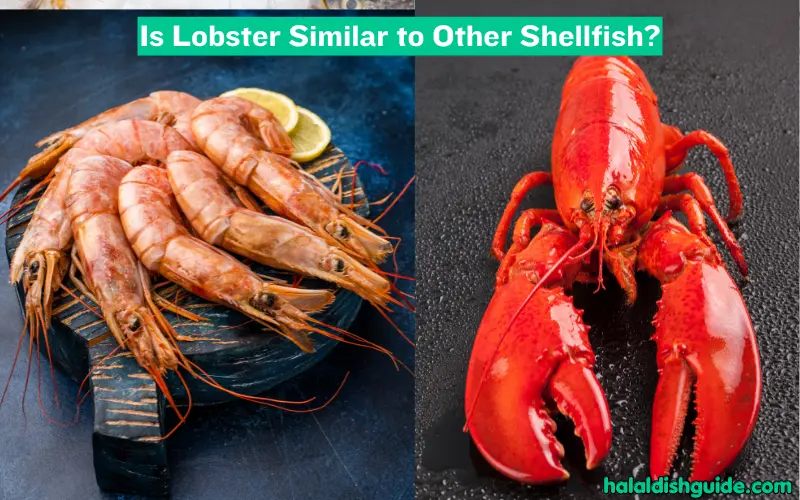
Lobster is often grouped with other shellfish such as crab, shrimp, prawns, and oysters. This grouping is important because the same debate applies to all of these items.
If someone follows the view that all seafood is halal, then shellfish are included without issue. If someone follows a more restrictive approach, then shellfish may be avoided.
This is why you will often see lobster discussed alongside shrimp and crab rather than on its own. The ruling is usually applied to the entire category rather than a single species.
Shellfish Category
| Seafood Type | Halal Status |
| Fish | Generally halal |
| Lobster | Disputed |
| Crab | Disputed |
| Shrimp | Mixed opinions |
| Oysters | Depends |
Health and Cleanliness Considerations
Another aspect sometimes mentioned in discussions is the nature of the animal itself. Lobsters live at the bottom of the ocean and may consume various materials found there. Some people use this as a reason for caution, while others argue that many seafood items share similar environments.
From a general perspective, lobster is widely consumed around the world and is considered safe and nutritious when properly prepared. However, cleanliness and sourcing can still play a role in personal decision-making.
For many people, this aspect is secondary compared to the main question of permissibility.
Practical Guidance for Muslims
Because there is no single agreed-upon answer, many people follow a practical approach.
Some choose to eat lobster based on the broader permissibility view. Others choose to avoid it based on a stricter interpretation. Both approaches are common and respected within the community.
For someone unsure, it is usually recommended to:
- follow a trusted scholar
- stay consistent with one opinion
- avoid switching views randomly
- choose caution if uncertain
This approach helps maintain clarity and consistency in dietary choices.
Common Misunderstandings About Lobster
A common misunderstanding is that lobster is automatically haram. This is not accurate because many scholars consider it halal.
Another misunderstanding is that all seafood is treated the same in every interpretation. In reality, there are clear differences in how seafood categories are defined.
These points help avoid confusion and allow people to make more informed decisions.
Cultural Influence on Lobster Consumption
Cultural practices also influence how lobster is viewed. In some regions, seafood, including lobster, is a regular part of the diet. In others, people avoid it due to local interpretations or traditions.
These cultural differences often align with scholarly interpretations followed in those regions. This is why you may see different practices even among Muslims living in different countries.
Should You Eat Lobster or Avoid It?
This is ultimately a personal decision based on knowledge and belief.
If you follow a view that allows all seafood, then lobster can be considered halal.
If you follow a stricter interpretation, then avoiding lobster may be the preferred choice.
For many people, the key is consistency and confidence in their decision.
We hope you guys find this guide helpful. If you like this one, here we have more for you:
- Is Shrimp Halal or Haram?
- Is Burger King Halal or Haram?
- Is Non-Alcoholic Wine Halal or Haram?
- Top 10 Halal Restaurants in Bangkok
FAQs
Is lobster halal in Islam?
Most Islamic scholars consider lobster halal, but many Hanafi scholars traditionally consider it haram or makruh.
Why do some Muslims avoid lobster?
Some Muslims avoid lobster because certain scholars classify shellfish and crustaceans as non-permissible seafood.
Is lobster halal for Hanafis?
Traditional Hanafi rulings generally do not allow lobster because it is not considered a fish.
Can Muslims eat lobster in restaurants?
Muslims may eat lobster in restaurants depending on their scholarly view, but cross-contamination and cooking methods may still be concerns.
Is all seafood halal in Islam?
The majority of scholars consider most seafood halal, while some schools place restrictions on shellfish and non-fish sea creatures.
Is boiling lobster alive halal?
Some Muslims question boiling lobsters alive because Islam encourages humane treatment of animals, although this does not usually change the halal ruling itself.
Is lobster halal in Shia Islam?
Many Shia scholars do not consider lobster halal because it is classified as shellfish rather than scaled fish.
Which seafood is universally halal?
Fish with scales are generally accepted as halal by all major Sunni schools of thought.
Conclusion
Is lobster halal or haram? The answer depends mainly on the Islamic school of thought a Muslim follows. The majority of scholars from the Shafi’i, Maliki, and Hanbali madhabs generally allow lobster because they consider most seafood halal. However, many Hanafi scholars traditionally avoid lobster because it is classified as shellfish instead of fish.
Muslims in the USA and UK also consider restaurant preparation methods, cross-contamination, and personal scholarly guidance before eating lobster. Since opinions differ among scholars and communities, many Muslims prefer following the ruling of their local scholar or madhab for clarity and confidence in halal food choices.