
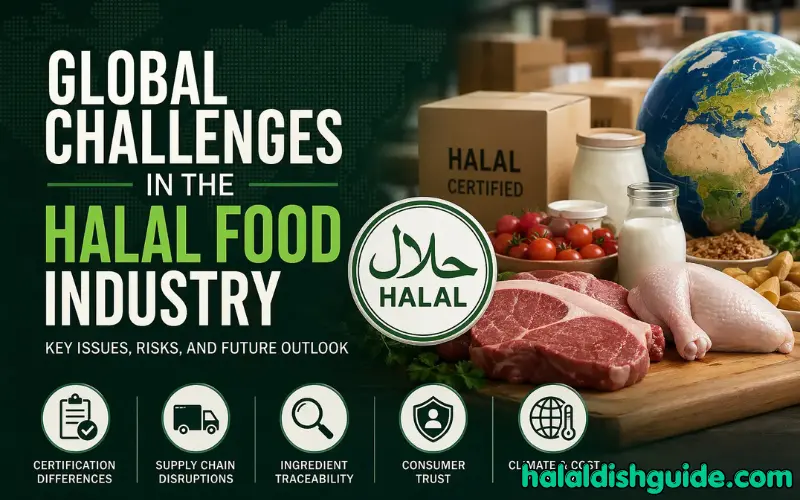
Global challenges in the halal food industry are becoming increasingly important as the sector continues to grow across international markets. The halal food market is no longer limited to Muslim-majority countries; it now has strong demand in the USA, UK, Europe, and many Asian regions. With this rapid expansion, businesses are facing new operational, regulatory, and trust-related challenges.
As more consumers demand transparency, quality assurance, and reliable certification, the halal food industry must adapt to global market standards. From supply chain issues to rising production costs and certification differences, these challenges directly affect manufacturers, retailers, exporters, and restaurant chains worldwide.
Quick Overview Table
| Category | Main Challenge | Industry Impact | Affected Area | Priority Level |
| Certification | Different global standards | Consumer confusion & export delays | International trade | High |
| Supply Chain | Shipping and storage disruptions | Product delays & cost increase | Manufacturing / Retail | High |
| Ingredients | Raw material verification | Compliance risks | Processed foods | High |
| Consumer Trust | Mislabeling and unclear labels | Brand reputation loss | Supermarkets / Restaurants | High |
| Climate & Cost | Rising production and logistics costs | Higher retail prices | Global food market | High |
Growth of the Global Halal Food Industry
Over the last decade, the halal food industry has transformed into one of the fastest-growing sectors in the global food market. What was once viewed primarily as a religiously guided category has now become a significant part of mainstream food retail and international trade.
The growth is driven by rising consumer awareness, population expansion, and increasing demand for clean and traceable food products. In countries like the USA and UK, halal products are now commonly found in supermarkets, restaurants, and online delivery platforms.
This expansion has created major opportunities for businesses, but it has also introduced several structural challenges. As companies expand into multiple countries, they face differences in regulation, certification, and supply chain requirements that can slow growth.
Certification and Standardization Challenges
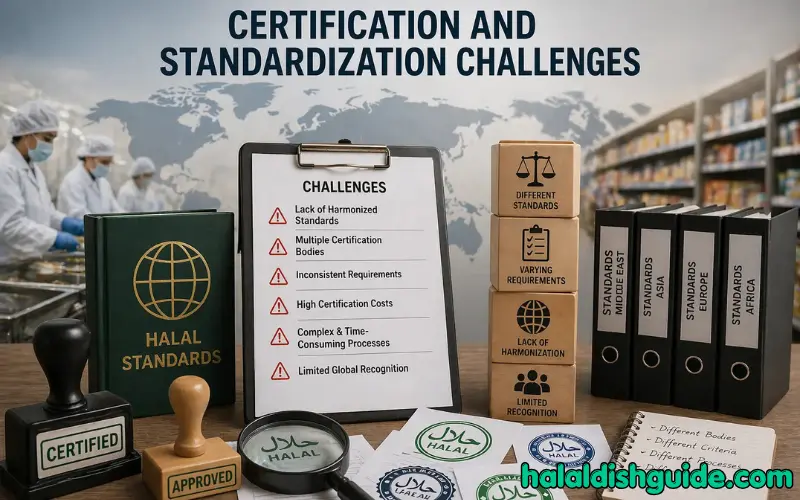
One of the major challenges in the global halal food industry is the absence of a unified standard. Different countries follow different halal certification systems, and this often creates confusion for both businesses and consumers.
A product that is accepted in one country may require fresh audits and recertification before it can enter another market. For example, standards in Southeast Asia may differ significantly from those used in Europe or North America.
This creates additional compliance costs for brands that want to operate internationally. Exporters often need to prepare separate documentation, packaging labels, and audit records for each region, which increases time and cost.
For smaller food brands and local manufacturers, this can become a major barrier to expansion. Many businesses struggle to manage multiple certification requirements at the same time.
Regulatory Differences Across Countries
Another major challenge comes from legal and regulatory differences. Food laws in the USA, UK, and Europe often require detailed ingredient labeling and traceability systems that may not match the requirements of Middle Eastern or Asian markets.
This difference can lead to delays in product launches and import approvals. Businesses that export frozen foods, meat products, or processed snacks often need to spend extra resources on compliance teams and legal review.
As the halal industry becomes more global, the absence of harmonized rules continues to remain one of the biggest obstacles to smooth international trade.
Supply Chain Disruptions
Supply chain stability is one of the most serious concerns in the halal food sector. Modern halal products often depend on ingredients sourced from multiple countries, which makes the supply chain highly interconnected.
Any disruption in logistics, shipping routes, or port operations can create delays in production and retail availability. This became even more visible in recent years as global freight costs increased and shipment timelines became less predictable.
For halal-certified meat, dairy, and frozen products, delays can be even more critical because temperature control and storage conditions must remain consistent throughout transport.
A weak supply chain can directly affect product quality, shelf life, and customer trust.
Ingredient Verification and Raw Material Sourcing
One of the less visible but highly important challenges is ingredient verification. Many modern packaged foods contain additives, stabilizers, emulsifiers, and flavoring agents that come from multiple international suppliers.
Ensuring that every ingredient meets halal requirements can be a lengthy process. Ingredients like gelatin, enzymes, and certain food colorings often require deeper sourcing checks.
For large food manufacturers, this means maintaining strong relationships with approved suppliers and regularly updating compliance documents. Any uncertainty in ingredient origin can delay product approval and damage consumer confidence.
This challenge is especially common in confectionery, dairy desserts, protein products, sauces, and processed snacks.
Cross-Contamination Risks
Cross-contamination remains one of the most sensitive issues in the halal food industry. Even if the ingredients themselves are compliant, the production process must also be carefully monitored.
If halal food products are processed on the same machinery as non-halal items without proper cleaning and separation, the product’s integrity can come into question.
This risk also exists during transportation and warehousing. Shared storage spaces and mixed logistics channels can create doubts for consumers.
For this reason, many businesses invest heavily in dedicated production lines and stricter quality control measures. However, this also increases operating costs.
Consumer Trust and Transparency
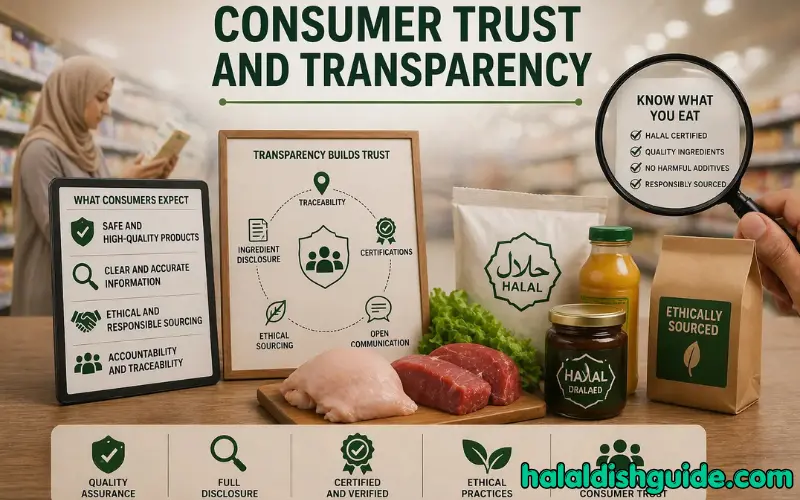
Trust is one of the strongest pillars of the halal food market. Consumers rely on clear certification labels, ingredient transparency, and reliable sourcing information when making purchasing decisions.
In the USA and UK especially, customers are increasingly comparing certification logos and checking brand reputation before buying.
A single labeling mistake, expired certification, or unclear packaging claim can quickly affect customer confidence. Once trust is damaged, rebuilding it can take a long time.
This is why transparency has become just as important as certification itself.
Rising Production Costs
Like the wider food industry, the halal sector is also under pressure from rising production costs. The prices of meat, poultry feed, packaging materials, and logistics services have all increased.
These costs directly affect retail pricing. As a result, halal-certified products may sometimes appear more expensive than conventional alternatives.
For price-sensitive consumers, this can impact purchase decisions, especially in highly competitive supermarket environments.
Businesses must balance quality compliance with affordability, which is becoming increasingly difficult.
Climate Change and Agricultural Pressure
Climate change is another major long-term challenge affecting the halal food industry. Agricultural disruptions, water shortages, and livestock stress are influencing the wider food ecosystem.
As feed crops such as wheat, maize, and soy become more expensive due to climate pressure, meat production costs also rise.
This creates a chain effect that impacts halal poultry, beef, lamb, dairy, and processed food products.
Over time, climate-related risks may become one of the biggest factors influencing halal food pricing and availability globally.
Challenges for Restaurants and Food Chains
Restaurant chains and food outlets face a different set of challenges. Maintaining halal compliance across multiple branches requires strong supplier management and staff training.
Kitchen practices, sauce ingredients, cooking oils, and even shared utensils can all affect halal integrity.
For international restaurant chains, maintaining consistency across all locations can be difficult. A brand that performs well in one city may face compliance issues in another if supplier standards are different.
This is why regular audits and standardized operational procedures are essential.
Technology and Digital Traceability
Technology is becoming an important solution to many of these challenges. Digital traceability tools can help businesses track ingredients from source to shelf.
QR-based packaging systems, supplier databases, and blockchain-based records are now being explored to improve transparency.
These systems can help consumers verify product authenticity while also helping businesses improve recall management and compliance reporting.
Although adoption is still growing, technology is expected to play a major role in the future of the halal food industry.
Future Outlook
Despite these challenges, the halal food industry continues to show strong long-term growth potential. Consumer demand remains high, and international brands continue to invest in halal product lines.
The future success of the industry will depend on stronger global coordination, improved supply chain resilience, and better consumer communication.
Businesses that focus on transparency, quality assurance, and digital traceability are likely to perform better in the coming years.
We hope you guys find this guide helpful. If you like this one, here we have more for you:
- Is Banana Bread Halal
- What Makes Meat Halal
- Popeyes Halal Status in USA, UK & Canada
- Is Starburst Halal
- Is Cava Halal
FAQs
What is the biggest challenge in the halal food industry?
The biggest challenge is the lack of unified global halal certification standards across different countries.
Why is halal certification difficult for global brands?
Because every country may follow different certification rules, audits, and labeling requirements.
How do supply chain issues affect halal food?
Supply chain delays can impact product freshness, storage quality, and timely retail availability.
Why is consumer trust important in halal products?
Clear labeling and reliable certification help consumers feel confident about what they are buying.
Does climate change affect the halal food industry?
Yes, it increases pressure on livestock, crops, and overall food production costs.
What is the future of the halal food industry?
The industry is expected to grow strongly with better technology, traceability, and global standards.
Conclusion
The global challenges in the halal food industry are wide-ranging and continue to evolve as the market expands. From certification differences and supply chain disruptions to climate pressure and rising costs, each issue directly affects long-term industry growth.
However, with better standardization, stronger trust systems, and smarter technology adoption, the halal food sector remains one of the most promising and rapidly expanding parts of the global food market.